Showing posts with label sport. Show all posts

Friday, 25 September 2020

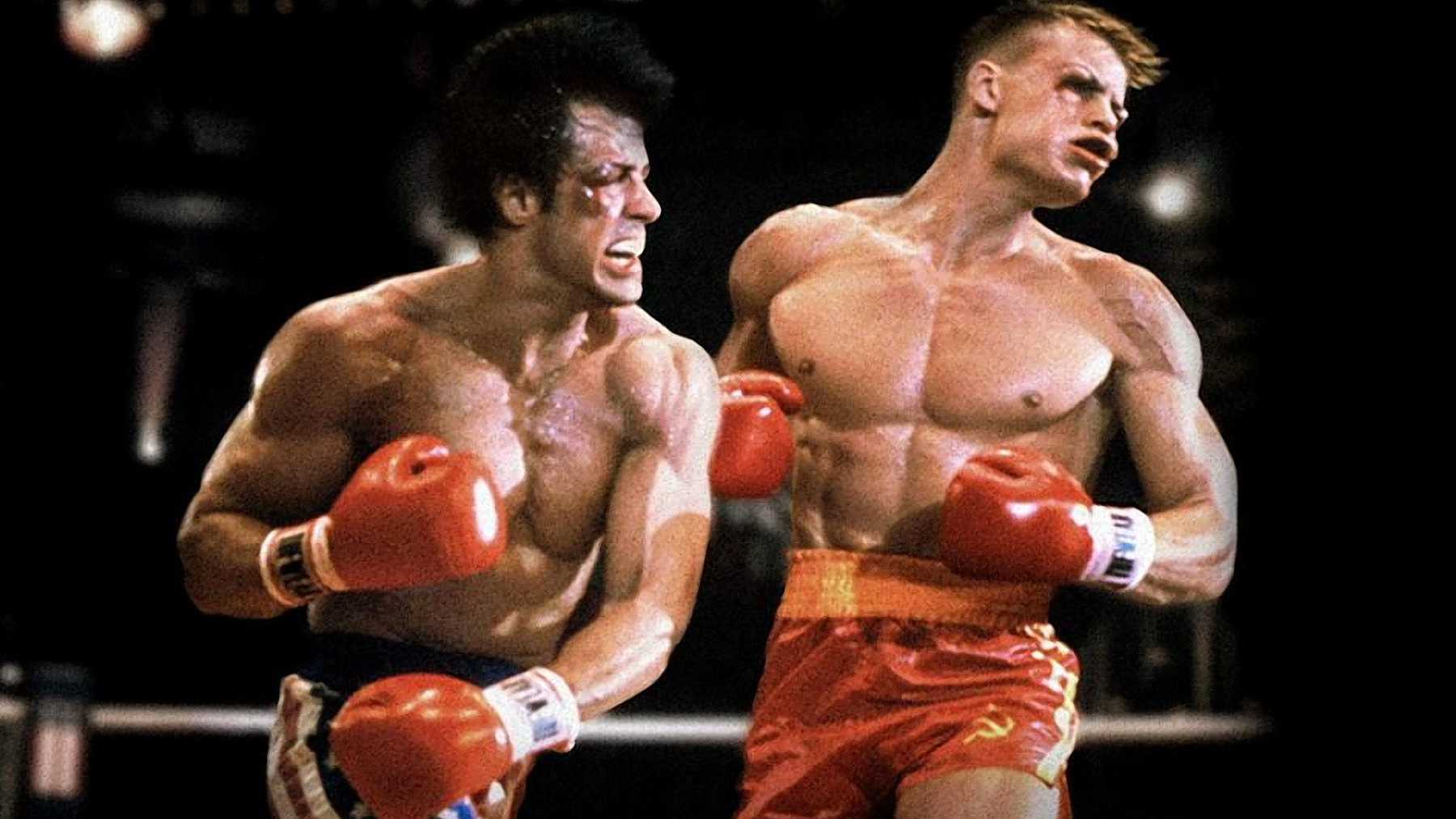
Three laughs: Rocky IV


It is hard to rate some trashy films. Films can be really good entertainment in spite of the quality of the filmmaking. In fact, it might be even harder to create unique trash that keeps surprising you than most "quality" films with which you know what you are going to get. It certainly is an even better pleasure to watch them. My friend says that he knows a trash film is worth something if it gets three laughs out of me. I mean proper, good belly laughs when you just can't believe what the film is showing to you, scene after scene. That's as good a rating as any for these movies. Any film that has these three laughs has a special place in my heart.

★ or ★★★★★


Three laughs case file #38:
Rocky IV (USA, 1985)
Director: Sylvester Stallone

So, as many movie directors these days have too much time on their hands, many have started to recut some of their films they feel didn't really work in their first form. Francis Ford Coppola is working on Godfather III, Steven Soderbergh has probably already gone through half of his filmography, and Sylvester Stallone has Rocky IV.

But why Rocky IV? It's as close to perfection as anything Stallone has ever made, and Creed notwithstanding, my favorite of the never-ending Rocky series. It turns out Stallone has changed his mind about Paulie's robot and he explains he doesn't like it any more. So, it would seem Stallone would cut out some of the movie's bizarreness and make it just a so-so melodrama, which the Rocky saga already has in abundance.

Well, here at Last Movieblog we are undoubtedly pro-robot. Stallone may recut all he wants but we will always have the original version (Right? He's no George Lucas, right?), so let's have a look at some of the laughs offered by the Rocky Ivee.


Three laughs (SPOILERS):

1. Before the movie has even settled to be a metaphor for the fight against the US and the Soviet Union, we see Ol' Rock has become a wealthy man since his underdog days. He lives in a huge mansion with his family. In fact, he even buys his friend Paulie (Burt Young) an expensive birthday gift. But he doesn't get the sports car he wanted, he gets a weird, bug-eyed robot that's probably meant more for Rocky's young son. In fact, the reason the robot is in the movie is that it's a helper tool that Stallone's actual son used for his autism.

Nevertheless, there's a big laugh coming on when inexplicably Paulie has switched the robots controls later on, so it uses a chirpy female voice and serves him beer. Knowing the background makes it even doubly bizarre that Stallone implies Paulie would use his robot for sex.  

2. I always enjoy Dolph Lundgren and feel like, as an actor, he got served the short stick and could have given so much more in his heyday. The scene when he's raised to his fight with Apollo Creed is carried by his face of confusion when he sees a Las Vegas -style gaudy James Brown musical number with small airplanes in the roof, showgirls, acrobats, and some sort of giant golden calf statue. Is Stallone implying that Americans are worshipping a false god? The sneeding way Lundgren delivers his line "You will lose" to Creed who he's about to kill in the ring, is also nothing short of magnificent.

3. A usual critique of the movie is that it's half montages set to the cheesiest arena rock the 80's had to offer. My personal favorite is the one set to Robert Tappert's No Easy Way Out where Rocky is driving around with tears on his faces thinking about his friend Apollo and the homoerotic scenes in Rocky III when they were running on the beach and bear-huuging in the waves. There's some shots of Adrian and classic Rocky training montages thrown in for good measure, of course, since the film is no homo.

Tuesday, 28 February 2012

It's 2012, Where is Death Racing?


I recently revealed in this blog that the interest I have towards any sport is equal to the violence the sport in question includes. Sadly, there are precious few sports in this here world where people get decapitated or otherwise brutally executed. But luckily, we have movies for that. After all, it's also better for human rights and such that people aren't actually executed for our thirst of carnage.

The sport that would most benefit some additional bloodshed would be the various race driving sports. I haven't the faintest idea why anyone would find cars driving around in a circle interesting if there isn't even a crash or two involved. Luckily, the visionary director Paul W.S. Anderson has prophecised that this year, the US economy will totally collapse. As unemployment will rise, cheap thrills become increasingly popular among the bloodthirsty 99%. Thrills such as... DEATH RACING!

Death Race (2008)
Director: Paul W.S. Anderson


In the near future, the live broadcasting of Death Race is the most popular TV event in the world. The racers are all notorious convicts, fighting for three victories in a three partial race competition, which will grant their freedom. And their cars are modified with plates and spikes and such, with additional weapons added by video game-like powerups. The TV event is supervised by the hard-nosed Hennessy (Joan Allen) who will have no holds barred to keep the masses entertained.

The latest convict she attempts to exploit is Jensen Ames (Jason Statham), a former racecar driver, now factory worker framed for the murder of his wife. Hennessy wants to masquerade Ames as the popular racer Frankenstein, beloved by the crowds. The original Frankenstein has recently died on the track, but this fact has been hidden from the public. Ames agrees to play along because he needs his freedom for any chance to meet his daughter ever again. But he also begins to suspect the real murderer of his wife is lurking inside the prison's car pool. Helping him is the spunky Case (Natalie Martinez), former driving partner of Frankenstein, and Frank's old pit stop crew, led by Coach (Ian McShane). But Ames doesn't just inherit Frank's old friends, but also his old enemies and racing rivals such as Machine Gun Joe (Tyrese Gibson), Pachenko (Max Ryan) and 14K (Robin Shou, Mortal Kombat's Liu Kang).

So what's surprising is that this is quite a good film for a Paul W.S. Anderson joint. It's certainly by far the most fun of his films I've seen, altough one can't claim that it is by any means smart or even that original. It takes good use of it's R rating, and allows the racers to become sliced, diced, shot full of holes and blown to bits. There's some good swearing in it, too. It's one of those hilarious modern action movies which are completely ridiculous, but play out as the most serious affair ever. There's no tongue-in-cheek winking here and there. And who better to play the lead as the man's man Jason Statham. Also the rest of the cast is filled with suitably hard-assed tough guy actors. Still, we could've done without Fred Koehler's racing and car tuning nerd Lists.

As the film is based on a Roger Corman classic, and the grand old man of trashy entertainment has still stayed on as an Executive Producer, one can be guaranteed that the film has a healthy exploitative nature. For instance, the rules of Death Race order that each car's co-driver must be a woman from the female penitentiary. That's why we are treated to a scene where impossibly fit female convicts emerge in slow motion from their bus, dressed in micro shorts and tight tops as the male convicts cheer and jeer. And so you should too, because this is fun and dumb testosterone-filled trash for a Friday night.

★★★ 1/2

Death Race 2 (2010)
Director: Roel Reiné


Altough this film could easily be mistaken for a sequel, it is in fact a prequel to the first Death Race. Which, according to Paul W.S. Anderson, is itself a prequel to Roger Corman's original Death Race 2000. Seems confusing, but since essentially they are all the same film, one shouldn't give too much thought to this fact. It's against the franchise's principles. So the film concerns the origin of the original Frankenstein (now played by Luke Goss) and how Death Racing was first concieved.

Goss's character is actually named Carl "Luke" Lucas, and he's a mob getaway driver for crime boss Marcus Kane (Sean Bean). A major heist goes wrong and everyone but Lucas get killed. The furious Kane wants to get rid of the final witness liking him to the crime and sets a reward for Lucas's head. The driver himself is sent to a maximum security prison. The prison is corporation-funded, and keeps it's costs down by having caged matchs where the prisioners fight to the death in front of millions of pay-per-view customers at their homes. Lucas becomes an unwilling galdiator to protect his prison-friend Lists (played again by Fred Kohler). But even a flamethrower match to the death prompting a major prison riot can't keep the ratings high enough. The executive producer of Death Match, September Jones (Lauren Cohan), soon figures another kind of deadly sport to keep the viewers interested. DEATH RACING.

Supposedly set in a post-apocalyptic world, Death Race 2 features a lot more footage of life outside prison walls. And it looks about the same as the world today does, which makes it odd that regular citizens are so extremely bloodthirsty to pay to see people beat each other to death in brutal dystopian gladiator matches (or is it?). Also oddly, much of the actors look the same as the actors in the first film, and play more or less the same roles, yet the characters are named differently. I suppose the film was written for the same actors, all of which, except for Kohler and Robin Shou, refused to do the film. That's probably also why the movie went straight to DVD. It still has a considerable budget, as the film features such famous actors as Danny Trejo (as Coach Goldberg), Ving Rhames (as the corporate magnate Weyland) and Sean Bean. The racing scenes in particular could just have been copied and pasted from the first film and no one would've noticed the difference.

All the characters are still introduced inside the scene with thse informational screens.

The film's pacing is also very odd. The climax doesn't happen in a race but when a single character is murdered by backing a car over her. Much of stuff between the two films still remains unexplained. Yet the result is as violent and sexy content is even more explicit than in the first film. Director Reiné also has some sort of fixation of people getting burned alive. An interesting fact is that since the film features the Weyland Corporation, it is set in the same universe as the Alien quadrilogy and the upcoming Prometheus.

★★★

Death Race 2000 (1975)
Director: Paul Bartel


Okay, so the idea of Death Races stems from this Roger Corman-produced cult film. Death Race 2000 is quite a different game when compared to the modern death races. In this original one, the drivers head their way from American coast to coast, not around a single track. The players score points by running over people, and the racers are just celebrities, not convicts. Instead of freedom, they compete for a chance to meet the President of the United States. Death Race is not being run by money-making corporations but the dystopian United States fascist police state that seeks to keep the masses happy. And nothing else matters to them as long as they get to watch the hit television programme Death Race.


Frankenstein (David Carradine) is a beloved champion of this brutal sport. He's thus named because multiple of his body parts have been rebuild as a result of a string of chrashes through the years. Frankenstein seems unbeatable, which annoys his chief rival Machine Gun Joe (Sylvester Stallone) . There's also a conspiracy of freedom fighters and a lingering war against France, which will be obstacles on Frankenstein's road to meet the president. And he has some very personal reasons to meet the man, too.

This 70's exploitation flick represents Corman's regular way of producing films. Take a popular genre (in this, car chase pictures), put in a few B-grade celebrities (in this, David Carradine and a pre-Rocky Sylvester Stallone), and lastly, put in some boobs every 15 script pages and as-cheap-as-possible special effects. The film's wicked and goofy sense of humour and cheery cheesiness reminds Troma films of the late 80's, early 90's. It's clear that Lloyd Kaufman and Michael Herz took a page from Corman's style of filmmaking. Death Race 2000 looks quite cheap and silly. For instance, the cars the drivers are driving look like amusement park bumper cars or ghost train wagons with all their plastic spikes and airbrushed colors.
See what I mean?

The film has some very slight satirical points, which stem from the period's sci-fi movies in general. For instance, the connection between a fascist state and keeping the audiences happy is more deeply observed in the same year's Rollerball. What interests director Paul Barter and Corman more is having some humour scenes where people are ran over with cars. Or women take their tops off. The film's general mood is well summed by the fact that several of the drivers are Nazis, with swastikas in their helmets, giving seig heils to each other, and generally eresorting to assholism. Many characters are quite annoying, cheif among them the cheerful TV host Junior Bruce ("The Real" Don Steele). The budget stops many of the more outrageous ideas right in their tracks. The film really misses its chance for an exploding ending. Death Race 2 may have been anticlimatic, but at least it delivered laughs with its brutality. But nevertheless, it is still somewhat fun entertainment by its stupidity values alone.

★★★

Saturday, 25 February 2012

Academy Award Nominated Films 2012


The point of award seasons should be to raise awareness to some truly unique film experiences of the past. Of course, when Hollywood is concerned, the quality varies from here to there. Last year, miraculously all Oscar nominees were at least decent. This year, however...


The only way I'll ever watch The Help. Also, a message to anyone thinking I'll watch the ceremony tomorrow.


Okay, now that I've opened yet another blog post with a Legolambs musical, let's take a look at six Best Picture Nominees. I've arranged them according how much you need to see them from unmissable to time-filler. And I haven't still seen War Horse, The Help nor Extremely Loud And Incredibly Close. Looks as if I won't either. Can't imagine they would offer anything for me.


Best Picture Nominees:

The Tree of Life
Director: Terrence Malick


I've written about the film so many times for various mediums (and at least twice in this blog alone) that I'm finding it hard to have new things to say about it. Suffice to say that this is by far the most arty of the nominees because it has no clear plot running through it, just imagery circling around the film's main themes. It's an unique piece of work, unlike any other film nominated this year. While it's overall message might be a little on the naïve side, I'd urge anyone to see this and with an open mind. That's why it's hard to see the film win, no matter how much Hollywood respects Terrence Malick and his life work. And even for a movie about memories and coming to terms with the past, I figure most of the Academy's elder members will fall alsleep to. But at least Emmanuel Lubezki's wonderfully beautiful cinematography should bring in the bust. I'll get back to it after the next rewatch.

The Artist
Director: Michel Hazanavicius


As the film has grown more and more probable as this year's Best Picture Oscar winner, it has prompted a lot of people to wonder how was this ever possible for a silent, black-and-white French movie. Yet one look at the film itself and it becomes quite clear why. The Artist is as Hollywood as they come, a feel-good melodrama with plenty of comedy and romance in the mix, lovingly made in the shape of classic movies of yesteryear. And it's about Hollywood itself!

The romantic silent movie star George Valentin (Jean Dujardin) is a darling of the crowds. Also in love with the star is up-and-coming actress Peppy Miller (Bérénice Bejo), who gets a job as a dancer in Valentin's new film. Valentin is endeared by the young woman and offers her a secret to success. But Valentin himself is facing rough times as the producer Al Zimmer (John Goodman) introduces Sound Film. Valentin refuses to do talking pictures, and soon finds himself out of work. As Valentin circles toward total poverty, it is left for Miller, who has found her fame in movies since, to rescue her old idol and mentor.

The movie is like a puppy, cute as a bug's ear and impossible to hate. Even though it is very calculated. The symbolic imagery in the scenes is easy to spot and underlines the emotions the characters go through. The story is about how we must innovate and develop ourselves according to what we love, in order to progress. There's also a good reason for Valentin to refuse to work in sound, but that's a mystery left to the very last scene. Hazanavicius teases the audience by casting a number of famous actors known for their distinctive voices, such as Goodman, Missi Pyle, James Cromwell and Malcolm McDowell, and not allow them to speak. But they do prove that there's more to their acting than just their voices, and deliver great performances. The film still revolves around Dujardin and his problem-struck movie star. Luckily, he is charismatic enough to pull it off. Like the film, it is hard not to symphatize with Valentin even if he is bull-headed, self-absorbed and later, wallowing in self-pity. Of course it helps that he owns such a cute dog.

The Descendants
Director: Alexander Payne


It has been rightfully argued that this year's nominees are mostly about rich white people and their problems. Furthermore, The Descendants is about a flawed family, featuring a troubled teenager and a spunky little-un, coming together against all odds. For an American independent movie game, that's a full Bingo right there. Luckily, this is being handled by Alexander Payne, who is the sharpest dramedy-maker in Hollywood right now.

Elizabeth King, the wife of a Hawaiian land owner and real estate magnate, has a boating accident and goes into a coma. The doctor's prognosis is negative. Thus Matt (George Clooney), her husband, brings their two daugthers together and begins to pick up the pieces of their lives. At the same time Matt has a major deal going down, as old native Hawaiian's lands are about to get sold, making him a millionaire. But Matt's mind is elsewhere as he hears from her daughter Alex (Shailene Woodley) that Elizabeth was having an affair behind his back. He attempts to seek out her lover to tell him the bad news as well.

Payne hasn't filmed a movie since 2004's modern classic Sideways, so a new film was eagerly awaited in film circles. But it turned out to be more akin to 2002's About Schmidt, a film about coming to terms with loss andfinding a new way forward. The Descendants is more melancholy-filled than funny. Altough it does offer a few hilarious scenes as well. By first glance the film's characters are clichéd, but Payne has written the film intelligently enough to give each of them some surprising depth, and making them integral to the story he's unfolding. It also allows him to have various different viewpoints into one tragedy, and ways of coping with it. Clooney truly is career-best here, his vunerable, confused character having none of his trademarked suave charm. Here is another rich guy, whose fate is told so well, one can't help but to become engulfed in it. It's not Payne's finest, but still better than most similar directors could even dream of.

Hugo
Director: Martin Scorsese


Martin Scorsese isn't afraid to step outside his comfort zone. I had bad premonitions of his kid's film, partly because the film's trailer made it seem like a quite horrible film where Sacha Baron Cohen chases kids around and runs into a large cake. Well, in actuality Scorsese brought a film for children that refuses to look down on its audience. There's actually precious few or virtually none action scenes, loud noises and moronic humour. That's why the resulting film is also good entertainment for adults.

In Paris in the 1930's, Hugo Cabret (Asa Butterfield) is a resourceful orphan living in the Grand Station. As a son of a clocksmith, he makes sure that the station's clocks are up and running, but still has to steal to live. He also has to avoid the Station Manager (Baron Cohen), who is bent on capturing any orphans loitering in his station and delivering them to the nearest Dickensian orphanage. Hugo also has a secret project left by his project, which requires various parts from toys and such. He pilfers them from the elder toymaker Papa Georges (Ben Kingsley), who eventually catches Hugo in the act, and then confiscates the blueprints Hugo needs to complete his father's work. To get them back, he makes friends with Georges' foster daughter Isabelle (Chloë Grace Moretz). Together, they set out to solve the mystery of Papa Georges' past, which takes them through a journey through the history of cinema itself.

As Scorsese has done plenty of culturally significant work in preservation and refurbishing classic films, the film is a sort of letter to the world on why this work is so important. Scorsese also manages to use a fantastic movie to teach children a thing or two about the history of cinema and the work of its pioneers. In fact, he uses so many montages consisting of footage of old films that these scenes resemble some of his documentary work. The central story is heartfelt enough, altough initially the mystery unfolds a little slow, and doesn't quite captivate as much as it should in the beginning of the film. But when the mystery starts to unfold and we start to get answers, the viewer starts to move towards the edge of the seat. The fact that this sort of film, that isn't noisy, based on a pre-existing films, and is frankly difficult to market (as evidenced by that bad trailer) can be successful, reinstores some of my faith in humanity. Another thing restored is the fact that 3D can be used as a good storytelling device. The sense of milieu, and the blueprints of the entire train station are laid out exceptionally well.

Midnight in Paris
Director: Woody Allen


Woody Allen keeps churning a movie a year. I myself have never been very interested in his work (even though I've watched the films which are generally recognized as his most essential). I also allowed this to fall through the cracks when it was first released. But when it began creating buzz and making money, I started to become intrigued. But in the end, all of it is a whole lot of hot air. While Midnight in Paris is by no means a bad film, it is quite flimsy and slight, so much so that there's little that lingers on in the film. This one is not for the ages, then.

Basically, Allen's stand-in is a neurotic writer, working on his first novel after a career writing screenplays. he is visiting Paris with his fiancée, and finds the city's heart to be helpful for his creativity. She, however, along with her parents, despise the city and can't wait to get back to America. That's why after an evening at a wine-tasting, wanders off on his own. This enables him to time-travel to meet a lot of his favorite cultural heroes who have shared time in the city in the past. From F. Scott Fitzgerald to Ernest Hemingway, and from Pablo Picasso to Salvador Dalí and Luis Bunuel, he finds fellowship in his kin, and necessary instructions on how to improve his work, and in the end, life.

I like the whimsiness of the film and that it has the crucial fantasy element of never explaining its core mystery to the audience. nevertheless, it is pretty clear how this will play out once the set up has been layed out. Allen starts the film with a montage of Paris so long, that the film resembbles more a travel advertisement than a narrative. I'm glad I already had booked a trip to the city before viewing this film. This one is most on the money for Original Screenplay, which is a wonder since Allen goes through is normal tropes, but never really delivers anything genius, super memorable, or even laugh-out-loud funny. It's smart, but never as clever as it thinks it is, or how much the Academy seems to think it is, for that matter.

Moneyball
Director: Bennett Miller


A lot of critics I admire have praised this Sports drama. Personally, I'm not very interested in sports (at least in any that don't frequently feature brutal violence), particularly baseball, but I had heard that the core of the film is set on the backstages and manager's offices of baseball stadiums. That is true, but I still couldn't work out much interest in those goings-on. You see, it doesn't make a difference to me who wins or who loses some stupid match, or even a whole season. So when the stakes are that low, personally I had a pretty boring experience with the film. But that doesn't mean it's totally without merit or wouldn't be a good film for someone else.

The Oakland Athletics baseball team's manager Billy Beane (Brad Pitt) is struggling with low salaries. His team losing an important match doesn't really help things for him. Star players are threatening of leaving the team, and there is little hope of turning his string of losses into vitories when he can't recruit any new talents either. But then he discovers the young analyst Peter Brand (Jonah Hill), who has deviced an economic theory in assessing the player's value. This schematic turns out to work well in recruiting new players and Beane is soon in the centre of a rags-to-riches story.

Aaron Sorkin is a great screenwriter, and his cooperation with Steve Zaillan here provides some good dialogue and moves the plot forward. The problem is that it's all played so low-key. The conversations have few high-points. The precious few times when Pitt expresses total anger at his team and the entire system he's playing in are high points, but don't pace the film well enough for it to capture the viewer's interest. Likewise, the film is overlong, as anyone who has ever seen a sports movie probably knows the basics of the plot from the get-go. Also the clichéd scenes with his estranged family and young daughter are way too familiar, even if they are based on a true story. But at least that gives an excuse to have a catchy acoustic song in the film.

Best Actor, Best Adapted Screenplay

Tinker, Taylor, Soldier, Spy
Director: Thomas Alfredson


The Swedish director Thomas Alfredson's film is smarter and better than any of the Best Picture  Nominees, yet it has had to suffice on being nominated for smaller awards, which is a shame. This cold war spy thriller strips away all the glamour from the espionage business. It is a twist-filled whodunnit mystery and a slide into paranoia at the same time. It's a demanding film, which requires the viewer to stay awake for every single minute of its running time. I will see this film again in the theatre, which I haven't done once since The Human Centipede. I simply feel that Tinker, Taylor rewards repeat viewings handsomely.

A British MI6 agent is mudered on a business in Budapest. This causes the Minister of Defence to fire the Head of the British Intelligence, Control (John Hurt), and his right-hand man George Smiley (Gary Oldman). Off the record, Control gives the retired Smiley the task of finding out who among their inner circle has betrayed their trust and is in actuality a mole for the Soviet Union. Smiley won't have it easy as he himself is among the five main suspects and thus isn't trusted among his peers. The only one helping him in his investigations at first is the eager young agent Peter Guillam (Benedict Cumberbatch). Smiley will have to see rogue agents, men on the run, shady figures and many other shady figures to find out the betrayer. If he himself is not killed before that.

The film's plot is a complicated web of conspiracies and lies. This would be challenging enough, but the narrative isn't straight-forward, and jumps back and forth in time. Also, there are plenty of characters to keep track of. In the end, the main plot isn't that hard, but to find out all the nuances and the whereabouts and goings-on of various characters, one must concentrate considerably. The film's aesthetic is such that it's easy to find oneself lost on its world. Even the smallest details are made important, and the film's rainy cinematography and 70's design aesthetics are well-realized enough to get the viewer easily lost among them. The real treat here are the performances. As good as Gary Oldman is (and he's really, really good.), the whole film is an ensemble piece, starring a cast of the best British talent to die for. With Oldman and Hurt, there's also great performances Tom Hardy, Colin Firth, Mark Strong, Kathy Burke, Toby Jones and Ciarán Hinds. One feels that these actors actually inhabit the jobs of their characters and have actually been spying on us with their other film roles. One does get a paranoid feeling from out of all this, but I would've still wanted to see the film again as soon as I walked out of the theatre.

History will prove that these sort of films will last, while no matter how many Oscars a certain film wins, it may still fall into obscurity. Hell, it happened to the last silent movie that won, Wings.

Saturday, 10 December 2011

International Films for the rest of the year, or: PÖFF 2011

"I hear Tallinn has a pretty groovy film festival. Let's meet at the harbor." Le Havre (c) 2011 Sputnik Oy.

The biggest film festival in Estonia, Tallinna Pimedate Ööde Filmifestival (Tallin Black Nights Film Festival, or PÖFF) turned 15 this fall. The prestigious international film festival was held 16.-30. November. I only had time to visit the festival for one weekend, even though it would've offered a lot of highly interesting international films. Luckily, a lot of them I had already seen or had the chance to see back in Finland. So here is an end-of-the-year roundup of interesting films from PÖFF's lineup.

Le Havre (Finland/France)
Director: Aki Kaurismäki

Le Havre (c) 2011 Sputnik Oy.
The pitiful Finnish film industry always gets a boost whenever our last and only recognized auteur, Aki Kaurismäki makes a new film. Nevermind that this one was shot in France and in French, Le Havre will win multiple Finnish Film Awards, and is our country's contender for the Oscars. But while it's a good film, it is a small disappointment and nowhere near Kaurismäki's finest.

Le Havre is about the inhabitants in a small coastal town in Northeast France. The old shoe-shiner Marcel Marx's (André Wilms) life is shaken as his wife Arletty (Kati Outinen) falls ill and is hospitalized. The grief-stricken elder gentleman finds it hard to function without his wife. He happens to come across the young immigrant Monet (Jean-Pierre Daroussin) hiding from the police in the harbour. The kind-hearted Marcel takes pity on the boy and gives him shelter in his home. It also allows him to get his mind off worrying about the fate of his wife. He gets the support of his entire comminity to keep the boy from getting to the cold hands of the law.

Le Havre is first and foremost a fairy tale for grown ups. Its humanism is strongly influenced by the silent films of Charlie Chaplin, and Kaurismäki also uses about as much dialogue in his films as well. But nevertheless, the film feels a bit too naïve and predictable for its own good. The message is of course good and pure, and as important today as it was in the 1930's when the right-wing chains of thought swept through Europe the last time. But Kaurismäki doesn't really get a good hold at his characters, which feel like rough drafts compared to his previous body of work. Marcel, for instance, is pretty one-dimensionally good. More time is spent on the nostalgia of the old town, where old people take care of old bars and old grocery stores, soon to vanish. The imagery itself is familiar to the point of clichés. Kaurismäki goes through a checklist of his usual trademarks, and thus, for instance, a rock show is tacked on (by the French old school rocker Little Bob). All in all, it feels a lot like a film fastly done in between other films with more gravitas.

★★★

Poongsan (South Korea)
Director: Juhn Jaihong


The formerly prolific Kim Ki-Duk has had trouble doing films lately. He's suffered from depression and a writer's block, that is all delved into in his latest film Arirang. But luckily Kim has shown signs of getting better, and now he has managed to script and produce another film that isn't about himself. Instead, is a action thriller about the conflict between North and South Korea and one smuggler between them.

The mute smuggler, known only by his cigarrette brand as Poongsan (Kye Sang Yoon), silently takes on jobs left on a note by grief-stricken families. He can bring anything and anyone across the borders of the two Koreas. While his reputation grows and grows, eventually he gets a job from a wealthy Southern businessman to bring back his Northern girlfriend In-ok (Guy-ri Kim). The job proves harder than usual, as the saucy woman proves to be more than a match to Poongsan's finely-tuned tactics. At the same time the South Korean police has set up a trap to catch Poongsan and to find out whether he comes from the North or the South. But also North Korean Agents have their eyes on Poongsan and sinister plans for him.

The fast-moving movie has a huge cast of characters and so many allegiances that it's difficult to keep track of all of them. The middle of the film in particular, is quite confusing. At the centre of the movie there is a triangular romance, that feels quite forced considered from any angle. But at least things aren't as black and white as they initially seem. Director Juhn Jaihong excels as an action director. The scenes of running through the border area are brisk, exciting and innovative, if not very realistic. Likewise, Juhn and Kim have also deviced some very twisted and nasty ideas for the film, which one can take chuckling. The whole ordeal is a kind of a modern western, if such a common comparison can be excused. The mute stranger playing two sides against each other for profit is the exact plot of A Fistful of Dollars. Poongsan is a sort of superhero, as he seems almost invunerable. He's a symbolic person, the spirit of the Korean soul that doesn't look whether you come from the nort or the south. The film deals with subjects that must be painful to the Koreans, but does it in an exciting, innovative way. The script could've used another polish, though.

★★★ 1/2

Attack the Block (Great Britain/France)
Director: Joe Cornish


A new generation of video-raised Brits have recently started to make more interesting genre pictures. With his debut, Joe Cornish goes to the same league with Neil Marshall, Edgar Wright and Ben Wheatley. Cornish's master idea was to combine a silly alien invasion idea with a coming-of-age tale of a hoodlum. A teen gang has to face responsibilities for the first time in their life to survive and protect their home block.

The story begins on New Year's eve as the gang led by Moses (John Boyega) mugs a nurse on her way home. While the gang's making their escape, a small furry alien attacks Moses. He decides to beat it to death as revenge. But this turns out to be a mistake, as bigger, nastier aliens soon start to appear and killing off people. They seem to have some beef with Moses and his past deeds. In the mids of all the fireworks they have come on Earth undetected and because of the block is seething with crime, few authorities want to check on it. One of the gang members gets injured and needs mediacal attention. Luckily at their home block the ruffians realize that the nurse they robbed is actually living as their neighbour. Sam (Jodie Whittaker) therefore has to choose whether to trust the hoodlums to survive or to try to make it on her own.

Attack the Block's biggest problem is that it's marketed as a comedy, but it really isn't all that funny. Little wannabe gangsters Probs and Mayhem do raise a few giggles, but Nick Frost as a lazy fat drug dealer feels mostly wasted (in the bad way). The film's aliens are cool, dark furry things with glow-in-the-dark teeth. When their mission is revealed, it seems plausible, and thus they would've fitted well with my recent list of best movie aliens. There is also the stretch that one has to symphatize with some nasty underage hoodlums to enjoy the film. But hey, the same is true with Akira. Like the anime classic, this is a little anarchistic and anti-authority, but also stretches the need to take responsibility of one's own actions.

★★★

Sons of Norway (Sønner av Norge, Norway)
Director: Jens Lien


Sons of Norway takes us back to the golden days of the late 1970's in the concrete suburbs of Oslo. The adolescent Nikolaj (Åsmund Høeg) is raised in a family of free-thinking radicals (in a word, hippies). Nothing is shunned upon, and his parents have an open mind toward everything. It all changes when Nikolaj's mother Lone (Sonja Richter) dies in a tragic accident. Living with just his grief-stricken widowed dad Magnus (Sven Nordin) is a real pain. So when Nikolaj gets his first teenaged needs to rebel, he needs to take it to the extreme. Luckily, punk rock and The Sex Pistols have just risen, so Nikolaj bases his life on their teachings. He gets a new punk look, acts rude toward authorities and starts his own garage band with his friends. But then Magnus decides he wants to party and join in the movement as well.

The film is certainly quite funny, as much comedy can be done on the expense of the 70's Nordic liberals. For instance, we are taken to a nudist camp, and Nikolaj gets to witness more sex than should be good for a boy too young to actually do it himself. As everything is looked through nostalgic lenses, rather than looking forward, the film isn't that punk in actuality. It pronounces the joy of life rather than nihilism. I should hate it then, but I don't. After all, there is a late cameo by Johnny Rotten himself. The film is quite episodic, which makes me feel it is based on a book or on actual events. It would benefit from having a stronger sense of the story rather than having just one set piece after another. But the father-son relationship is realized in a funny and never preachy way.

★★★

Inní: Sigur Rós (Iceland)
Director: Vincent Morrisset


I didn't know much about Iceland's gift to progedelic rock, Sigur Rós, before seeing this film. I feel like I still don't. It's a documentary film about the band, which utilizes a lot of concert footage, but also some interviews from the course of their career. But very few of them, in fact. Too bad, because they are easily the most interesting thing in the movie. Most of the time is spent on gigs, with the camera hugely close to the players and obscuring much. The film is black-and-white and grainy, allowing viewers either to interpret the film as they please or get nauseous. As for Sigur Rós's music, I feel it is quite nice to listen for a song or two, but I get annoyed by its slowness and lack of any hooks after 1,5 hours. If you're a fan, this is a must. Otherwise, I suggest to avoid this.

★★

Killing Bono (Ireland/Great Britain)
Director: Nick Hamm


Based on a memoir that every one that has ever talked about has described as "almost too weird to be true", Killing Bono tells the story of Bono's doppelgänger. The man in question is the Irish rocker Neil McCormick (Ben Barnes) who went to the same school as Bono, The Edge and friends way back when before they were famous as U2, in the late 70's. Neil's younger brother Ivan (Robert Sheehan) was in fact asked to be in the band lare named U2, but the jealous big brother never allowed for this to happen.

The film deals with the two brothers' struggling to have some sort of success with their own band, while U2 goes on to be the biggest band in the world. The McCormick ordeal features gangsters, record company executives, loose women and other deadly combinations of weird Irish people. Sex, drugs and rock and roll are all present, but don't feel glamorous but a little worn out and with a tiny hint of melancholic sadness within them. Neil makes a huge string of bad decisions and usually keeps them from Ivan. When Ivan finds out brotherly feuds so harsh follow even the Gallaghers would find them a little excessive. The ever-awesome Pete Postlethwaite makes his final appearance on the screen as the boys' gay landlord. The still-awesome Twitter superstar Peter Serafinowicz plays a sleazy and foul-mouthed record company owner. The film is quite funny, but more than anything, it made me interested in reading Neil McGormick's book. I'd like to find out just how much of it was made in the sake of cinematic storytelling and how much does McGormick claim is true.

★★★

Code Blue (Netherlands)
Director: Urszula Antoniak

 
Urszula Antoniak is known from her debut feature film Nothing Personal. Code Blue is similar in the slow pace and lack of dialogue. Antoniak trusts the images to tell the story. Another thing that is similar is that they both are stories about love and sexuality, but go across painful limits, making the stories all the more tragic. Code Blue is much more violent, almost sadistic in its outcome.

Nurse Marian (Bien de Moor) tends to appears to be emphatetic and good at her job, taking care of terminally ill and old patients. But she harbors more sinister feelings among herself. She's a loner and become more than a little twisted from being around death all the time. She also has voyeristic urges, and with binoculars witnesses a man in the next building doing violent acts to women. Rather than calling the authorities, she becomes fascinated and a bit aroused by this man. And the man also starts to spy on her. It is inevitable that these two shall meet.

Code Blue is slow to the point of coma. But nevertheless Antoniak is good at building pressures, which burst out at a few shocking scenes. Her film's protagonists are pretty rotten to the core, which makes the film feel a tad nihilistic. It's certainly arty, to the point when a lot of people won't stand the film. But I've got to say, once I got over my initial confusement, I kind of liked it.

★★★ 1/2

She Monkeys (Apflickorna, Sweden)
Director: Lisa Aschan


One of this autumn's biggest surprises comes from Sweden of all places. To be fair, it's no wonder I was t first dismissive of a film that was said to be like "a new Fucking Åmal". In actuality She Monkeys is a lot more. It shares it's slow, almost documentaristically still style with films like Play. In fact it works very well as a companion piece of that film. Whereas Play had some good ideas of how to present male adolescence, peer pressure and the spread of anti-immigrant views on cinema, She Monkeys delves on the development of female sexuality, unrequited love, mood swings and physicality.

The teenaged Emma (Mathilda Paradeiser) is accepted to a school for circus acrobats. She soon makes friends with another schooler, Cassandra (Lena Molin). They soon become inseperable, doing everything together. But it soon turns out that one of the girls feels a lot stronger towards the other than the other does. Nevertheless, the scenario is allowed to go all through to its breaking point. Meanwhile, Emma's little sister Sara (Isabella Lindquist) gets her first taste of developing into an adult as a swim school instructor tells her mom that she needs a bikini top to swim there. Sara harbors a crush on her cousin Sebastian, and plans to woo her.

All information we viewers gain in the film is based on what Emma and Sara experience on screen. There's not a lot told about what's happening outside. It keeps the film fresh and pulls the rug out from under the viewer's feet a few times. She Monkeys isn't afraid to surprise or even shock. For a debut director, Lisa Aschan has astonishingly good sense of cropping the image and allowing us to read things on almost still faces. The film also has a strong sound design, with breathing and other small sounds turning out to be vital for the storytelling. The film is cut surprisingly short and when it ends, the viewer is left wanting for more. While all threads are tied in this film, maybe we're just left to wait what Aschan does next.

★★★★

In A Better World (Hævnen, Denmark)
Director: Susanne Bier


Susanne Bier's films are basically very good, but I somehow mostly see them as somewhat off-putting. I don't know what it is, certainly not the thematic darkness, since I'm used to that as a Scandinavian. Her films tend to have depressed people be miserable amid the Scandinavian welfare state. That's by no means a wholly unique theme in Scandinavian cinema. So is the case with Hævnen, which actually means Revenge. It has won multiple awards, including the Academy Award for Best Foreign Film at this year's Oscars.

Hævnen has several stories going on at once, but the central one concerns the budding friendship between Elias (Markus Nygaard), who is bullied at school and Christian (William Nielsen), who has a lot of personal problems as well. Both come from fractured families. Elias' parents are on the border of breaking up and his father Anton (Mikael Persbrandt) spends a lot of time abroad, at work at an African refugee camp. Christian has lost his mother to cancer and is having a hard time adjusting to life with his dad Claus (Ulrik Thomsen). Christian starts behaving aggressively, almost sociopathically, and he pulls Elias with him to his dangerous shenanigans.

Bier has a pretty good idea of male adolescence and what pulls boys to dangerous shenanigans. The actors are superb and are particularly well in scenes filled with melancholia and sorrow. Audio-visually, the film is also top notch. Yet I still feel as if the film is missing an edge or some other major spice. The whole thing feels like playing a bit too safe to create exactly the kind of film that Scandinavians appereciate. For one thing, I don't feel the scenes in African add too much to the story. They are interesting and all, but seem like they would better suit another kind of film. Perhaps it is Bier's way to show that the Nordic angst actually is nothing compared to the problems that a lot of other countries have to deal with every day. That would explain the English title, at least.

★★★ 1/2

Superclásico (Denmark/Argentine)
Director: Ole Christian Madsen


In a Better World was Denmark's representative at the Oscars last year. This year they've sent a more comedic film, which is actually still a very similar story at core. It's also about a dysfunctional family on the verge of breaking up that faces grievances, angst and sorrow. It is probably because of Lars von Trier's controversial Nazi statements that they wouldn't dare to send the much superior Melancholia. But while Superclásico is pretty predictable, there's loads of fun to be had with the film.

Christian (Anders W. Berthelsen) is a wine shop owner, that has been trying to cope with his wife Anna (Paprika Steen) leaving him. Anna is a football manager and has fallen in love with her protegé, the famed Argentinian soccer player Juan Diaz (Sebastián Estavanez). Anna needs Christian to sign the divorce papers so he can marry Juan. Christian decides to do that in person in Argentine to get one last chance of rescuing his and Anna's marriage. Their recluctant, laconic teenaged son Oscar (Jamie Morton) is taken along. On the trip the Nordic and fiery latino sensibilities clash, but the boys also get their own taste of passion form Argentine women.

Like it's name implies, Superclásico is a pretty basic story about a divorce. There's only a few small surprises along the way, but the film's real trick is to do the most worn-out elements so well as to make them seem fresh. First of all, the film is very well acted. Everyone from the main roles to small ones do a great job, have just the right comedic timing, and create multidimensional characters that feel very real in the context. Second is that the sunny Buenos Aires is shot with care, an eye for detail and, in a word, with love. It feels like one of the main characters of the film. We scarcely get postcard monuments, the film takes us more to tiny wine bars, carages and seedy hotels. So all in all, while there's nothing to write home about, it is a pleasant enough trip.

★★★

50/50 (USA)
Director: Jonathan Levine


An even more unlikely concept for a comedy than a painful divorce, is deadly cancer. But dark subjects are usually the most ripe for comedic treatment. The approach here is to do it as adorable as possible. So we have adorable Joseph Gordon-Levitt getting deadly cancer. Helping him are the adorable Anna Kedrick, Bryce Dallas Howard and Anjelica Huston. Perky pop and old classics are playing on the background. There's an adorable dog named Skeletor tilting his head at appropriate times. The film even features the adorable Philip Baker Hall as an adorable older cancer sufferer with a potty mouth and an appreciation of weed.

But anyway, the film is based on an (inspirational) true story. The 27-year-old Adam (Gordon-Levitt) finds out that he has back pains because he has a rare form of spinal cancer. He's given a 50/50 chance of making through it. So, naturally he also starts to go through what is important in his life. He comes to terms with his overly-worrying mother (Huston), and deals with his artist girlfriend (Howard) who has started to drift away. Along the way he meets new friends at cemotheraphy and strikes a friendship with his young therapist Katherine (Kendrick).

While 50/50 is quite symphatetic, it doesn't work that well as a comedy. Most of the fault lies in Seth Rogen's performance as the cancer-sufferer's best friend Kyle. Rogen's shtick is as tired as ever, and starting to really get on my nerves. Kyle is a generally unlikeable radio host that thinks about himself before others. He only talks about getting laid and smoking weed, and never, ever shuts up. And he's ever-present in many scenes that would do a lot better without him. I get that he's supposed to be a bit of an asshole, but still have a heart of gold. That's what friends sometimes are, particularly if you're in a tricky situation. I'd still like to avoid Rogen from now on, if he doesn't attempt to evolve one bit either as an actor or a comedian. But the film at least made me reflect on my own life.

★★ 1/2

Tuesday, 1 November 2011

Night Visions Maximum Halloween 3011 End Report

What wouldn't one do to stay awake at Night Visions?

So here's the report on the final night of this autumn's precious Night Visions Festival. You'll excuse me if I keep these talks short, because I have a lot to cover (and I actually left one movie out because there was so little to say about it).


Red State (USA, 2011)
Director: Kevin Smith


The screening of Kevin Smith's latest film went really well with the audience. The most hilarious thing about it was that all the laughing made one audience member shout out in frustration "SHUT THE HELL UP! THIS IS NOT A COMEDY!" By the time the end sequence rolled along, I assume he saw the error of his ways. Red State is as much a comedy as any of Smith's previous films. Unlike most of Kevin Smith's previous movies, however, it is also pretty damn funny and good.

In an ultra-conservative small town, the local preacher Abin Cooper (Michael Parks) is practicing drastic measures in his crusade against gay or otherwise sexually "unnormal" people. The teenage boys Travis, Randy and Jarod couldn't care less, instead browsing the internet, looking to get laid. Little do they know that they are playing straight into the sinister plans of Cooper and his deranged family.

The script is among the very best things Kevin Smith has ever done, among Clerks I and II. What appears on surface to be a simple torture-porn horror film quickly changes into something else altogether, but revealing it would be spoiling things. Suffice to say the actual protagonist of the film is John Goodman's no-nonesense FBI agent Joseph Keenan who only comes into the movie about 45 minutes in. Among Smith's usual dick and shit jokes there is a clear political statement against fundementalist hate-groups. Also, Smith's humour is pitch-black this time around and he isn't tiptoeing around his characters, allowing many of them to suffer quick and surprising demises. The film's flaws are found in his lack of directorial skills. Some of the action sequences are confusingly edited, and the film does end in a big deus ex machina, albeit a funny one at that.

It is a sort of modern postmodern genre-combining, tribute-giving genre piece, but it is well-made, acted, structured and entertaining. I wouldn't have thought Smith had it in him. Let's hope he makes more of these rather than romantic comedies.

★★★ 1/2

Morituris (Italy, 2011)
Director: Raffaele Picchio

 
While the smart people that purchased the ticket to the Surprise Movie (which turned out to be Attack The Block), I had the big idea to check on the modern Italian exploitation cinema. This film is about Roman Gladiator Zombies who come to life and use their inexplicable superpowers to kill off a bunch of twentysomethings. Sounds like a surefire plan, right?

Well, it failed. The trailers of the film showing before some screenings earlier already made me dread for the film in advance. The trailers were nothing but dimly-lit forests and people running around them. No jokes, no action, no gore. The splatter effects in the film were made by Sergio Stivaletti, known from special effects in such films as Demons and Cemetary Man. Also what was funny for a while was the horribly bad subtitles that seemed to be in Borat English. These two things were by far the best part in the film, and even they felt like too little too late.

For the exploitation film totally screws its stupid concept by making us watch as five bad actors talk their way into a rave in the middle of a forest. It is all a ruse, however, and the three Italian men plan to brutally rape and murder the two Romanian tourist girls they had picked up. And we have to watch about twenty minutes of them brutally beating the crying women before the killing starts. Now, I'm far from being a moralist, but I do feel that rape is such a painful subject that it should only be used in films that treat it with the gravitas, such as Irreversible or Boys Don't Cry. Of course there are exploitation films such as the original I Spit On Your Grave that feel disgusting but even they have something to say about the subject. Here it is used just to make the audience want to reach catharsis by watching the rapists get brutally killed. As of such, there is no entertainment value to this thing.

★ 1/2

Viva Riva! (Democratic Republic of Congo/France/Belgium, 2010)
Director: Djo Munga


Viva Riva has been getting praise ever since its screening at the Berlin Film Festival last spring. Indeed, it is a clear sign on the rising talent from the middle Africa. But it was also mildly disappointing because it's not that particularly original. This kind of gangster story has of course been told numerous times before. Of course there is certain exotism and African flavour among it. Sex and violence come of course with the deal.

Riva (Patsha Bay) is a petrol dealer in Kinsasha. He finds a huge supply of precious barrels with his sidekick J.M. (Alex Herabo). He gains a good profit, selling off the drums, but his riches also attract attention from various lowlifes who want in on the cut. Riva himself is more interested in wooing a married woman, Nora, who has an abusive husband. When the gang boss Azor (Diplome Amekindra) finds out about his businesses, Riva has to walk on thin ice to avoid a full-scale gang war.

The film does earn its title of African Scarface, as the themes of sacrificing friendship and love for excessive luxury and over-the-top consumption. As you may guess, it does not end good for Riva. But the real stars of the film are the colorful cast of minor characters, to the female soldier masquerading as a nun to the ruthless crime boss.

★★★

High Crime (La polizia incrimina la legge assolve, Italy 1973)
Director: Enzo G. Castellari


Enzo G. Castellari is first and foremost a self-described entertainer, and a very good one at that. But it was a hugely pleasant surprise to find out that he had managed to direct at least one lean and mean crime thriller that also has ponderous subtext, political messages and very arty editing. The end result was so good, much of the film was remade by Castellari himself into 1980's much more action-oriented Revenge of the Cobra. You recognize a true exploitation master from allowing himself to exploit even his own work.

In Genoa, the police is closing in on a large-scale drug operation ring. Comissario Belli (known from 1969's Un detective, still played by Franco Nero) in particular is fond of using drastic measures to catch the culprits. So, he engulfs in car-chases and beats up suspects, much to the annoyance of the police commissioner Aldo Scavino (James Whitmore). But the criminals are also particularly ruthless, and won't hesitate to kill their own or to threaten the police force's families. They are also well-prepared enough to carry out their threats.

The ever-young Castellari was also present at the screening, and remembered that the film's initial idea came from a real-life crime headlines. He also claimed that the ruthlessness of the fight against crime and corruption is still as ruthless as it is in the film, particularly in Italy. Much of the action takes place among the labor protests and the mafia also has connections to the unions. But by the end the workers realize which is the worse of the two evils and allow Belli to do his job. Even though Castellari trusts in the little people, there is some cynical views on authorities who are either corruptible or in a position where they can be offed easily, while the culprits get away with it. The film has a very postmodern editing style that at part mixes events to the dreams of the characters and alternative happenings that turn out to be false. The end in particular is left open and it's left for the viewer to decide whether the outlook is really cynical or whether there's a glimmer of hope within it.

Castellari is still very proud of the film, as he should be, and the film was a huge success at the time. It was also the first of many crime films he came to direct.

★★★★ 1/2

Trespass (USA, 2011)
Director: Joel Schumacher


If Night Visions has a Nicolas Cage film in its programme, it is usually worth seeing. And noticing that it was directed by none other than Joel Schumacher, expectations were either on über-camp or at a reasonably bleak thriller. At the end the film delivered a mostly serious and working thriller, that also has really over-the-top performances that will work for any fans of Cage's raging on screen.

Cage plays the diamond-dealer Kyle Miller, an all business and no play -family man. He lives in a remote mansion with his wife Sarah (Nicole Kidman) and teenaged daughter Avery (Liana Liberato). He is hardly ever home, which has taken its strain on his marriage, and setting the rules straight to Avery (in Hollywood movies it's always the parents' fault if a teenager wants to go to a party). But the high-end security that the house has, also has a few flaws that are exploited by a team of high-end burglars that kidnap Kyle and Sarah and demand them to get them to open their safe. But what happens when Kyle very adamantly refuses? 

Schumacher is actually a pretty good thriller director, and his films tend to work better in a restricted area. Most of the film's plot takes place in the Miller's house. Cage's Kyle is no coward but he is hardly heroic, being calculating, bargaining and altogether slimy in other ways as well. He is playing with the life of his family after all. So it's a bit hard to swallow that the film's events are supposed to bring the family together. Kidman has happily laid off the botox and is capable for two expressions now, and has finally started to show some signs of age. But the best part of the film are the criminals, who are a desperate bunch, but played off as real characters with problems, not merely as a tour-de-force obstacle in the way of our protagonists. It may have not been Schumacher's intention, but the film actually works up a pretty grey area on its portrayal of good and bad guys.

★★★

Rabies (Kalevet, Israel 2010)
Directors: Aharon Keshales, Navot Papushado


The first horror film to ever be produced in Israel shows promise. The directors Aharon Keshales and Navot Papushado were set to appear on the festival, but the pre-production of their next film prevented that. Or maybe they just boycotted Valley of the Wolves: Palestine, I don't know.

Rabies follows a few groups of people who are all driven to one mysterious forest. First, there are two teenagers from a rich family on the run, a brother and a sister who have ickily fallen in love and escaped their parents. While running through the woods, the sister falls into a trap set by a mysterious huntsman. While looking for help, the brother gets ran over by a car driven by tennis-players (two boys and two girls) on their way to a game. Luckily the crash victim doesn't die, but instead insists on going to find his sister. While the boys go out to the woods, the girls call for the police. Too bad the worst officers, a sex-hungry pig and his melancholy partner, happen to come to the scene and start harassing the tennis chicks. All the while a ranger has found the wounded girl in the trap and attempts to take her back to his cabin. But seemingly something also makes people in the forest very aggressive, and due to bad communications, each of the groups will engulf in bloodshed.

I really like the rare horror film where the actual threat is kind of vague. The name implies that a virus is spreading in the woods that makes the people act so blood-thirsty. But it doesn't manifest in red eyes and foaming mouths, so it's always a surprise when a character suddenly resorts to violence. But they can also snap back at being reasonable and be horrified to see what they have done. Bad communications lead into a lot of trouble, as do dysfunctioning relationships, which to gether make people push each other further and further. A lot of anger comes through these characters and their petty woes. They don't realize that their heartaches aren't so bad as to die for, and that makes them all the more tragic.

The different segments in the film compliment each other, much like in Alan Moore-scripted comics. The editing works well, altough there may be a little too many people to keep track of. At first it seems that the film is satirizing macho attitudes as wanting to get a girl most often leads to caveman-like violent outbursts. But the girls get to act violent by themselves later on, too. The film also contains a lot of humour, and suitably it is pitch-black. This actually is a rare thing nowadays: a horror film set in a forest that does work!

★★★ 1/2

Deadball (Deddobôru, Japan 2011)
Director: Yûdai Yamaguchi 


Alongside Cage, what usually works in the middle of the night are the goofy japanese splatter films from the studio Sushi Typhoon. The films do tend to be hit-and-miss, but what sets Deadball on the right path is that its jokes come thick and fast, Airplane! -style. So altough there are plenty of humour that doesn't entertain, it goes over fast and we are off to the next moronically hilarious set-piece.

Jubeh Yakyu (Tak Sakaguchi) is a juvenile delinquent, charged with dropping 53 televisions on people's heads. The Clint Eastwood-modeled chain-smoker is put to the Pterodactyl Juvenile Reformatory. The prison is led by actual Nazis, they greet you by anal fisting you all the way to the elbow, and for supper, vomit is served. It soon dawns to Jubeh that he must get out of there as soon as possible. The best way would be to join the prison's baseball team, but ever since Jubeh crushed his father's head with a superpowered pitch and his brother went crazy, slaughtering people with balls, he has made a vow never to throw a ball again. But he may soon need to, since the nazis are planning to get rid of their prisoners by making the game a lot more violent.

The japanese do a lot of cartoon-like comedies and this is pure Tom & Jerry humour but with real people. The film is very crass, and its gory kill scenes are far from convincing. But the best way to watch this kind of crap is in the middle of the night with an audience howling with laughter. It does run out of steam at one point, but saves a lot by offering a truly outrageous finale. One has to ponder what did the regular japanese citizens think about that one.

★★★


Valley of the Wolves: Palestine (Kurtlar Vadisi Filistin, Turkey 2011)
Director: Zübeyr Sasmaz


By outrageousness, however, nothing beats this Turkish action film. It is the latest adventure of the Turkish agent Polat Alemdar (Necati Sasmaz), who would be best described as the muslim Steven Seagal. Polat travels the world to where-ever the muslims suffer oppression, and doesn't hesitate to brutally murder whoever is to blame for that. He has already set things right in Iraq, by killing lots of yankee scum, so now he heads to Palestine. The Turkish commando team runs into problems already at the border where they refuse to recognize that they have come to Israel. They state that their business is to kill the military leader of the Jews, the über-zionist Mosche Ben Eliezer (Erdal Besikcioglu). When the border guard refuses to take them to him, they start to shoot up soldiers. And won't stop until all the bad Jews in Palestine have been killed.

During the old days, Turkish films were mostly hilariously clumsy rip-offs of big Hollywood pictures, since no copyright laws were held in the country. Nowadays things are different, altough the spirit remains the same. Valley of the Wolves 2 looks expensive enough and has a somewhat original story. But the core is exactly the same as in the most over-the-top right-wing revenge fantasies of the 80's and 90's, mostly starring Chuck Norris and Steven Seagal. Like those guys, Sasmaz doesn't quip too many one-liners, but when he does, they are suitably awful. All the Turkish action films I've seen have nearly invincible leading men. It's also true here. It is impossible to kill Polat and his two brothers-in-arms, but they slaughter Israeli soldiers by the hundreds. That's probably why the Israelis have to kill so many palestinian civils and Hamas fighters to compensate.

So the film is nearly only killing people, and to boot it is an unbelievably serious affair. Too much joking would've taken some of the edge off this. Now, the end result is repetitive and awful, but one must admire its ruthless attitude. And it worked, too: The film became the most watched film of all time in Turkey.

★★★★

Ator – the Fighting Eagle (Ator l'invincibile, Italy 1983)
Director: Joe D'Amato


Needless to say, the film isn't nearly as awesome nor expensive as the poster.
And then we got to the real meat of the festival, about 7 AM in the morning. Joe D'Amato is known as a real godfather of sleaze in Italy. He directed hunderds of films, most of which didn't shy away from nudity, gore and sex. But when the early 80's came, he saw a market for an adventure movie for children, and copied the adventures of Conan, so memorably brought to screen by John Milius. Ator the Barbarian was a series that spawned three films, and we had the good fortune to see the very first one.


In a needlessly detailed backstory (which is told no less than twice) we learn that according to the prophecies, the newborn Ator will be the chosen one to throw the evil High Priest of the Spider (played by a bearded burly black dude named Dakar). The warrior Griba (Edmund Purdom) takes the baby to be raised in a remote village and hides his birthright from the Armies of the Spider. Things do not work as good as they should, as Ator grows up to be played Miles O'Keeffe, and neither looks or acts like anything is working inside his head. When Ator has grown of age, he brings back a bear cub as a pet for his step sister. 


As you can see from this clip, he also decides that the siblings must marry. Somehow, his foster-parents happily agree, but as they are about to complete the ceremony, the Armies of the Spider attack, kill all the villagers except Ator, and steal his sister. He appears to be a little bummed by this. But then Griba appears and promises to train Ator to be a true warrior. Somehow for an 80's movie this is done without a montage, and Ator learns all the necessary skills in one afternoon. When taking a break, he spots a beautiful female thief (Sabrina Siani) fighting against aggressors. Luckily, everyone else in Ator's world is as smart as a lima bean, and Ator manages to best them. The female who refuses to reveal her name (altough it is actually Roon) joins Ator on a quest to defeat the High Priest of the Spider, and the Spider as well.


And treasure.
As you probably notice, the film's plot seems to be written by a five-year-old. Ator and Roon bumble from one fantasy cliché to another just because and escape because they were supposed to. Following them is Ator's pet bear, and D'Amato spends an uncanny amount of time just shooting it running from one place to another. Seems like he almost would've wanted to make a film about cute baby animals instead. That might explain why all the action in Ator is so horribly shot that it look just like five-year-olds fighting with plastic swords. In the end we get a betrayal that makes absolutely zero sense, the worst giant spider I have ever seen (it looks like a big hairy arse with dangling legs, caught in a corridor), and Ator choosing his sister over the fair, corageous and dying Roon. He's not just stupid, he's an asshole too.


The film is slow as hell and so stupid I think I suffered some sort of brain damage. But if there is one time of the day when this kind of thing makes you giggle, it's at 7 in the morning when you have stayed up all night.


★ or ★★★★★


Lady Terminator (Pembalasan ratu pantai selatan, Indonesia 1989)
Director: H. Tjut Djalil


But even Ator's magnificent stupidity remains second to this masterpiece, which will surely be hailed as one of the best closing films Night Visions has ever seen, alongside Pieces and Super Typhoon. Lady Terminator is something truly incredible. Altough the title might give you such an idea, the film doesn't actually contain any robots, cyborgs or androids. But it is a pretty clear-cut copy of James Cameron's The Terminator otherwise. It is a true trashy exploitation film from Indonesia, where such things hardly matter.

According to an Indonesian legend, there was once a sex-hungry queen who couldn't be satisfied by any man. She then bit their penises off with her vagina dentata in the heat of passion. But one man realized what was the problem, and pulled a snake out of her tush. This angered the Sea Queen so much that she vowed revenge on the disciples of the man in the future. Cut to the modern day, where a spunky young anthropology student Tania Wilson (Barbara Ann Constable) decides to visit the island where the Sea Queen used to live. But while diving, she is surprised to see herself fall into a comfrotable bed and getting her legs spread. Then an asp slithers into her pussy and thus she is possessed by the spirit of the Evil Queen herself. When she returns to shore nude, she stumbles upon a couple of horny Indonesian youths. They soon get their penises bitten off and are VERY dead bodies.


And this is where the similarities to James Cameron's sci-fi classic begin. Tania is now utterly unstoppable and she targets the young nightclub singer Erica (Claudia Angelique Rademaker), who's a descedent of the young man who wrecked the Sea Queen's powers way back when. A widowed American cop in Singapore Max McNeill (Christopher J. Hart) tries to help her to survive. In the film's action, Lady Terminator doesn't lose at all to even T2, as more and more rounds are shot. Seriously, every single character that gets shot in the film gets shot into swiss cheese. The script doesn't care one bit that Lady Terminator isn't a robot, so she hilariously does very robot things just because. When she cleans her eyeball under the sink in one scene, it actually looks better made than with Arnold Schwarzenegger's puppet head.


Go with them if you want to live.
The film's dialogue is ludicrous, and howlingly funny. It doesn't sound like anything anyone would say in any circumstances. The characters have almost no logic in their decisions, so they might go shopping when they know an unkillable murderer is on their trail. The finale une-ups all the craziness that has gone before it, by bringing in helicopters, surfer dudes, laser eyes and the lot. I haven't laughed so hard for a very, very long time.

★ or ★★★★★

Thanks a million for the unforgettable memories again, Night Visions. Can't wait for what's in store in the spring!

LinkWithin

Related Posts Plugin for WordPress, Blogger...