Showing posts with label danish. Show all posts

Tuesday, 15 September 2020

Night Visions: The New Ab-normal

 
Things are different this year around, which meant for the regular spring edition of Night Visions film festival getting cancelled. But at least here in Finland things got a little better, so there was an opportunity to have a festival in August. Things are changing also in the way I'm writing a festival report after a long while.

Butt Boy (USA, 2019)
Director: Tyler Cormack

 
This is a movie about an obsession, addiction and the willingness to wreck lives to achieve it. It's also a serial-killer movie about a dude, who (SPOILER) sucks people and objects inside his cavernous butthole. As far as crazy premises go, this one takes itself as seriously as it physically can.

As a whole, this film moves quite slowly. It has some perks, like watching the slowly ravelling cat-and-mouse game between Tyler Cornack's perp and Tyler Rice's cop on the edge. When the actual reveal comes, it changes the film's dynamic entirely, making the last quarter or so a real blast of butt-jokes. It is not quite as crazy as I had hope it would be, but I got some good chuckles and the melancholic feel of the movie really got to me.

★★★

Luz: The Flower of Evil (Columbia, 2019)
Dir. Juan Diego Escobar Alzate


This latest word in folk horror sees a reclusive cult live off the land. The cult leader El Señor (Conrado Osorio) keeps multiple wives and declares his youngest child to be the next Messiah. The other children, three daughters, find an object of the outside world and have different reactions, from wanting to escape to undying loyalty and laboring hard for the cult. The film doesn't really manage to give a good athmosphere or raise the stakes as one would wish from a horror film. Visually, it's clearly a fan product of the works of Alejandro Jodorowsky. But the actors are quite good in their roles, and one manages to sit through the film woith relative ease, even if it doesn't ever really deliver as good as one would want.

★★ 1/2

Tezuka's Barbara (Japan, 2019)
Dir. Macoto Tezuka

 
The pinku film seems to follow pretty clearly the godfather of manga Osamu Tezuka's comics. It is a story of a regular guy becoming increasingly obsessed by a homeless girl he meets on the streets of Tokyo. Like most pinkus I've seen, this one is quite slow with very few and not very graphic sex scenes. The ideas and obsessions around sex are more important than the act itself. There are a few scenes of note here that remind of Tezuka's odd sense of humour and richness of his imagination. But as a whole, the film is quite stilted, not utilizing what film can bring to the table as opposed to manga. So, this one felt quite dull in the end.

★★

Klovn The Final (Denmark, 2020)
Dir. Mikkel Norgaard

 
After the bit disappointing Klovn Forever, it's fun to see the third part in a trilogy somewhat return to its roots. At this point, Frank Hvam and Casper Christensen's rowdy comedies know what audiences are expecting, and both tease them with it but in the end, also deliver. It's not quite as graphic as the two previous ones, but altogether it might be ruder. It's crazy funny, at least.

The movie opened in Denmark just before the Corona crisis, so it's weird to see it tackle self-isolation for a length of its time. However, since an embarrassing mishap has cost them their trip in Iceland, Frank and Casper have to hide out in a vacant house next door to Frank's family. One small lie leads to bigger and bigger ones, and the strain to Frank's marriage in particular is stretched to a breaking point. Casper works as a ruthless id, caring little about anything else besides getting laid and getting the two into bigger and bigger troubles.

Not all of the film's gags quite land, and they are eager to set up some scenes that they oddly drop off at the blink of an eye. But when a good joke is laid out, waiting and then suddenly given an unexpected punchline, one can't help but to fall over laughing. I laughed, I cried, I hurled.

★★★★

Rabid (Canada, 2019)
Dir. The Soska Sisters

 
Even if 1977's Rabid isn't the most popular film in David Cronenberg's filmography, it is still risky to even attempt to redo one of the corner stones of the body horror movement. The Soska Sisters realize this, and while the end result is definitely going to split viewers, I do think they managed to update the ideas to a modern setting quite well. Maybe this should be a Re:Make blog post later on?

The new version downplays sexuality and the inner shame caused by it, as seen in regular horror movie tropes. The idea this time around is more like a feminist satire showing a woman being punished by outside forces for showing initiative in general. Timid fashion designer Rose (Laura Vanderwoort) isn't getting the recognition she deserves until she has an accident and an experimental skin operation to fix it. Too bad it also makes her a Patient Zero in a vampiric disease that starts to wreack havock.


It's kind of a wonder how ahead the curve the Soskas were last year. The vampire disease and the reactions of it, ranging from trying to shrug it off and continuing as if nothing is happening to outright maliciousness of trying to benefit from people dying, seems like satire from the reactions to COVID-19. There's even a barb at the police violence against poor people that have the disease. The Soskas make plenty of changes to the original, with a lot of emphasis on a sisterly relationship, and a thoroughly bonkers final reveal to match. All the bitterness surrounding the depiction fashion industry don't quite work, but the film bursts with ideas enough that one can give or take a few clunkers as something entirely else is just around the corner.

★★★★

The Gangster, The Cop, The Devil (Akinjeon, South Korea, 2019)
Dir. Lee Won-tae

 
Supposedly this south korean crime actioner is based on actual events of a mob boss testifying in court against a serial killer. It does deliver some grisly violence, surprising twists and well-rounded characters. The actors are wonderful, especially Ma Dong-seok as the burly kingpin who has to revalue his pendant for violence and need for revenge as an even more ruthless murderer (Kim Sung-kyu) tries to kill him. There are only shades of grey here, as the cop (Kim Mu-yeol) himself is a corrupt gambler and a drunk, happily spending his spare time in mob-owned casinos. The film is well-done entertainment, but has a bit of an abrupt ending, like you would expect from a TV series, and it doesn't really feel to have a central idea strong enough to really elevate it into a classic. 

★★★

Dolls (USA/Italy 1987)
Dir. Stuart Gordon


Night Visions also paid tribute to the late horror master Stuart Gordon with a screening of his classic horror-comedy. Dolls may not be quite among the very best of Gordon's filmography, but as is usual for the director's oveure, it is better than you would think. And it's generally thought to be the best of producer Charles Band's various killer toy movies that also include the Demonic Toys and Puppet Master franchises.

For the hardcore horror buff, the film might be a bit childish, though. It's central character is a little girl (Carrie Lorraine) and all the adult characters are overplayed caricatures, like you would find in a Roald Dahl book. They also meet similar grisly ends in a magic mansion filled with creepy dolls, or getting turned into dolls themselves. There are a couple of rowdy punk girls, evil yuppie stepparents, a weird elderly couple, and a plump but well-meaning dweeb (Stephen Lee). 


While the plot isn't anything terribly extraordinary, nor scary, the film is kept reasonably short and gives a few good one-liners to chuckle now and again. The puppet effects are kind of crude, but kept in a way that makes them mysterious enough. That was some of the magic of Gordon's filmmaking, he always knew how to stretch his budgets to suit the storytelling he aimed for.

★★★

Sunday, 30 September 2012

HIFF 2012: Stranger than Fiction

 
Man, I've seen so many Love & Anarchy movies this year that it's going to take a while to get through them all. But it has been quite a festival with loads and loads of interesting cinema to discuss about. I'll open this, the first of my Reports from this year's Helsinki International Film Festival, with a look at three quite extraordinary true stories. As you may recall, I already wrote about Erroll Morris' Tabloid in my pre-festival picks. The weirdness on our documentary-screening cinemas continued deep into the festival.

The Ambassador (Ambassadoren, Denmark)
Director: Mads Brügger


One of the most hyped movies on this year's festival was this Danish pseudo-documentary. It's about the Danish journalist Mads Brügger who fakes and pays his way to become a consul (a diplomat without the immunity) in the Central-African Republic. This position opens opportunities for some very shady side-jobs, and Brügger becomes a smuggler of blood diamonds (diamonds that can't be traced and thus may have been mined at a quarry which uses slave labour).

Brügger attempst to show what kind of a wild west Africa still is, and how dirty western diplomats' hands over there still are. Much has been discussed whether it's really true or just a mockumentary. I think it's safe to say, there are certainly scenes that have been staged, so it's not a full-fledged documentary.

This uncertainty of methods works against the film itself. The biggest reveals in the film don't have the necessary weight into them, when the scenes surrounding them have Brügger just talking bullshit. It's also weird that supposed "hidden cameras" have multiple angle shots. Crucially, in order this to work as any sort of public service announcement, it would need to be a lot more informative and factual. The connections within Africa and the tentacles of international crime are briefly explained but not in a way an audience member could grasp them and digest the info.

While several scenes in the film are quite funny in their politically incorrectness and manage to unveil the racism still inherent in African politics, the jokes don't come very often and even then, don't necessarily work. Brügger's on-screen persona isn't ruthless nor outrageous enough to be enjoyable, and one can't really emphasize with him.

All that adds to the point that the film's pacing is way off, and it never reaches the levels of interest it should. It's a noble effort, with several great scenes (pygmy party, everyone!), but in the end, feels a bit lacking.

★★1/2

Grandma Lo-Fi: The Basement Tapes of Sigrídur Nielsdóttir (Amma Lo-Fi: Kjallaraspólur Sigrídar Níelsdóttur, Iceland)
Directors: Ingibjörg Birgisdóttir, Orii Jónsson, Kristin Björk Kristjánsdóttir


This Islandish doc is about how one is never too old to be creative. Sigrídur Nielsdóttir got a synthesizer as a 70th birthday present from her friends. She soon became enthralled with the thing and started to compose some music of her own, based on the base lines and background beats found in the machine itself. She had a knack for it and in the end, taped 59 recordings. Initially for her friends and family, they were found by a larger audience and she became an inspiration for a whole generation of musicians. The cute old granny is likeable enough to pull the documentary by herself.

The documentary is only 62 minutes long and, focuses heavily on Sigríd. It's all well and good, but the viewer gets a feeling that another side of the story is blocked altogether. It would pay to feature some of the musicians inspired by Sigríd's music in the doc. Also missing are any fans or third parties, like friends and family, enjoying Ingrid's music. Only text screens and tie-in animation scenes put the artist herself in the right context.

There's no need to underline the quirkiness of the subject, but in doing so, the film goes to kitchy lengths. This starts to get annoying after a while. Paper clip animations, singing ballerinas and cute animals picture some of Ingrid's best songs. Ingrid would be sweet enough on her own, whether blowing a whistle, telling about her youth or bringing in a new batch of cassettes with her wheeled grocery bag. Not much time is dwelled on any (minor) negative aspects of the artist, only her stage fright is mentioned in one text screen.

Perhaps the artist died before the documentarists could achieve everything they aimed for, but one got the feeling the subject matter would deserve a film that would go a bit deeper

★★1/2

The Imposter (UK)
Director: Bart Layton


The portrait of a liar is one of the most interesting stories one can tell, and even moreso in documentaries, where one has to be a bit wary whether to take the things stated with a grain of salt or not.

Frédéric Bourdin, a French-born con man, had no family growing up, so he made a career in attempting to steal that unit from others. His biggest con involved the Barclays, a grieving Texan family, pining for their missing teenaged child Nicholas. Bourdin successfully stole Nicholas' identity and cheated his way into the family for years. The Barclays wouldn't question whether he really was their long-lost son. This is although he had the wrong hair color, wrong facial characteristics, wrong eye color, and to top it all, a thick accent.
This documentary goes through the whole ordeal from start to finish. It collects a frankly impressive array of interviewees, since basically all parties still alive from the case are in the film. And this is even though the subject matter must not be the easiest thing for all parties involved to talk about. Not only did they lose a family member to mysterious circumstances, they got their hopes crushed and in a way, lost their son again when Bourdin's hoax was revealed.

Re-enacting a past crime in the beginning seems to be like an episode of True Crimes in the beginning. But one becomes enthralled since the interviewees seem to be so open, telling their inner thoughs and feelings with seemingly alarming accuracy. The eccentric person of Bourdin  is well-realized in the doc. One starts to like him a little bit, even though it is made clear that he is unable to stop trying to take advantage of any situation by spinning more of a web of lies.

Towards the end of his con, Bourdin gets suspicious himself as to why his new family doesn't realize anything to be wrong with him. FBI agents still studying the case have dug up enough info to put him behind bars for fraud, yet the family defends him and insists he is who he says he is. Bourdin comes to the conclusion that they have something to hide themselves, and the arrival of is convinient for their own plans. Namely, hiding the death of Nicholas in their hands.

The question here isn't, who's lying, but rather, who is the crucial liar. The film doesn't offer any easy answers, but it does have some good social criticism and insights on an inner rot eating an deal suburban Americana inside out. It's a suspensful and thought-provoking film, and that's as much as one can hope for.

★★★★

Searching For Sugar Man (Sweden, the UK)
Directors: Malik Bendjelloul


Fame is a difficult beat to capture. It may even be hard to tell whether it exists in the first place or is just good enough at hiding.

Sixto Rodriguez was a creative folk artist in the late 60's, early 70's America, that never got the break he deserved. He played in the seedy clubs at his native Detroit and released two albums, produced by Motown mogul Clarence Avant. Even though record executives figured he'd be huge with his talents, nobody bought his albums in his home land. Rodriguez vanished into thin air after the commercial failure of his latter album.

But the story of the artist only begins there. For the record made its way into South Africa, and the locals over there became crazy over it. In the narrow-minded apartheid culture of that time, political protest songs captured something about the native psyche. Rodriguez was also deemed dangerous by the government and censored, which made him an even more important underground figure. The artist became as popular in the country as Elvis Presley or the Beatles. But nobody in South Africa knew anything about their idol. Wild rumours started to circulate, like that the artist had burned himself alive on stage since he didn't get the appreciation he wanted.

Tracking down what happened to Rodriguez has been a process that has lasted for years. South African music fans Simon Chinn and Dennis "Sugar Man" Coffey tried to track the artist down through years of research and calls to record executives. The documentary follows their detective work for the first half and it is some very intriguing stuff. Going in the movie without knowing anything about Rodriguez also makes new listeners instant fans and terribly interested in the fate of the artist. I'd recommend everyone to see the film to have this curiosity for themselves before reading any further. The latter half of the doc is a very different beast and in order to assess it, one must write a spoiler or a few. So look away.

Like Rodriguez used to look away from his audience back in the day.
Rodriguez didn't commit suicide nor die of a drug overdose, but decided to take life by the balls and went to do some easy storage works. The artist is found alive, but without a single bitter bone in his body. He's happy with where he was at life, even though he lived in poverty due to the royalty checks from South Africa never reaching him. He didn't do it for the money, he did it for love, as he has done everything since. At Detroit, he was a well-known man, friend to many, but nobody had any idea he had been a recording artist.

The Swedish film is unbelievably well-directed, with just the right amount of talking heads, investigative journalism, and music thrown in the mix, visualized with scenery shots and occasionally animated montages. The film basically does two seperate stories, one a detective story and a mystery, which gets a satisfying ending but with some of the bad guys (like the ones who pocketed Rodriguez's royalty money) walking away scot free.

The second half is more of a philosophical character piece, with an unbelievably easy-going, mellow and friendly musician coming to terms with his newfound fame. Rodriguez is so zen in his approach, he isn't afraid to play to thousands of people, but film interviews seemingly scare him a little. It is clear that this guy is as happy as doing odd jobs at a storage than playing his old songs, which he has never forgotten. For South Africans (and music fans) the climax is seeing Rodriguez finally climbing on the stage of a concert hall.

The moral of the story is, never forget your past, but don't hold grudges against it, but take the good things with you. Important movies such as this one can change your life. And at the very least teach you something interesting about music on the side.

★★★★ 1/2

Thursday, 29 December 2011

The Best of 2011


Like every year, I've been asked by a magazine I write movie reviews for to hand in my picks for the best movies for the year. And not just that, also the top 10 in the best actors, actresses, screenplays, directors and Straight-to-DVD releases. These are of course restricted by what premiered in Finland during 2011. Because I want to be open and to do lists that I myself can defend, I will publish these lists here.

These lists initially seemed simple, but in fact were a lot harder than I anticipated once I read a list of films that actually premiered this year. It was a good year for film, and there are a lot of good things that these small lists won't cover. I also can't claim to have seen all, since I'm just a freelancer and not a professional critic. Here's a top 10 of the critically acclaimed films I didn't get a chance to see:

Biutiful, Bridesmaids, Contagion, Even the Rain, The Last Circus, Moneyball, Of Gods And Men, Polisse, Rango, Rise of the Planet of the Apes

Best Actors:

This was a year for the manly men. Whether they were talkative (The Fighter) or almost silent (Drive), the best actors of the year inhabited roles that got the jobs that needed to be done, done. They could be good fathers (The Tree of Life), or horny assholes (The Guard). But what has stuck is how convincing all of these roles are. Some are by major movie stars, but while watching their film, one only thinks of them as their character, not as a celebrity.

Christian Bale / The Fighter.

10. James Franco, 127 hours
9. Jim Broadbent, Another Year
8. Brad Pitt, The Tree of Life
7. Albert Brooks, Drive
6. Geoffrey Rush, The King's Speech
5. Frank Hvam, Clown
4. Jeff Bridges, True Grit
3. Brendan Gleeson, The Guard
2. Christian Bale, The Fighter
1. Ryan Gosling, Drive

Best Actresses:

Last year I struggled to find enough good female performances in films. This was not the case this year, because there were almost more good female roles than male ones. Strong, vunerable, crazy, sane, criminal, straight, happy, depressed. Many of them determined and goal-oriented. The good female performance didn't even look for age, because the teenaged Hailee Stanfield also delivered a memorable performance.

Natalie Portman / Black Swan.

10. Charlotte Gainsbourg, The Tree
9. Leila Hatami, A Separation: Nader and Simin
8. Hailee Steinfield, True Grit
7. Jennifer Lawrence, Winter's Bone
6. Jacki Weaver, Animal Kingdom
5. Outi Mäenpää, Beyond
4. Rooney Mara, The Girl With The Dragon Tattoo
3. Lesley Manville, Another Year
2. Natalie Portman, Black Swan
1. Kirsten Dunst, Melancholia

Best Screenplays:

Now, best screenplays are hard to judge, because I haven't actually read any. But I've seen the consequtive films, according to which to judge how the scripts treat characters, whether they have holes in their events, and overall, how original the voice of the writer is. Based on this, I've cooked up the following list:

Lars von Trier (c) Zentropa Europe

10. Casper Christensen, Frank Hvam, Clown
9. David Seidler, The King's Speech
8. Scott Silver, Paul Tamasy, Eric Johnson, The Fighter
7. Mark Heyman, Anders Heinz, John J. McLaughlin, Black Swan
6. John Michael McDonagh, The Guard
5. Lars von Trier, Melancholia
4. Jacques Tati, The Illusionist
3. Joel Coen, Ethan Coen, True Grit
2. Hossein Amini, Drive
1. Mike Leigh, Another Year

Best Directors:

Altough I know next to nothing about actual directing, judging directors is almost as much fun as judging actual movies. I favour a strongly independent, artistic views on making cinema. You can say I'm auteuristic. Making this list, I tried to consider how hard it may have been for the director to make the source material come to life and how good the end result was.

Aki Kaurismäki (c) Sputnik Oy / Marja-Leena Hukkanen
10. Pedro Almodovar, The Skin I Live In
9. Aki Kaurismäki, Le Havre
8. Duncan Jones, Source Code
7. Lisa Aschan, She Monkeys
6. Lars von Trier, Melancholia
5. David Fincher, The Girl With The Dragon Tattoo
4. Mike Leigh, Another Year
3. Darren Aronofsky, Black Swan
2. Terrence Malick, The Tree of Life
1. Nicolas Winding Refn, Drive

All right, now we're up for the Main Event. Since the year was 2011, a top 10 list wouldn't just suffice. Instead, I cooked up a Top 11 list – and still plenty of films that would've made the list any other year missed out. Another thing that is hard is to put numerical value on the film experiences that I had. That's why I planned to put places 5-11 in alphabetical order. But wouldn't you know, that order makes sense anyhow! I favor the sort of films that made me feel something. Now, becuase of my magazine's rules that the films had to have their premiere in Finland in 2011, I had Black Swan and The Illusionist on the list I sent there (on places 3 and 4, respectively). But since I actually saw both of those films in 2010, I omitted them here to make space for more recent experiences. That's why I also have so many films that missed the list – you can make your own top 20 if you count them with the 11 and those two.

Bubbling Under:
Arrietty – A beautifully detail-based Ghibli film, that has a leisure pace, but is at the same time a bit melancholic and about a race on the verge of extinction.

The Girl With The Dragon Tattoo – David Fincher has some of his old furiousness back. The rhythm of the film is relentless and the mystery is made interesting. The The worst parts of the book (the beginning and the end) fly by frantically, while he good ones (the research process) is lingered on just right. Long overdue for a review here.

The Guard – A hilarious buddy cop film set on the coast of Ireland. Like it's main character, it's a smarter film that it would initially seem.

The King's Speech – A worthy Best Picture Oscar winner if only by its great performances. The true story may be a bit conventional, but you can't help but to be sucked in the world of pronounciation.

The Skin I Live in – Pedro Almodovar also has his mojo back, having another movie about the thin borders of sexuality and perversion, and a mother turning a blind eye to a crime of passion. A one-joke movie, perhaps, but it is such a twisted idea, it can be forgiven.

Source Code – Cleverly done techno-thriller that sells its ridiculous concept by confident direction by Duncan Jones. The ending is a bit too much, though.

True Grit – The Coen brothers deliver a great adaptation of Charles Portis' western novel, and deliver an almost traditional western that has surprisingly few postmodern tricks up its sleeve. Jeff Bridges owns the movie.

And, ladies and gentlemen: Here comes actual list: 


11. Clown: the Movie (Klovn: The Movie)
Director: Mikkel Nørgaard


This danish comedy, based on a Danish TV series inspired by Curb Your Enthusiasm, takes the torch of gross-out comedy from deck such as Hangover, Part II, and takes it to a whole another level. Below-the-navel humour can also be made intelligently and the hilarious canoeing trip of the middle-aged friends Frank and Casper through the rivers of Denmark is loads more embarrasing than just re-hashing Hangover I in Thailand. The horny Casper wants to cheat on his wife and to go to the finest brothel in all of Europe on the trip. The meeker Frank, however, decides to send a message to his girfriend that he's good with kids, and subsequently kidnaps her 12-year-old nephew Bo. Neither of the leads can be said to be good guys, but they make such a string of bad decisions that one can't help but to love the two idiots. The film takes a hearty laugh at, among other things, bullying, paedophilia, infidelity, sexual perversions, and closeted homosexuality.

10. The Fighter
Director: David O. Russell


There has been so many boxing films that it's become a cliché whether the protagonist wins or loses his big fight. So, in order to do a good film about a boxer, one needs to take the focus in other things. The Fighter initially seems to be about a pair of brothers, one sparring the other up for greatness. But just scratching the surface it becomes clear that this is a film about both a dysfunctional family and the need for a local hero for a community to come together. As the film initially seems to follow a bunch of sleazebags, they are just as much underdogs in pulling themselves together than in the boxing ring. But the terrific performances manage to pull this off, from Christian Bale's manic, bragging drug-addict to Melissa Leo's feisty matriarch, it's all good here. Even Mark Wahlberg can do a good straight man when he's in the middle of a vivid ensemble. The film took home two Oscars for its acting talents and with good reason.

9. Mama Africa
Director: Mika Kaurismäki


While Aki Kaurismäki got most of the attention in Finland with his new movie, Le Havre, it was his brother Mika who actually made the better movie this year. The work on this documentary about the South African singer / civil rights activist Miriam Makeba was started before Makeba passed away in 2008. The original idea was for Makeba to cook on camera while telling her life stories like a collective grandmother to the audience. Sadly, Kaurismäki did not even have time to meet her in person (they spoke on the phone). So, he was forced to do a pretty straight-forward biography with his film. But even the conventional approach works wonders when the subject matter is so unconventional. Makeba was the first one to make traditional African music popular in the western world in the 60's. Her career was laced with melancholia, as her fight against apartheid made her a refugee from her own country, and her first born child died in infancy. Yet Kaurismäki's film doesn't dwell on the sadness of the past, but makes a convincing portrait of a woman who always gt up when faced with difficulties, and thus worked as an inspiration for millions. And made some pretty groovy music, too.

8. Melancholia 
Director: Lars von Trier


Leave it to von Trier to make a film even I wasn't initially sure how to feel about. I'm used to his films being shocking and surprising, so it was a small disappointment when Melancholia was pretty much just what I expected. But the key here is that no one else but Trier would make a film like this. It's a catastrophy movie about the end of the world which intercuts with the ongoing depression suffered by the protagonist Justine (Kirsten Dunst). The glooming doom should not come as a surprise to anyone, as Trier starts off his movie by doing a quick recap of what we're about to see by replicating 18th century art as truly stunning slow-motion images. The film itself is a story of two halves: the first is the onset of Melancholia as Justine becomes severely depressed on her wedding day, and says what's on her mind to just about everyone she knows. In the second half it becomes clear to the characters that the planet Melancholia (no sublety here) is on a crash course with Earth, wiping out all life when it hits. Justine's depression becomes the key of learning how to cope with this threat. Trier has clearly had some rough times, yet his film is not angry (like for instance Antichrist), or sad (like Dancer in the Dark). It has all the dignified acceptance of the blue feelings and thus a quite comforting experience for anyone who has experienced melancholia him or herself. The superb visuals and wonderful actors just seal the deal.

7. A Separation: Nader and Simin (Jodaeiye Nader az Simin)
Director: Asghar Farhadi


This was the year I discovered Iranian cinema. While being a totalitaritan conservative muslim country, a number of great directors have risen from there, willing to question the authorities with very strong cinematic views. While Asghar Farhadi's divorce drama won't overthrow the Ajatollah, it has deserved the praise flowing for it through doors and windows ever since it won the Berlin International Film Festival. To be precise, it is a film about a lot more than just the initial divorce, but it is the act that sets the ball moving and casts a shadow on all the consequtive actions in the film. Nader and Simin don't really want to divorce, but feel that they have to, since Simin (Leila Hatami) wants to move from the oppressing country and Nader (Peyman Maadi) wants to stay home to take care of his senile father. Caught in between is their daughter Termeh.

The thing where the film excels is making the characters three-dimensional. They mostly work on a morally grey area, and not all of their actions are acceptable. But they all have good reasons for doing the things that they do. Every one in the film feels like they've been trapped into a box outside which they can't work. The difficult divorce procedings eventually develop into a whodunit mystery, as tensions between Nader trying to keep his family together, and his maid Razieh (Sareh Bayat) with her husband get out of hand. The difficulty of human interaction is intercut with the ridiculous bureaucracy and red tape that the events cause for the iranese government. Between the lines, the film criticises much about how Iran is being led, but also recognizes that people are different and by no means disregards the Islam faith. But it showcases that in an oppressive system, it is harder and harder for different kinds of people to function together.

6. She Monkeys (Apflickorna)
Director: Lisa Aschan


A documantary-styled distant look at the sexual awakenings of two young Swedish girls. It's a whole different beast than it sounds, with it taking a look at the mood swings, hissy fits, alluring and female friendships, all the while intercutting it all with the strong physicality of circus gymnastics. As I recently wrote,

"She Monkeys isn't afraid to surprise or even shock. For a debut director, Lisa Aschan has astonishingly good sense of cropping the image and allowing us to read things on almost still faces. The film also has a strong sound design, with breathing and other small sounds turning out to be vital for the storytelling. The film is cut surprisingly short and when it ends, the viewer is left wanting for more. "

5. The Tree of Life
Director: Terrence Malick


Like Enter the Void last year, The Tree of Life has a share of faults, most of which include it trying to sell a certain religious viewpoint to the viewer all too hard. But it can be easily avoided and enjoy a jaw-droppingly unique vision of cinema by a true auteur. Malick, who has also spent years in perfecting his cinematc visions, appear to be taking a look back at his childhood. He is trying to find reasons for past tragedies through religion and a poetic approach on the Earth's development. Malick's vision of the development of life on Earth has no equal this year, or probably ever. The only film that even approaches the same kind of scope is Stanley Kubrick's 2001: A Space Odyssey, yet that is missing the human element that comes here in spades. The nostalgia-filled scenes of a childhood in the early 60's are warm, affectionate, and also as multi-layered as everything else on offer here.

4. Alamar – To The Sea
Director: Pedro González-Rubio


This year, I hadn't time to travel around the world or really for a vacation at all. But I feel like I had one, because I saw Alamar in a movie theatre. This minimalistic docu-drama is about an estranged mexican father being reunited with his young son, and the pair spending their days in the Mexican coast fishing and admiring the wildlife. There isn't much of a story, but the film opens up a childlike bedazzlement of the wonders of nature. The film's pace is peacheful and soothing. There's also subtext about the things we lose by urbanization, separations, and the loss of traditions. The film encourages to seize good moments and to protect the environment for our children, but is never preachy about it, or forces these things upon a viewer. A warm film, that can be reccommended by anyone feeling stressed by the daily grind but not having time to travel around.

3. The Adventures of Tintin: The Secret of the Unicorn
Director: Steven Spielberg


Putting a cheesy Hollywood 3D extravaganza so high on my list should by all means raise some anger. Yet Tintin is on this spot for one simple reason: Watching the film made me happy. Being a life-long fan of Hergé's Tintin albums I know the albums wouldn't work as straight translations for film. They are heavy with exposition, and the actual adventures aren't really that action-filled by today's standards. Spielberg's way of making the film into a motion-capture animation raised a lot of disbelief in the project, but the results should speak for itself. While the world seems a bit cartoonish and exaggerated, there's a sense of everything actually happening, and thus the dangers our heroes face feel more threatening. The slapstic humour also works well in this canvas. Of course they all are upstaged by the huge action scenes are stunningly awesome, from the nightly escape from a tanker to the wonderful pirate battles, and the incredibly creative single-camera shot of the chase in Bagghar. But the main thing to nail from Hergé's source material is the characters and their dynamic. Tintin is as clever, resourceful and straight as in the comics, while the Dupondts and Milou provide good comic relief. But the real star, protagonist and hero of the film is Captain Haddock, the old sea-dog who also gets a real character arc from developing from a pitiful old drunk into a heroic swashbuckler like his ancestors. Yet he's still rough around the edges to be lovable and also a suitable foil for Tintin's best intentions. Andy Serkis's performance fits the film like a hand in glove. So, it's an Indiana Jones adventure for children, that sees The Bearded One feel a lot more comfrotable with the whole ordeal, than with the CGI-filled last Indiana Jones film.

2. Another Year
Director: Mike Leigh


To me, Another Year is the biggest masterpiece of Mike Leigh's career. The master of British kitchen-sink drama brings us a strong film that ponders about happiness in the autumn years of people's lives. The unrelated prologues sees an old woman refusing to do anything that would improve her life. So it is in this film that we ourselves are the biggest obstacles on the way of our happiness. The film takes place during one year, and we peek at the main characters once every season. The garden house of Tom (Jim Broadbent) and Gerri (Ruth Sheen) is a refuge centre for their firends and colleagues, particularly her broken-hearted work friend Mary (the superb Lesley Manville). Mary drinks too much and occasionally says the wrong things. She is also utterly unhappy about her life, but even with the support of her friends, can't get it going to the directions she wants. Mary also makes the poor decision of getting her eye on Tom and Gerri's son, Joe.

As always, Leigh's films are done with close collaboration with the actors, which explains why they do their roles so heart-breakingly realistic and believably. The characters are lovable, altough their bad sides are showing, too. Even the virtuous Tom and Gerri are pretty helpless to deal with the problems of others, and remain as onlookers, and perhaps a little presumptuous towards others. The end scene brings the whole thing around. This has just been Another Year, full of ups and downs, happiness and sadness, and problems and solutions. Leigh remains optimistic that everyone has a right to be happy, but also reminds us that it's usually only through hard work that we achieve this.

1. Drive
Director: Nicolas Winding Refn

I know it isn't actually breaking ground to choose this as the film of the year. But, Drive is a film that works for many filmwatchers on multiple levels. Well, if you're not expecting to see Fast Five because of the film's trailer, that is. Drive is a smooth, visual film for the acquired modern cinephiliac taste, with a great electronic 80's soundtrack. It's a pastiche film for fans of the car chase films of yesteryear.  It's an exciting and gritty thriller for those seeking suspense. And it also has other layers wherein it comments on the emptiness of the lives and the isolation and loneliness of certain types of professionals. When you aim to be perfect in what you do, it leaves little room for human affections. Once you isolate and go too far, and then attempt to build emotions, everything goes to hell quick.

Drive is an adaptation of James Sallis' novel of the same name. It is also a masterclass on how a succesful movie adaptation of a good book should be made. Whereas Drive the novel is broken-chronology pulp fiction book that's playing with the genre's conventions from the start, Drive the film approaches the viewer more slyly. For instance, while in the novel it's clear from the get-go that the protagonist, known only as Driver, is a violent sociopath, the film tricks us to symphatize with the lonely, shy-seeming man (played by the puppy-dog-eyed Ryan Gosling) first before revealing this. Drive works so well aside from its source material, it's no wonder that Sallis' excellent book is mostly forgotten to be mentioned from the film's reviews.

No matter how many times Brett Easton Ellis keeps saying the same thing on Twitter, I really don't see any fault in the film's superb casting. Gosling can carry a stone-faced main role seemingly easy. Cult favorite Ron Perlman has never been better and more intimidating. The film's women, Carey Mulligan and Christina Hendricks manage to pull off their deer-in-headlight eyes without feeling like objects, but like women that happened to make poor choices or got in the stream of things going wrong. Bryan Cranston has the necessary niceness and a dark side as well, to pull off the role of Driver's only friend and employer. And the coldness behind the facade of legendary actor Albert Brooks' performance as a matey pizza-chain owner/ mafia boss should win him a host of various awards.

Winding Refn has madethe sort of film that Quentin Tarantino could be making if he had kept out of his comfort zone and developed as a filmmaker since Jackie Brown. The film feels familiar enough, and references old classics, but never loses its own voice. Winding Refn had a bumpy career thus far, but he seems to have finally stumbled back to the gritty streamlined aesthetics that made his Pusher trilogy such a hoot. I hope he will continue to have a fruitful career in Hollywood.


Okay, I hope you enjoyed this list. I'd love to hear your own picks for the year's best films, so make sure to comment or send me links to blog posts. I try to do another post tomorrow that would have some more favorites from 2011, this time from festivals and DVD releases of the year.

Saturday, 10 December 2011

International Films for the rest of the year, or: PÖFF 2011

"I hear Tallinn has a pretty groovy film festival. Let's meet at the harbor." Le Havre (c) 2011 Sputnik Oy.

The biggest film festival in Estonia, Tallinna Pimedate Ööde Filmifestival (Tallin Black Nights Film Festival, or PÖFF) turned 15 this fall. The prestigious international film festival was held 16.-30. November. I only had time to visit the festival for one weekend, even though it would've offered a lot of highly interesting international films. Luckily, a lot of them I had already seen or had the chance to see back in Finland. So here is an end-of-the-year roundup of interesting films from PÖFF's lineup.

Le Havre (Finland/France)
Director: Aki Kaurismäki

Le Havre (c) 2011 Sputnik Oy.
The pitiful Finnish film industry always gets a boost whenever our last and only recognized auteur, Aki Kaurismäki makes a new film. Nevermind that this one was shot in France and in French, Le Havre will win multiple Finnish Film Awards, and is our country's contender for the Oscars. But while it's a good film, it is a small disappointment and nowhere near Kaurismäki's finest.

Le Havre is about the inhabitants in a small coastal town in Northeast France. The old shoe-shiner Marcel Marx's (André Wilms) life is shaken as his wife Arletty (Kati Outinen) falls ill and is hospitalized. The grief-stricken elder gentleman finds it hard to function without his wife. He happens to come across the young immigrant Monet (Jean-Pierre Daroussin) hiding from the police in the harbour. The kind-hearted Marcel takes pity on the boy and gives him shelter in his home. It also allows him to get his mind off worrying about the fate of his wife. He gets the support of his entire comminity to keep the boy from getting to the cold hands of the law.

Le Havre is first and foremost a fairy tale for grown ups. Its humanism is strongly influenced by the silent films of Charlie Chaplin, and Kaurismäki also uses about as much dialogue in his films as well. But nevertheless, the film feels a bit too naïve and predictable for its own good. The message is of course good and pure, and as important today as it was in the 1930's when the right-wing chains of thought swept through Europe the last time. But Kaurismäki doesn't really get a good hold at his characters, which feel like rough drafts compared to his previous body of work. Marcel, for instance, is pretty one-dimensionally good. More time is spent on the nostalgia of the old town, where old people take care of old bars and old grocery stores, soon to vanish. The imagery itself is familiar to the point of clichés. Kaurismäki goes through a checklist of his usual trademarks, and thus, for instance, a rock show is tacked on (by the French old school rocker Little Bob). All in all, it feels a lot like a film fastly done in between other films with more gravitas.

★★★

Poongsan (South Korea)
Director: Juhn Jaihong


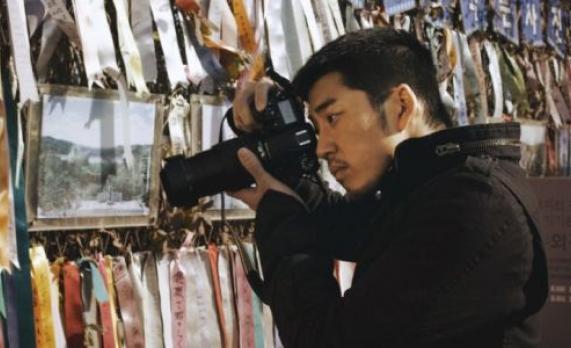
The formerly prolific Kim Ki-Duk has had trouble doing films lately. He's suffered from depression and a writer's block, that is all delved into in his latest film Arirang. But luckily Kim has shown signs of getting better, and now he has managed to script and produce another film that isn't about himself. Instead, is a action thriller about the conflict between North and South Korea and one smuggler between them.

The mute smuggler, known only by his cigarrette brand as Poongsan (Kye Sang Yoon), silently takes on jobs left on a note by grief-stricken families. He can bring anything and anyone across the borders of the two Koreas. While his reputation grows and grows, eventually he gets a job from a wealthy Southern businessman to bring back his Northern girlfriend In-ok (Guy-ri Kim). The job proves harder than usual, as the saucy woman proves to be more than a match to Poongsan's finely-tuned tactics. At the same time the South Korean police has set up a trap to catch Poongsan and to find out whether he comes from the North or the South. But also North Korean Agents have their eyes on Poongsan and sinister plans for him.

The fast-moving movie has a huge cast of characters and so many allegiances that it's difficult to keep track of all of them. The middle of the film in particular, is quite confusing. At the centre of the movie there is a triangular romance, that feels quite forced considered from any angle. But at least things aren't as black and white as they initially seem. Director Juhn Jaihong excels as an action director. The scenes of running through the border area are brisk, exciting and innovative, if not very realistic. Likewise, Juhn and Kim have also deviced some very twisted and nasty ideas for the film, which one can take chuckling. The whole ordeal is a kind of a modern western, if such a common comparison can be excused. The mute stranger playing two sides against each other for profit is the exact plot of A Fistful of Dollars. Poongsan is a sort of superhero, as he seems almost invunerable. He's a symbolic person, the spirit of the Korean soul that doesn't look whether you come from the nort or the south. The film deals with subjects that must be painful to the Koreans, but does it in an exciting, innovative way. The script could've used another polish, though.

★★★ 1/2

Attack the Block (Great Britain/France)
Director: Joe Cornish


A new generation of video-raised Brits have recently started to make more interesting genre pictures. With his debut, Joe Cornish goes to the same league with Neil Marshall, Edgar Wright and Ben Wheatley. Cornish's master idea was to combine a silly alien invasion idea with a coming-of-age tale of a hoodlum. A teen gang has to face responsibilities for the first time in their life to survive and protect their home block.

The story begins on New Year's eve as the gang led by Moses (John Boyega) mugs a nurse on her way home. While the gang's making their escape, a small furry alien attacks Moses. He decides to beat it to death as revenge. But this turns out to be a mistake, as bigger, nastier aliens soon start to appear and killing off people. They seem to have some beef with Moses and his past deeds. In the mids of all the fireworks they have come on Earth undetected and because of the block is seething with crime, few authorities want to check on it. One of the gang members gets injured and needs mediacal attention. Luckily at their home block the ruffians realize that the nurse they robbed is actually living as their neighbour. Sam (Jodie Whittaker) therefore has to choose whether to trust the hoodlums to survive or to try to make it on her own.

Attack the Block's biggest problem is that it's marketed as a comedy, but it really isn't all that funny. Little wannabe gangsters Probs and Mayhem do raise a few giggles, but Nick Frost as a lazy fat drug dealer feels mostly wasted (in the bad way). The film's aliens are cool, dark furry things with glow-in-the-dark teeth. When their mission is revealed, it seems plausible, and thus they would've fitted well with my recent list of best movie aliens. There is also the stretch that one has to symphatize with some nasty underage hoodlums to enjoy the film. But hey, the same is true with Akira. Like the anime classic, this is a little anarchistic and anti-authority, but also stretches the need to take responsibility of one's own actions.

★★★

Sons of Norway (Sønner av Norge, Norway)
Director: Jens Lien


Sons of Norway takes us back to the golden days of the late 1970's in the concrete suburbs of Oslo. The adolescent Nikolaj (Åsmund Høeg) is raised in a family of free-thinking radicals (in a word, hippies). Nothing is shunned upon, and his parents have an open mind toward everything. It all changes when Nikolaj's mother Lone (Sonja Richter) dies in a tragic accident. Living with just his grief-stricken widowed dad Magnus (Sven Nordin) is a real pain. So when Nikolaj gets his first teenaged needs to rebel, he needs to take it to the extreme. Luckily, punk rock and The Sex Pistols have just risen, so Nikolaj bases his life on their teachings. He gets a new punk look, acts rude toward authorities and starts his own garage band with his friends. But then Magnus decides he wants to party and join in the movement as well.

The film is certainly quite funny, as much comedy can be done on the expense of the 70's Nordic liberals. For instance, we are taken to a nudist camp, and Nikolaj gets to witness more sex than should be good for a boy too young to actually do it himself. As everything is looked through nostalgic lenses, rather than looking forward, the film isn't that punk in actuality. It pronounces the joy of life rather than nihilism. I should hate it then, but I don't. After all, there is a late cameo by Johnny Rotten himself. The film is quite episodic, which makes me feel it is based on a book or on actual events. It would benefit from having a stronger sense of the story rather than having just one set piece after another. But the father-son relationship is realized in a funny and never preachy way.

★★★

Inní: Sigur Rós (Iceland)
Director: Vincent Morrisset


I didn't know much about Iceland's gift to progedelic rock, Sigur Rós, before seeing this film. I feel like I still don't. It's a documentary film about the band, which utilizes a lot of concert footage, but also some interviews from the course of their career. But very few of them, in fact. Too bad, because they are easily the most interesting thing in the movie. Most of the time is spent on gigs, with the camera hugely close to the players and obscuring much. The film is black-and-white and grainy, allowing viewers either to interpret the film as they please or get nauseous. As for Sigur Rós's music, I feel it is quite nice to listen for a song or two, but I get annoyed by its slowness and lack of any hooks after 1,5 hours. If you're a fan, this is a must. Otherwise, I suggest to avoid this.

★★

Killing Bono (Ireland/Great Britain)
Director: Nick Hamm


Based on a memoir that every one that has ever talked about has described as "almost too weird to be true", Killing Bono tells the story of Bono's doppelgänger. The man in question is the Irish rocker Neil McCormick (Ben Barnes) who went to the same school as Bono, The Edge and friends way back when before they were famous as U2, in the late 70's. Neil's younger brother Ivan (Robert Sheehan) was in fact asked to be in the band lare named U2, but the jealous big brother never allowed for this to happen.

The film deals with the two brothers' struggling to have some sort of success with their own band, while U2 goes on to be the biggest band in the world. The McCormick ordeal features gangsters, record company executives, loose women and other deadly combinations of weird Irish people. Sex, drugs and rock and roll are all present, but don't feel glamorous but a little worn out and with a tiny hint of melancholic sadness within them. Neil makes a huge string of bad decisions and usually keeps them from Ivan. When Ivan finds out brotherly feuds so harsh follow even the Gallaghers would find them a little excessive. The ever-awesome Pete Postlethwaite makes his final appearance on the screen as the boys' gay landlord. The still-awesome Twitter superstar Peter Serafinowicz plays a sleazy and foul-mouthed record company owner. The film is quite funny, but more than anything, it made me interested in reading Neil McGormick's book. I'd like to find out just how much of it was made in the sake of cinematic storytelling and how much does McGormick claim is true.

★★★

Code Blue (Netherlands)
Director: Urszula Antoniak

 
Urszula Antoniak is known from her debut feature film Nothing Personal. Code Blue is similar in the slow pace and lack of dialogue. Antoniak trusts the images to tell the story. Another thing that is similar is that they both are stories about love and sexuality, but go across painful limits, making the stories all the more tragic. Code Blue is much more violent, almost sadistic in its outcome.

Nurse Marian (Bien de Moor) tends to appears to be emphatetic and good at her job, taking care of terminally ill and old patients. But she harbors more sinister feelings among herself. She's a loner and become more than a little twisted from being around death all the time. She also has voyeristic urges, and with binoculars witnesses a man in the next building doing violent acts to women. Rather than calling the authorities, she becomes fascinated and a bit aroused by this man. And the man also starts to spy on her. It is inevitable that these two shall meet.

Code Blue is slow to the point of coma. But nevertheless Antoniak is good at building pressures, which burst out at a few shocking scenes. Her film's protagonists are pretty rotten to the core, which makes the film feel a tad nihilistic. It's certainly arty, to the point when a lot of people won't stand the film. But I've got to say, once I got over my initial confusement, I kind of liked it.

★★★ 1/2

She Monkeys (Apflickorna, Sweden)
Director: Lisa Aschan


One of this autumn's biggest surprises comes from Sweden of all places. To be fair, it's no wonder I was t first dismissive of a film that was said to be like "a new Fucking Åmal". In actuality She Monkeys is a lot more. It shares it's slow, almost documentaristically still style with films like Play. In fact it works very well as a companion piece of that film. Whereas Play had some good ideas of how to present male adolescence, peer pressure and the spread of anti-immigrant views on cinema, She Monkeys delves on the development of female sexuality, unrequited love, mood swings and physicality.

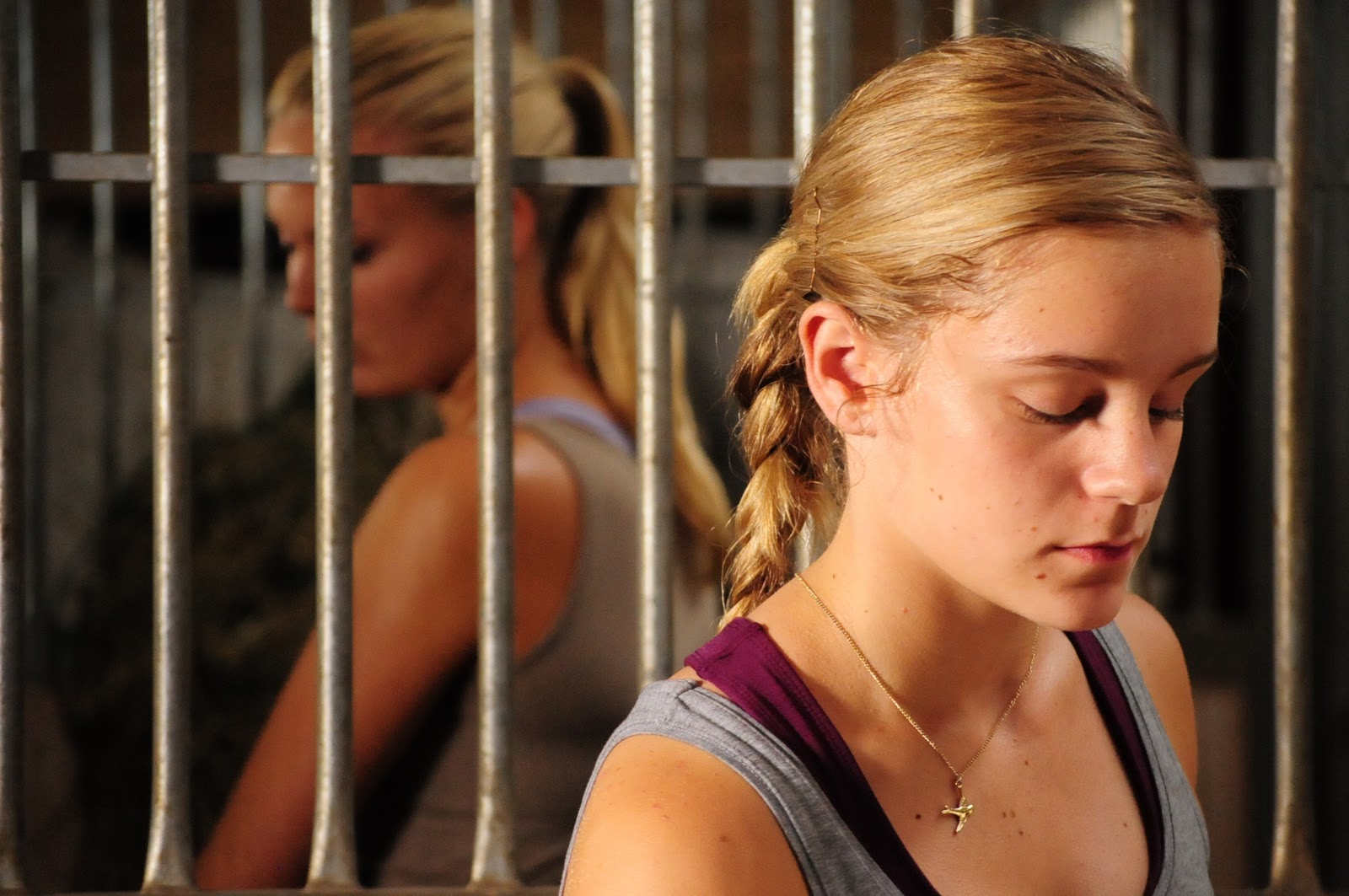
The teenaged Emma (Mathilda Paradeiser) is accepted to a school for circus acrobats. She soon makes friends with another schooler, Cassandra (Lena Molin). They soon become inseperable, doing everything together. But it soon turns out that one of the girls feels a lot stronger towards the other than the other does. Nevertheless, the scenario is allowed to go all through to its breaking point. Meanwhile, Emma's little sister Sara (Isabella Lindquist) gets her first taste of developing into an adult as a swim school instructor tells her mom that she needs a bikini top to swim there. Sara harbors a crush on her cousin Sebastian, and plans to woo her.

All information we viewers gain in the film is based on what Emma and Sara experience on screen. There's not a lot told about what's happening outside. It keeps the film fresh and pulls the rug out from under the viewer's feet a few times. She Monkeys isn't afraid to surprise or even shock. For a debut director, Lisa Aschan has astonishingly good sense of cropping the image and allowing us to read things on almost still faces. The film also has a strong sound design, with breathing and other small sounds turning out to be vital for the storytelling. The film is cut surprisingly short and when it ends, the viewer is left wanting for more. While all threads are tied in this film, maybe we're just left to wait what Aschan does next.

★★★★

In A Better World (Hævnen, Denmark)
Director: Susanne Bier


Susanne Bier's films are basically very good, but I somehow mostly see them as somewhat off-putting. I don't know what it is, certainly not the thematic darkness, since I'm used to that as a Scandinavian. Her films tend to have depressed people be miserable amid the Scandinavian welfare state. That's by no means a wholly unique theme in Scandinavian cinema. So is the case with Hævnen, which actually means Revenge. It has won multiple awards, including the Academy Award for Best Foreign Film at this year's Oscars.

Hævnen has several stories going on at once, but the central one concerns the budding friendship between Elias (Markus Nygaard), who is bullied at school and Christian (William Nielsen), who has a lot of personal problems as well. Both come from fractured families. Elias' parents are on the border of breaking up and his father Anton (Mikael Persbrandt) spends a lot of time abroad, at work at an African refugee camp. Christian has lost his mother to cancer and is having a hard time adjusting to life with his dad Claus (Ulrik Thomsen). Christian starts behaving aggressively, almost sociopathically, and he pulls Elias with him to his dangerous shenanigans.

Bier has a pretty good idea of male adolescence and what pulls boys to dangerous shenanigans. The actors are superb and are particularly well in scenes filled with melancholia and sorrow. Audio-visually, the film is also top notch. Yet I still feel as if the film is missing an edge or some other major spice. The whole thing feels like playing a bit too safe to create exactly the kind of film that Scandinavians appereciate. For one thing, I don't feel the scenes in African add too much to the story. They are interesting and all, but seem like they would better suit another kind of film. Perhaps it is Bier's way to show that the Nordic angst actually is nothing compared to the problems that a lot of other countries have to deal with every day. That would explain the English title, at least.

★★★ 1/2

Superclásico (Denmark/Argentine)
Director: Ole Christian Madsen


In a Better World was Denmark's representative at the Oscars last year. This year they've sent a more comedic film, which is actually still a very similar story at core. It's also about a dysfunctional family on the verge of breaking up that faces grievances, angst and sorrow. It is probably because of Lars von Trier's controversial Nazi statements that they wouldn't dare to send the much superior Melancholia. But while Superclásico is pretty predictable, there's loads of fun to be had with the film.

Christian (Anders W. Berthelsen) is a wine shop owner, that has been trying to cope with his wife Anna (Paprika Steen) leaving him. Anna is a football manager and has fallen in love with her protegé, the famed Argentinian soccer player Juan Diaz (Sebastián Estavanez). Anna needs Christian to sign the divorce papers so he can marry Juan. Christian decides to do that in person in Argentine to get one last chance of rescuing his and Anna's marriage. Their recluctant, laconic teenaged son Oscar (Jamie Morton) is taken along. On the trip the Nordic and fiery latino sensibilities clash, but the boys also get their own taste of passion form Argentine women.

Like it's name implies, Superclásico is a pretty basic story about a divorce. There's only a few small surprises along the way, but the film's real trick is to do the most worn-out elements so well as to make them seem fresh. First of all, the film is very well acted. Everyone from the main roles to small ones do a great job, have just the right comedic timing, and create multidimensional characters that feel very real in the context. Second is that the sunny Buenos Aires is shot with care, an eye for detail and, in a word, with love. It feels like one of the main characters of the film. We scarcely get postcard monuments, the film takes us more to tiny wine bars, carages and seedy hotels. So all in all, while there's nothing to write home about, it is a pleasant enough trip.

★★★

50/50 (USA)
Director: Jonathan Levine


An even more unlikely concept for a comedy than a painful divorce, is deadly cancer. But dark subjects are usually the most ripe for comedic treatment. The approach here is to do it as adorable as possible. So we have adorable Joseph Gordon-Levitt getting deadly cancer. Helping him are the adorable Anna Kedrick, Bryce Dallas Howard and Anjelica Huston. Perky pop and old classics are playing on the background. There's an adorable dog named Skeletor tilting his head at appropriate times. The film even features the adorable Philip Baker Hall as an adorable older cancer sufferer with a potty mouth and an appreciation of weed.

But anyway, the film is based on an (inspirational) true story. The 27-year-old Adam (Gordon-Levitt) finds out that he has back pains because he has a rare form of spinal cancer. He's given a 50/50 chance of making through it. So, naturally he also starts to go through what is important in his life. He comes to terms with his overly-worrying mother (Huston), and deals with his artist girlfriend (Howard) who has started to drift away. Along the way he meets new friends at cemotheraphy and strikes a friendship with his young therapist Katherine (Kendrick).

While 50/50 is quite symphatetic, it doesn't work that well as a comedy. Most of the fault lies in Seth Rogen's performance as the cancer-sufferer's best friend Kyle. Rogen's shtick is as tired as ever, and starting to really get on my nerves. Kyle is a generally unlikeable radio host that thinks about himself before others. He only talks about getting laid and smoking weed, and never, ever shuts up. And he's ever-present in many scenes that would do a lot better without him. I get that he's supposed to be a bit of an asshole, but still have a heart of gold. That's what friends sometimes are, particularly if you're in a tricky situation. I'd still like to avoid Rogen from now on, if he doesn't attempt to evolve one bit either as an actor or a comedian. But the film at least made me reflect on my own life.

★★ 1/2

LinkWithin

Related Posts Plugin for WordPress, Blogger...