Showing posts with label adventure. Show all posts

Wednesday, 2 December 2020

Love & Anarchy Advent Calendar


So, we had a Love & Anarchy Film Festival this year as well. I was taking it slow in covering it, but then I realized it was over two months ago. But perhaps by starting an Advent Calendar I can cover 24 movies that were seen at the festival. They had chosen a really good program, and kept the audience as safe as possible in these circumstances. Check back to this post on every day of December to catch up on reviews.

1. First Cow (USA, 2019)
Director: Kelly Reichardt


Kelly Reichardt is known for making slow, quiet and ponderous movies, so it's kind of a jump when the new one is basically a buddy comedy of two grifters in the Old West. It's the kind of western that follows on the footsteps of McCabe & Mrs Miller and the like, everything is grey, brown, dirty, flimsily built and wooden. There's no glory or romanticism involved, even if the framing story tells of a modern woman finding out about the history involved.

The movie is a good, multilayered depiction of the friendship between two underdogs, played by John Magaro and Orion Lee. It also has some critique of the American Dream and drive towards entrepreneurship, which proves impossible for even the skilled ones if enough odds are against them right from the start. That's why they have to resort to cheating, stealing milk from the prize cow to improve their cakes and thus bake sales. The film has a cold, unflinching look at nature, which is at the same time utterly ruthless and oddly comforting. we are all parts of the woods in the end.

★★★★

2. Wendy (USA, 2019)
Dir. Benh Zeitlin


The impressionistic director Benh Zeitlin with his crew has prepared his follow-up to Beasts of a Southern Wild for seven years. While that one saw wonder and childlike amazement in poor and devastated Southeast terriories, this one takes a jump toward even more fantastic storytelling. It's a reworking of the story of Peter Pan.

The film is again visually stunning, and the locations in the Pacific Islands with an active volcano are nothing short of breathtaking. This time around, Zeitling guides a larger cast of child actors, none of which are as strong to carry a movie as Quvenzhané Wallis was. It also seems that the long production period and kids growing up so fast has made it necessary to tell the story fragmented and disjointed. It may be argued that its due to the logic following children's playtimes, but it makes for a tedious thing to follow. There are some kind of cool reworkings of the Pan story set to a more modern backdrop, but some are basically terrible. Mostly anything to do with Captain Hook and his pirates. Beasts of a Southern Wild was not without its problems, but it had a more clear purpose, now it seems it's a bit too childish and dumbed down for adults and not exciting enough for kids, satisfying no one.

★★

3. Lost Boys (Finland/Thailand 2020)
Dirs. Joonas Neuvonen, Sadri Cetinkaya


The documentary film Reindeerspotting made waves a decade ago, and also became a big hit in Finland. The movie depicted a group of drug addicts from Lapland in their daily lives, fighting against their urges, boredom, and the system. From the profits of the film, the real-life buddy group got enough money to fly to Thailand for the winter. After a few months of pure hedonism, sex, drugs and all other vices, only the film's director Joonas Neuvonen returned home. Soon after, one of the group was missing and the first film's main character Jani was found dead in shady circumstances.

The sequel film is of Neuvonen's attempts to recollect, what went wrong and to try to find out what exactly happened to his friends. The material he had for this film were fragmented, some in pooor quality. The reason the film took a decade was that it needed multiple screenwriters, editors and even co-directors to make sense of all this. Considering this, the resulting film is a wonder, a docufiction that is both a horrifying psychedelic nightmare in the vein of Gaspar Noé and Nicolas Winding Refn. On the other hand, it is also a sad look at the dead end facing the first film's characters. They might get some fleeting moments of happiness late in their lives, but it's all a illusion and the ground is approaching fast. This time around, Neuvonen puts himself more to under the magnifying glass, emphasizes his own bad feelings about the case and maybe his own fractured psyche.

★★★★

4. Radioactive (UK, Hungary, China, France, USA 2019)
Dir. Marjane Satrapi


The author of Persepolis, Marjane Satrapi, hasn't had the most successful career as a film director. His previous film, Voices, flopped in the Stateside, so she has had to resort to having an easy-to-sell biography project made with funding from around the world as her next project. The film tells the life story of chemist Marie Curie, discoverer of Radioactive elements. As it is, Radioactive has many moments of visual intrigue and good acting, but it can't avoid all the major pratfalls of the biography genre.

Rosamund Pike carries the film as headstrong Curie. As Satrapi tends to do with her comics work, she also intercuts the story with asides that show consequences of the discoveries, both good (radiation treatments) and bad (the Chernobyl accident). Those asides however reveal the film's limited budget, even if it's stretched admirably to fit these parts. The major problem is, however, that like most scientists, the life story by itself isn't really that captivating, and showing of all the various awards and stuff seems like reading from a Wikipedia page. The center is the relationship between Marie and Pierre (Sam Riley), but it lacks tension since Pierre is doing his best to share credits and help Marie as much as he can. The adventures in World War I with her daughter, shrugged off in the film's last 20 minutes, would have been more interesting to follow than focusing on the early parts.

★★

5. Nomadland (USA, Germany 2020)
Dir. Chloé Zhao


Director Zhao once again finds a way to make a western that's relevant to the themes for today. And she does it with a docufiction style, having plenty of people with the nomad lifestyle essentially play themselves. It's a touching film about the inability to find one's place in the world, but for once, not through the eyes of a teen or a young adult, but an actual adult, magnificently portrayed by Frances McDormand.

McDormand's Fern is tossed out after the closure of a major factory and an entire town's livelyhood. She does meaningless part-time work for Amazon and lives in her trailer, traveling the Great Plains of USA.  On her way, she tries developing relationships, but everything seems fleeting and avoid her grasp. The film has an anti-capitalist sting, but I feel the film could have had more brutally honest things to say about Amazon's worker practices, which were only alluded to here. It may be due to the realities of releasing such a melancholic film for adults, one can't rule out Amazon by biting the hand that may feed you. It's a shame Zhao herself seems to accept the odd job here and there, since she's moving on to the MCU. I think certain rising talents could produce incredible movies elsewhere, whereas with Marvel they'll probably do something reasonably entertaining but forgettable. But that's late-stage capitalism for you. It maximises profits, not art.

★★★★ 1/2

6. Dogs Don't Wear Pants (Koirat eivät käytä housuja, Finland, Latvia 2019)
Dir. J-P Valkeapää


I had actually seen this last year in festival screenings, but since then this movie has become a bit notorious abroad, so it warrants a mention. It's a sort of dark comedy of a man (Pekka Streng) struggling with grief finding a new lease in life with kinky sex and especially with a blossoming relationship with a dominatrix (Krista Kosonen).

Valkeapää is perhaps the most gifted visualist of the new generation of Finnish filmmakers. Here he has some shades of neon noir or the films of the likes of Noé and Friedkin, but manages to do something unique and undoubtedly his. It's a considerable step up of his previous work that had clearer pastiches. It's not as rough and kinky as one might expect, but it's also no surprise that some things get taken a bit far. The key of the movie is in its central triangle drama of sorts with a father being drawn into a sexy underworld, but his daughter also needing him in her struggles.

★★★★

7. My Octopus Teacher (South Africa 2020)
Dirs. Pippa Ehrlich, James Reed

Filmmaker Craig Forster recalls an unusual encounter with an octopus in an underwater kelp forest. Octopi are as intelligent as house cats, so the fil m goes out its way to show how they too can act as personally, gracefully and smartly as any pet, with footage to support it. I'm usually wary of films that make of animal behaviour to be to human-like, and there are some interpretations here that near the line. As it is however, is a reminder that we have incredible species around the world that have their own emotions, and we just can't go on destroying the landscapes in which they live in.  

★★★

Monday, 30 November 2020

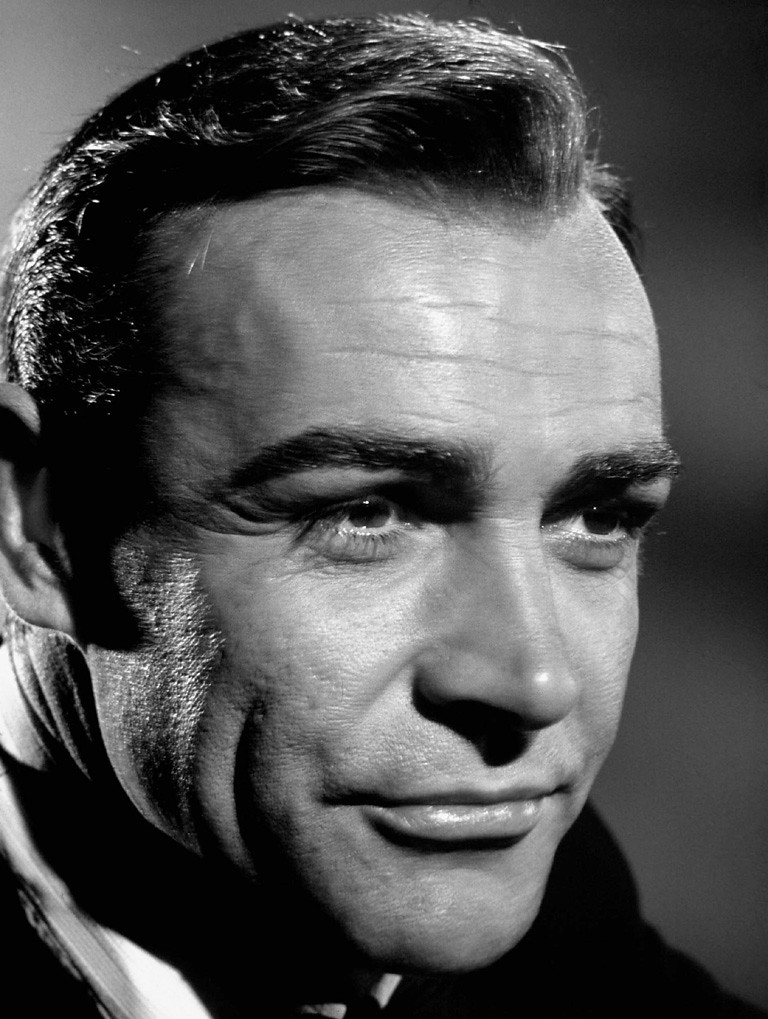
Sean Connery in Memoriam


Cinema lost another giant this year as the legendary Highlander Sean Connery himself passed away aged 90 in the Bahamas. Now, he might have had some very regressive personal ideas that have been repeated ad nauseum by leftists. But one can't claim that he wasn't a mesmerizing screen star, and also (his constant Scottish accent and lisping s's notwithstanding), quite a great actor as well. This post takes a look at some of his best performances.

From Russia with Love (UK, 1963)
Dir. Terence Young


There are many ways of approaching the Bond series, but it is also interesting to watch the earliest entries where everything was not that set in stone. While Dr. No already had a version of the basic formula, the first sequel in the series took a different path, having a more real world espionage-based and dark sequel. As it is one of the more serious entries in the franchise, I find it also surprisingly underrated.

It's still a Bond film, so there's plenty of ludicrousness. The entire film begins with a scene where Bond is seemingly killed, but it turns out it's just some guy wearing a rubber mask (for some reason) in Red Grant's (Robert Shaw) training exercise. Grant's dark reflection of Bond is one of the reasons people remember this film so fondly, but it has some other good characterizations as well, from the double-agent Tatiana Romanova (Daniela Bianchi) to the actual main villain Rosa Klebb (Lotte Lenya), who never even meets Bond face-to-face. 

But Red Grant does, in perhaps the best fight scene of the entire series.
 

Before Daniel Craig came along, Connery was the only actor who managed to get a sense of danger out of the Bond movies. He is constantly in over his head, but his cocky nature and luck also make him come out on top of any situation. Bond is probably the worst secret agent possible, but it just adds to the allure of the character. Espionage is well below his radar after women and boozing.

★★★★

Marnie (USA, 1964)
Dir. Alfred Hitchcock


Late-era Hitchcock films aren't also quite as well-known, and it may seem even surprising that Connery starred in a Hitch movie. Marnie is a exploration of trauma and lies and their effects on a relationship. It also has a Psycho-like table-turn, in which we at first follow Marnie (Tippi Hedren) as she cheats, swindles and steals money from each of her employers. When she gets caught by Connery's Mark Rutland, he takes it upon himself to get to the bottom of her personality flaws and functions.


As it was already the 60's, Hitch could have more graphic sex and violence than used to in his films. Connery is more of a hands-on actor than Jimmy Stewart or Cary Grant who had problems with their masculinity in Hitch's movies. The central character of Marnie, however, is way too half-baked, a damsel in distress with little agenda of her own. Hitchcock has interesting scenes play out her panic attacks, but is seems he could have grounded the end reveals a bit more with the role of Marnie's mother being almost nonexistant beforehand. I think the film showcases a little too clearly Hitchcock's problems with women, and as a result, it's a good try to have a multilayered psychological thriller, but times had already passed such a chauvinistic view of things. It's not among the best of it's director's standards.

★★★

The Offence (USA, 1973)
Dir. Sidney Lumet


Connery made four films in total with Lumet, and as directed by a veteran who leaned heavy on good scripts and getting the best out of his actors, he also made some of the best work in his career. Here he plays a British policeman driven evenly more desperate as a child-murderer's case lingers on.


I'd say the bleak outlook on a 20-year police procedure has probably been a major influence on Bong Joon-ho's Memories of Murder. Lumet, however directs this mostly like a stage play, with minimalist interrogation rooms and very dialogue-heavy scenes. Lumet is interested in a breaking psyche, and the growing desperation that brings a seemingly good police to do atrocious deeds. It covers similar themes than a lot of showier films which is probably why this small-scale movie has had such relatively light attention.

Connery's role, however, is yet another character that takes out his inner anger and frustrations on women, in this case his long-suffering wife. Well, he has violent tendencies towards suspects as well, so he's not entirely likable by any means, but still, one has to wonder why so many of his characters share this woman-beating tendencies.

★★★ 1/2

The Wind and the Lion (USA, 1975)
Dir. John Milius


Milius found a good historical epic with which to tell a story about one of his greatest heroes, Theodore Roosevelt. It wasn't his last Roosevelt film, and Ol' Teddy is restricted here to a quite brief supporting role, though he is the Wind in the title. The Lion, then is Connery's Raisuli, a Berber prince out for glory. At that point it wasn't considered problematic to have Scots portray Arabs. Rather, he is used here to be a world-class lover and a fighter, in the same vein as Rudolph Valentino


There's planty of action scenes equal to Milius's later Conan the Barbarian, and a Stockholm sydromish romance with Candace Bergen's reporter, who finds that there's more to the Berber lifestyle than meets the eye at first. Meanwhile, Teddy (Brian Keith) faces pressures on his foreign policy back home, but meets them with his personal philosophies, which isn't nearly as interesting. The seperate stories don't quite click together and the ending is quite underwhelming. nevertheless, it is an enjoyable film to watch since Connery's and Milius's approaches to tell manly men tales are tangentially similar.

★★★

The Rock (USA, 1996)
Dir. Michael Bay


Finally, among the last really entertaining romps Connery made, and also the movie was more or less to blame for many of Connery's late-era woes. The Rock's stunt casting sees him play pretty much a James Bond type that has been kept in a prison cell for 30 years. He's a quippy man of action, but at the same time a mentor too. That the aged Connery happend to fit into a thoroughly modern action movie so well gave the wrong imprsiion to other filmmakers who attempted similar approaches, the bottom of the barrel being 2003's LXG which made Connery quit acting altogether.


You can find plenty to blame in Michael Bay's approach. Connery seems to enjoy to play a character that sees things to be as black-and-white as they were in the 1960's, which extends also on his sex politics. He also seemingly kills or maims a lot of innocent people in a very tacked-on car chase, that's nevertheless a great showcase of Bay's strengths as an action director. By contrast, Nicolas Cage's weirdo, modern action man and Ed Harris's noble main baddie are more nuanced characters, but Connery holds his own against these two great performances. Bay has only regressive things to say, but that's only if you try to search anything meaningful in his cavalcade of outrageous plot turns and huge explosions. As a 90's romp, it's still great fun, and perhaps should have been Connery's actual retirement film so he could have gone out on top.

★★★★

Wednesday, 7 October 2020

Three laughs: Gamera vs. Guiron

 
It is hard to rate some trashy films. Films can be really good entertainment in spite of the quality of the filmmaking. In fact, it might be even harder to create unique trash that keeps surprising you than most "quality" films with which you know what you are going to get. It certainly is an even better pleasure to watch them. My friend says that he knows a trash film is worth something if it gets three laughs out of me. I mean proper, good belly laughs when you just can't believe what the film is showing to you, scene after scene. That's as good a rating as any for these movies. Any film that has these three laughs has a special place in my heart.  

★ or ★★★★★


Three laughs case file #39:
Gamera vs. Guiron (Gamera tai daiakuju Giron Japan, 1969)
Director: Noriyaki Yuasa

Compared to the more famous and glamorous Godzilla, Daei Studios' space turtle Gamera was an also-ran. Still, he has plenty of fans that swear on his name. The kaiju adventures were aimed more to smaller children, and thus Gamera also has a easily sung theme song and usually Earth children to protect from pesky aliens bent on conquering the world. 

The thing that makes Gamera movies so intriguing is that even though they clearly have budgetary restrictions and are basically kids' movies, they still up the ante on gore and brutality. Sure, Gamera bleeds green blood, but it still burtsts out of him when he faces the knife-headed fiend Guiron. The film was the fifth entry into the series.

Two small boys find a flying saucer and decide to take a trip in it. They are taken to a strange planet where an alien base is being protected by the nasty giant monster Guiron. Two sexy alien ladies reveal their plan is to get information from the kids' brains in order to take over the Earth. So, it's up to Gamera (established at this point to be a friend to children and a protector of our world) to defeat Guiron and save the children.


Three laughs (SPOILERS):

1. The amount of non-chalantness the main characters display here is something quite amazing by itself. Seeing a spaceship from a telescope? Wow! Finding the flying saucer out in the open? Wow! Taking off in to space? Wow! Seeing a giant turtle being propulsed by jet beams crushing asteroids from your way? Better sing the Gamera theme song. The creature effects are somehow super funny, all the monsters look to be either drunk or extremely hungover.

2. In order to establish the threat of Guiron, the filmmakers go to the obvious route: have it defeat a character that used to be a strong opponent for Gamera himself. In this case it's the pterodactyl-like Gyaos. Gyaos tries to shoot Guiron with a laser beam, but it reflects on his knife-head and shoots Gyaos's leg clean off. The fight ends with Guiron chopping Gyaos into neat purple slices.

3. The thing that's funny about the creature effects is how there are noticeable seams from guys in suit to animatronics to smaller-scale models. The final fight begins with Gamera lying unconscious on an ocean floor. What makes him wake up is a boulder dropping and hitting him in the jaw. The spinach to Popeye is getting hit to Gamera. As he rises he's also showing off his gymkata skills by spinning around and around a chinning bar. It doesn't do much good against Guiron, but at least it startles it for a bit, probably? In the end Guiron's limbs are blown off with a missile. JUSTICE FOR GYAOS!

Friday, 7 August 2020

H is for Hill and Spencer


Some people love 'em, some loathe 'em. But there's no denying the films of Terence Hill and Bud Spencer aren't some of the most essential if one wants to understand Italian Genre Cinema. For one, their punching-and-burping brand of humour brought down the spaghetti western. In some ways the overly cynical subgenre was a parody in itself, but after these guys were done with it, it was impossible to take seriously any more.

So let's take a look at the work done by them in the spaghetti western play field. Hill in particular was used quite a lot as a cowboy, as you might remember. As this post takes its H from his name, it shall focus more on his work, though Spencer was also alnong for the ride in most cases.

The Colizzi Trilogy 
(Director: Giuseppe Colizzi)

God Forgives, I don't
(Dio perdona... Io no!, Italy/Spain 1967)


The first starring role of the Hill/Spencer duo. At this point their mishaps were still a bit more violent and cynical than later on, reminiscent of the rivalry of Blondie and Tuco in The Good, The Bad and the Ugly. Colizzi's tongue in cheek approach was to create a sort of animal fable in the west, with Hill and Spencer taking attributes of a cat and a dog, respectively, and the main villain played by Frank Wolff being, of course, a wolf. Or maybe a cunning fox.

The film's plotting is divided into several viewpoints, but the core is that two buddies with a dangerous bandit on their tails, are traveling across the west to find loot that has gone from person to person after a train robbery. As it's a study of power dynamics, cheating to win, gambling and poker are also very important aspects of the film.  

 
This was the point still when spaghetti westerns were racing to have ever more epic scopes and bigger action scenes. As a spectacle, the movie also delivers, even though the wandering across deserts takes a bit too much of the running time. The film is explodable and at times even brutal, which makes for an odd cocktail with all the animal-based slapstick, but it holds together surprisingly well.

★★★ 1/2

Ace High
(I quattro dell'Ave Maria, Italy 1968)


This film starts off straight from where the last one left off. The two buddies are wandering across the desert, with their loot packed in. But things get complicated when they meet up with a bandit (Eli Wallach) who has survived from a hanging, and starts to swindle them out of their earnings and perhaps enlist them to help him get revenge.

It's the longest and limpest part of the trilogy, that allows Wallch's Leone-tested maneurs and charisma to drive the film rather than more intricate plotting, humour or character dynamics. But . this time around the film's balancing of epic action, cynical brutality and comedy doesn't fit together as well, leaving a taste a bit too dry.

Once again there's a long heist sequence, here saved toward the end of the film, that shines as the best part of the movie.

★★ 1/2

Boot Hill
(La collina degli stivali, Italy 1969)


As the trilogy closes, the film explores more themses such as aging and settling down. Hill's scoundrel has a new get-rich plane, but he has to try to convince Spencer who has settled as a gold-digger with a new partner, to join him and a grizzled gun-fighter (Woody Strode) to battle a bandit (George Eastman) who has taken over an entire town.

At this point the comedy aspects are starting to take hold, and there are more jokes here than in the previous two films. The film's major plot concerns a traveling circus that is used as a Trojan Horse in order to gain access to the closed city. But the film works mostly as a cavalcade of nice stunts and gun-fights, it doesn't have the well-thought out plotting and character work of the first film in trilogy.

The circus acts foreshadow the reliance of slapstic and acrobatics in lieu of gunfire later on, but in here the bodies still pile up and people get a proper lead poisoning.

★★★

They Call Me Trinity
(Lo chiamavano Trinita..., Italy 1971)
Director: Enzo Barboni (E.B. Clucher)


This was a turning point for the spaghetti western genre and a major box-office hit. I would think audiences were getting tired of the over-the-top cynicism on offer in so many spaghetti westerns (that were done in just an 8-year stretch of time. The intended audience for this one were born around the same time as the whole sub-genre.

The plot concerns the lazy bounty hunter Trinity meet up with his brother Bambino who has escaped the law in plain sight and become a sherriff for a small town. A rich dandy hires a group of Mexican thugs to create trouble, which threatens to hit also the small religious community out on the prerie, trying to build their own town. Trinity and Bambino, who walk on a morally grey line, must decide who they want to help build the west.


As a film, Trinity is overlong and uneven. The best secenes see Trinity and Bambino bickering, but neither is much fun by themselves. Barboni's greatest invention was to replace the final gundown with a beat-em-up free-for-all. This has since been topped in many ways and many times.

★★ 1/2

A Man From the East 
(E poi lo chiamarono il magnifico, Italy/France 1972)
Director: Enzo Barboni


Hill is playing solo here, as a New York dandy who gets an inheritance. It turns out to be not that much in money, but more in cameraderieship with a gang of rootin'-tootin' frontier men. They are in turn tasked to grow the young greenhorn into a real man. On the way, Hill also falls in love with a beautiful young lady (Yanti Somer).

So it's more or less a romantic comedy that's only set in the old west. Even though the films with Spencer weren't exactly that raunchy, this one has even less edges than them. The most memorable things regarding this film are a quite good barroom brawl scene, and a nice scenery-chewing turn of the film's villain, gunslinger Morton Clayton (Ricardo Pizzutti). Most of the actors playing Hill's gang members do their best to even out the buddy-comedy partnership, but none of them can really hold a candle to Spencer's irritability and Obelix-level imperviousness to any physical harm. 

★★

My Name is Nobody
(Il mio nome è Nessuno, Italy/France/West Germany 1973)
Director: Tonino Valerii


Sergio Leone himself executive produced another spaghetti vehicle to his favorite star, Henry Fonda, and also secretly co-directed several scenes in the film. It turns out he preferred to do the more comedic parts of the film. Most of the film's more stylized scenes were done by the dependably talented director Tonino Valerii.


Hill plays a wild west weirdo who happens upon an old gunslinger Jack Beauregard (Fonda) who thinks of peaceful retirement. Much as the Italians had done in real life, he decides to stage a final showdown so that legends might be written in his name. In doing so, he messes up with some powerful enemies, and soon Beauregard and Nobody are facing the men of the Wild Bunch alone.

Fonda being more of a straight man requires Hill to play his basic character shtick even more unhinged (and annoying) than usual. The film has its share of cool setpieces, including a comicbooky Funhouse shootout. But the movie also had the bad luck to come out the same year than Mel Brooks' Blazing Saddles, which had plenty of more insightful ideas on comedically deconstructing the westerns. But it's still one of the better films Hill ever did, and Ennio Morricone's theme song is an ear-worm for the ages.

★★★ 1/2

Thursday, 30 July 2020

Three laughs: Ninja III The Domination


It is hard to rate some trashy films. Films can be really good entertainment in spite of the quality of the filmmaking. In fact, it might be even harder to create unique trash that keeps surprising you than most "quality" films with which you know what you are going to get. It certainly is an even better pleasure to watch them. My friend says that he knows a trash film is worth something if it gets three laughs out of me. I mean proper, good belly laughs when you just can't believe what the film is showing to you, scene after scene. That's as good a rating as any for these movies. Any film that has these three laughs has a special place in my heart.  

★ or ★★★★★


Three laughs case file #30: Ninja III: The Domination
(USA, 1984)
Director: Sam Firstenberg

It's kind of odd that I've not yet featured any Cannon Group films in this column. Perhaps I've gone on even cheaper thrills than the relatively cheap but still Hollywood productions of the company started by Menahem Golan and Yoram Globus. The main idea of Cannon was to populistically grab onto any trend that might attract customers of the 1980's film landscape. Enter the Ninja.

As the world started to open up in the 80s, ninjas were some of the exotic thrills provided by foreign countries that managed to work wonders within the action movies. They made for good enemies for any action hero, but there was a sense of mysticism and magic in them that they could also carry entire movies as protagonists. Shô Kosugi was one of these crossover stars that first started as a villain yet grew into a surprisingly popular leading man.

As Cannon's Ninja trilogy goes, I've covered the Franco Nero -starring first part here before. While I might prefer the second one, Revenge of the Ninja, it is a close call and there's a lot more cult movie vibe in the third one, titled The Domination. For as Golan and Globus wanted to capture trends, it is not just a ninja picture, but rips off other popular films of the time, such as Poltergeist and Flashdance.

Yes, the story is of a female aerobics instructor that gets possessed by the spirit of a vengeful ninja, and must strike to kill at nights. She needs the help of Kosugi's wise old ninja master in order to defeat the evil. The film could have been a star-making turn for Lucinda Dickey, and the idea of a female lead in a ninja action movie is kind of progressive. It's too bad she can't be a fighter by her own right but has to be possessed in order to be able to take men on. The way to go about it is nothing short of crazy, so we might gawp and gather the highlights into a text such as this.


Three laughs (SPOILERS):

1. The movie has one of my favorite opening action scenes of any action movie ever. It's the best action scene of the movie, so it's a bit of a letdown that the rest of the movie can't hold up to that one. After a short intro of a man visiting an ominous ancient temple, a black ninja (David Chung) appears on a golf course to an entourage of polo-shirted white guys. He enrages them by squeezing golf balls into powder. He proceeds to hack and slash them to death which starts out a non-stop 10 minutes of pure action I won't go beat-by-beat here. Suffice to say the ninja lifts a running golf cart and stops such a hard hit from a golf club with his hand, the bar bends around it.

2. Soon after rich guys are offed, the action moves to cops pursuing the ninja. He lifts a ride from a helicopter and kills the cops within it, making the helicopter explode. Just as you think the scene is over as the ninja is hiding in a pond, breathing through a reed, he gets discovered and blows some poison darts to a cop through the reed and starts killing cops once again. Talk about making bacon on a beach.

3. I have to talk about the other side of the film, which sees Dickey's character be escorted by a cop (Jordan Bennett) since she is eyewitness of the Black Ninja's crimes. She ends up seducing him in an amazingly 80's apartement with arcade cabinets, neon lights and Duran Duran albums. Like a scene from The Naked Gun, she takes a can of tomato juice out of somewhere and pours some on her neck. Is this bizarre idea supposed to be sensual?

Saturday, 25 July 2020

Three laughs: Killer Elephants


It is hard to rate some trashy films. Films can be really good entertainment in spite of the quality of the filmmaking. In fact, it might be even harder to create unique trash that keeps surprising you than most "quality" films with which you know what you are going to get. It certainly is an even better pleasure to watch them. My friend says that he knows a trash film is worth something if it gets three laughs out of me. I mean proper, good belly laughs when you just can't believe what the film is showing to you, scene after scene. That's as good a rating as any for these movies. Any film that has these three laughs has a special place in my heart. 

★ or ★★★★★


Three laughs case file #29:
Killer Elephants a.k.a. Rumbling the Elephant (Thailand, 1976)
Director: Kom Akkadej

Low-budget action movies, particularly fromn foreign countries area n interesting pool to dive into, since they come from a place of having to  try harder to entertain the audience than their big-budgeted bretheren. That's why every once in a while something emerges that delivers outrageous action and no filler throughout their run-time.

Case in point is Killer Elephants, a Thai movie starring the local film star Sombat Metanee. It may not have the outstanding martial arts action that many Thai films since the 2000s have boasted, but it makes up for them in big stunts, big elephants and a big heart. It's basically a western film with a ruthless criminal gang terrorizing a small town, until a mysterious stranger comes to put them in line. Using a lot of violence and a group of elephants, of course.


Three laughs (SPOILERS):

1. One thing I love most about these sort of exotic thriller movies is the way their action really looks dangerous. It might have been a horror to make, but the explosions are much more satisfying when it doesn't seem they have been made in a supervised and sterilized environment with professional stuntmen. This film doesn't really waste time, and the very opening scene is of a car chase through a jungle road with bad guys dropping oil drumson the road from a pick-up truck, and then shoot at them to explode the car of the pursuing hero.

2. Although the film offers plenty of old-school action thrills with car stunts and explosions, the money shot is of course the elephants and their use in these scenes. Luckily, it doesn't seem like elpehants have been put to any real danger in making the film, rather it seems they enjoy being able to wreck shit up. The first such scene comes early on as  the police comes to confront the villainous Elephant Gang on a bridge. The baddies don't take no shit from the pigs, and command their steeds to throw police cars into the river.

3. Mostly the elephants don't kill anyone though, they are mostly used to scare people and perhaps demolish a village. I have to highlight one comedic scene, though, where a defeated little runt tries to cheese off. A bull elephant has surrounded him, and he klonks his head on its dong. Childish? Maybe yes, but you won't get anything like that on any other movie.

Monday, 15 June 2020

Three laughs: The Champions of Justice

 
It is hard to rate some trashy films. Films can be really good entertainment in spite of the quality of the filmmaking. In fact, it might be even harder to create unique trash that keeps surprising you than most "quality" films with which you know what you are going to get. It certainly is an even better pleasure to watch them. My friend says that he knows a trash film is worth something if it gets three laughs out of me. I mean proper, good belly laughs when you just can't believe what the film is showing to you, scene after scene. That's as good a rating as any for these movies. Any film that has these three laughs has a special place in my heart.  


Three laughs case file #26:
Los campeones justicieros (The Champions of Justice), Mexico 1971
Director: Federico Curiel

Mexican cinema is filled with luchadore pictures, featuring the exploits of popular masked wrestlers who are something akin to superheroes in the country. The most famous of these is of course Santo, who was popular enough to also star in ripoffs such as 3 Dev Adam. Also in his official films, Santo fought against monsters, vampires and mummies and such.

My favorite film of this subgenre features Santo's sometimes-sidekick Blue Demon, as well as four other colorful luchas. It's a sort of Avengers film to see all these guys together, with the attitude straight outta Da 5 Bloods. The coolest wrestler to my mind is Mil Mascaras (Thousand Masks), who keeps switching his mask, having a neat trick with which to change his mask on the fly without revealing his face. It would be akin to Judge Dredd removing his helmet. Needless to say, he has a specific mask with each task he's doing.

The film's plotting is corny and comicbooky, but also meant to be as such. The costumes are colorful and garish. It has a similar style of both riffing and embracing the pop art stylings of its day as the Adam West Batman show. Most of the film has the luchas relax somewhere, like on a beach or a picnic, which gets interrupted by the sudden appearance of evil midget wrestlers, and a fight ensues while some improvised jazz plays on the soundtrack. It is to me, a sort of perfect breezy summer movie.
 
★ or ★★★★★


Three laughs (SPOILERS):

1. The opening scene of the film just oozes coolness as our heroes drive motorcycles through nightly scenes as the cool jazz score plays. Each one gets a close-up and their name so as we know who they are on the first scene that is a wrestling match against Los Hermanos Muertes.

2. The film's villains soon appear themselves, too. They are some little people dressed in red devil outfits, armed with machine guns. They shoot the referee of the match from the rafters and then escape through the roof with a handy rope heading to their getaway car.

3. Of course, these dwarves haven't come about naturally, but they are a creation of a vengeful mad scientist. He has a machine that creates these little fellows, after which they show off their judo throws on the professor's hypnotized henchman, Demon Mask. The uruk-hai sure didn't get as good a programming and a training session to boot.

Sunday, 24 May 2020

Three laughs: The Devil's Sword


It is hard to rate some trashy films. Films can be really good entertainment in spite of the quality of the filmmaking. In fact, it might be even harder to create unique trash that keeps surprising you than most "quality" films with which you know what you are going to get. It certainly is an even better pleasure to watch them. My friend says that he knows a trash film is worth something if it gets three laughs out of me. I mean proper, good belly laughs when you just can't believe what the film is showing to you, scene after scene. That's as good a rating as any for these movies. Any film that has these three laughs has a special place in my heart.


Three laughs case file #24: 
The Devil’s Sword (Golok Setan) Indonesia, 1984
Director: Ratno Timoer

It is a particular pleasure of seeing genre films from far-off countries, since they often innovate and blend western action movie basics with more exotic sensibilities. Though it utilizes some Indonesian folklore, The Devil's Sword is actually a comic book adaptation. But one does not have to read some obscure Indonesian comics or need to know anything of the island nation's complex history to enjoy the movie. It is gleefully violent, logically dim, constantly surprising and often totally bonkers.

If Indonesian movies would have a big film star, then Barry Prima would be it, known from this and another film called The Warrior. Basically, he is Liu Kang from the Mortal Kombat games, a guy who sort of looks and acts like Bruce Lee, but has a bandana, and has been enhanced with some outlandish magic abilities. Here he plays Mandala, a mythical warrior that has to avenge the death of his master to the evil powers allied with the sinister Crocodile Queen.

At the same time his rival, the rogue Banyuaga (Advent Bangun) is after the legendary Devil's Sword that would give unmitigated power to its wielder. He is after the power for himself, but is seduced by the Crocodile Queen and thrown to do her bidding. The film's cast of character and basic structure seems to be a bit indebted to Star Wars, or perhaps it is just that it also follows Joseph Campbell's basic formulas. Nevertheless, there are plenty of amusing side characters to be met along the way.


Three laughs (SPOILERS):

1. Even the first major fight is a corker, where Banyuaga and his men distrupt a wedding to kidnap the fiancee of a local prince. Mandala happens upon the fight, arrives on a flying boulder and starts kicking ass. He is not above hitting people's heads off, or punching them so hard they float off to treetops, after which they are impaled by a spear. Crocodile Men pop out of the ground and Mandala is not at all miffed, quipping "Oh, Crocodile Men". The fight choreography here is surprisingly inventive, with a scene with a wooden table proving to be particularly noteworthy.

2. We're introduced to the Crocodile Queen when we see her select a mate for herself. She has hypnotic gestures that make shirtless young men stand up as she slithers around them. When she takes her pick, it enrages one would-be suitor, that attacks Banyuaga. But the attacker is defeated with a quick punch and thrown to a cage where apparently the Crocodile Cult keeps their prisoners in hunger. The poor guy is soon ripped into pieces. Banyuaga's reward is sex on a circulating bed in a giant chalice of fire.

3. It is not quite clear, if the crocodile cultists are supposed to be half-crocodile mutants or just people with elaborate croc costumes on. Nevertheless, the film's showstopper is Mandala's fight on the raft with crocodile men rising from the river. Dudes have to swim in theircostumes to get a shot at Mandala, who swings his big-ass sword and decapitates them all. He is also shown to have some magic powers as he shoots friggin' laser beams from his hands. Toastyyyy.

LinkWithin

Related Posts Plugin for WordPress, Blogger...