Showing posts with label epic. Show all posts

Monday, 30 November 2020

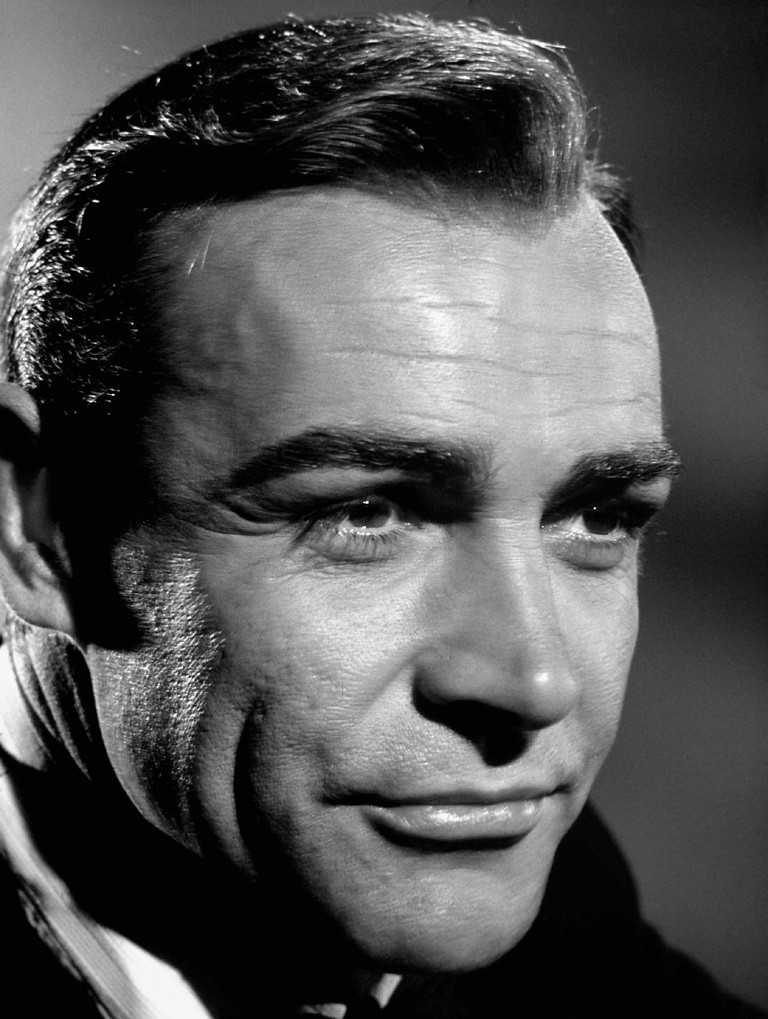
Sean Connery in Memoriam


Cinema lost another giant this year as the legendary Highlander Sean Connery himself passed away aged 90 in the Bahamas. Now, he might have had some very regressive personal ideas that have been repeated ad nauseum by leftists. But one can't claim that he wasn't a mesmerizing screen star, and also (his constant Scottish accent and lisping s's notwithstanding), quite a great actor as well. This post takes a look at some of his best performances.

From Russia with Love (UK, 1963)
Dir. Terence Young


There are many ways of approaching the Bond series, but it is also interesting to watch the earliest entries where everything was not that set in stone. While Dr. No already had a version of the basic formula, the first sequel in the series took a different path, having a more real world espionage-based and dark sequel. As it is one of the more serious entries in the franchise, I find it also surprisingly underrated.

It's still a Bond film, so there's plenty of ludicrousness. The entire film begins with a scene where Bond is seemingly killed, but it turns out it's just some guy wearing a rubber mask (for some reason) in Red Grant's (Robert Shaw) training exercise. Grant's dark reflection of Bond is one of the reasons people remember this film so fondly, but it has some other good characterizations as well, from the double-agent Tatiana Romanova (Daniela Bianchi) to the actual main villain Rosa Klebb (Lotte Lenya), who never even meets Bond face-to-face. 

But Red Grant does, in perhaps the best fight scene of the entire series.
 

Before Daniel Craig came along, Connery was the only actor who managed to get a sense of danger out of the Bond movies. He is constantly in over his head, but his cocky nature and luck also make him come out on top of any situation. Bond is probably the worst secret agent possible, but it just adds to the allure of the character. Espionage is well below his radar after women and boozing.

★★★★

Marnie (USA, 1964)
Dir. Alfred Hitchcock


Late-era Hitchcock films aren't also quite as well-known, and it may seem even surprising that Connery starred in a Hitch movie. Marnie is a exploration of trauma and lies and their effects on a relationship. It also has a Psycho-like table-turn, in which we at first follow Marnie (Tippi Hedren) as she cheats, swindles and steals money from each of her employers. When she gets caught by Connery's Mark Rutland, he takes it upon himself to get to the bottom of her personality flaws and functions.


As it was already the 60's, Hitch could have more graphic sex and violence than used to in his films. Connery is more of a hands-on actor than Jimmy Stewart or Cary Grant who had problems with their masculinity in Hitch's movies. The central character of Marnie, however, is way too half-baked, a damsel in distress with little agenda of her own. Hitchcock has interesting scenes play out her panic attacks, but is seems he could have grounded the end reveals a bit more with the role of Marnie's mother being almost nonexistant beforehand. I think the film showcases a little too clearly Hitchcock's problems with women, and as a result, it's a good try to have a multilayered psychological thriller, but times had already passed such a chauvinistic view of things. It's not among the best of it's director's standards.

★★★

The Offence (USA, 1973)
Dir. Sidney Lumet


Connery made four films in total with Lumet, and as directed by a veteran who leaned heavy on good scripts and getting the best out of his actors, he also made some of the best work in his career. Here he plays a British policeman driven evenly more desperate as a child-murderer's case lingers on.


I'd say the bleak outlook on a 20-year police procedure has probably been a major influence on Bong Joon-ho's Memories of Murder. Lumet, however directs this mostly like a stage play, with minimalist interrogation rooms and very dialogue-heavy scenes. Lumet is interested in a breaking psyche, and the growing desperation that brings a seemingly good police to do atrocious deeds. It covers similar themes than a lot of showier films which is probably why this small-scale movie has had such relatively light attention.

Connery's role, however, is yet another character that takes out his inner anger and frustrations on women, in this case his long-suffering wife. Well, he has violent tendencies towards suspects as well, so he's not entirely likable by any means, but still, one has to wonder why so many of his characters share this woman-beating tendencies.

★★★ 1/2

The Wind and the Lion (USA, 1975)
Dir. John Milius


Milius found a good historical epic with which to tell a story about one of his greatest heroes, Theodore Roosevelt. It wasn't his last Roosevelt film, and Ol' Teddy is restricted here to a quite brief supporting role, though he is the Wind in the title. The Lion, then is Connery's Raisuli, a Berber prince out for glory. At that point it wasn't considered problematic to have Scots portray Arabs. Rather, he is used here to be a world-class lover and a fighter, in the same vein as Rudolph Valentino. 


There's planty of action scenes equal to Milius's later Conan the Barbarian, and a Stockholm sydromish romance with Candace Bergen's reporter, who finds that there's more to the Berber lifestyle than meets the eye at first. Meanwhile, Teddy (Brian Keith) faces pressures on his foreign policy back home, but meets them with his personal philosophies, which isn't nearly as interesting. The seperate stories don't quite click together and the ending is quite underwhelming. nevertheless, it is an enjoyable film to watch since Connery's and Milius's approaches to tell manly men tales are tangentially similar.

★★★

The Rock (USA, 1996)
Dir. Michael Bay


Finally, among the last really entertaining romps Connery made, and also the movie was more or less to blame for many of Connery's late-era woes. The Rock's stunt casting sees him play pretty much a James Bond type that has been kept in a prison cell for 30 years. He's a quippy man of action, but at the same time a mentor too. That the aged Connery happend to fit into a thoroughly modern action movie so well gave the wrong imprsiion to other filmmakers who attempted similar approaches, the bottom of the barrel being 2003's LXG which made Connery quit acting altogether.


You can find plenty to blame in Michael Bay's approach. Connery seems to enjoy to play a character that sees things to be as black-and-white as they were in the 1960's, which extends also on his sex politics. He also seemingly kills or maims a lot of innocent people in a very tacked-on car chase, that's nevertheless a great showcase of Bay's strengths as an action director. By contrast, Nicolas Cage's weirdo, modern action man and Ed Harris's noble main baddie are more nuanced characters, but Connery holds his own against these two great performances. Bay has only regressive things to say, but that's only if you try to search anything meaningful in his cavalcade of outrageous plot turns and huge explosions. As a 90's romp, it's still great fun, and perhaps should have been Connery's actual retirement film so he could have gone out on top.

★★★★

Wednesday, 3 June 2020

Three laughs: Crazy World


It is hard to rate some trashy films. Films can be really good entertainment in spite of the quality of the filmmaking. In fact, it might be even harder to create unique trash that keeps surprising you than most "quality" films with which you know what you are going to get. It certainly is an even better pleasure to watch them. My friend says that he knows a trash film is worth something if it gets three laughs out of me. I mean proper, good belly laughs when you just can't believe what the film is showing to you, scene after scene. That's as good a rating as any for these movies. Any film that has these three laughs has a special place in my heart. 


Three laughs case file #25:
Crazy World (Ani Mulalu? - Crazy World), Uganda 2019
Director: Nabwana I.G.G.

Times are tough and what the world needs now is some mirth and laughter. A gathering of the world's most prestigious film festivals are currently having a streaming festival called We Are One. Most of the festival's programme doesn't exactly capture my fancy, execpt when I noticed that Toronto International Film Festival has presented us a new "supa action" movie straight outta Wakaliwood, Uganda. It was Crazy World Time!

Now, one might need a bit of background of these films. In the poor village of Wakali a group of local filmmakers have taken it to themselves to create movies with what they have. Thus these movies put on screen every villager from small kids to elders, and have some very creative solutions in terms of technics. They never take themselves too seriously, as every movie also includes a VJ, a video joker, making fun of characters and scenes as a running commentary. That's also how one doesn't feel like laughing at people living in the 3rd world, but rather, sharing a joke with some people from a totally different background. It's no wonder Wakaliwood has found fans all over the world.

I'd also like to add that the films keep also getting more inventive and have some clever in-joking as well. The 4th wall is blown up in gags so inspiring, they remind me of the ending of Mel Brooks' Blazing Saddles. The first worldwide sensation was Who Killed Captain Alex?, then came Bad Black and now Crazy World. Each of these movies also touches upon more serious aspects of life in Uganda, including militarization, organized crime and kidnappings. But these ideas are more made fun of and thus also laughed at the poor image Uganda may have in western eyes. It's not hard to fall in love with Wakali with its sense of community and love for filmmaking after viewing these.


Three laughs (SPOILERS)

1. The star of this film is Isaac Newton Kizito, as noted by the VJ, the son of the director. Together with some other small kids they form Wakas Stars United! In the film's plot, they are kidnapped children plotting for their escape from the Tiger Mafia. But this plot is only needed to showcase the kids throwing kung fu kids at gun-toting adults. It is clear they are having the time of their lives.

2. There's an anti-piracy PSA in the middle of the movie. In a radar they notice that someone somewhere is pirating the film, and thus they send out the robotic Piracy Hunter to capture them. After some bloody inserts of Piracy Hunter getting rid of fans out in Canada and Paris, it turns out that the culprit is actually the film's director himself, showing his creation to his family. Piracy Hunter doesn't feel any remorse, though.

3. In one scene a gangster discovers that the big wad of money is only colored from the other side. The VJ gives a memorable one-liner to this: "See kids, adults, too, can be stupid."

Saturday, 25 April 2020

Three laughs: Eega


It is hard to rate some trashy films. Films can be really good entertainment in spite of the quality of the filmmaking. In fact, it might be even harder to create unique trash that keeps surprising you than most "quality" films with which you know what you are going to get. It certainly is an even better pleasure to watch them. My friend says that he knows a trash film is worth something if it gets three laughs out of me. I mean proper, good belly laughs when you just can't believe what the film is showing to you, scene after scene. That's as good a rating as any for these movies. Any film that has these three laughs has a special place in my heart.


Three laughs case #19:
Eega / The Fly (India, 2012)
Director: S.S. Rajamouli

A lot of western people have stereotypes about films produced in India, even though it's a huge country with multiple huge film industries producing movies for different language regions. One of particular note is the Tamil area based in Tennai. Their action movies in particular tend to be more over the top and violent than ones under harsher Bollywood restrictions.

The film discussed today is an action movie that does have its share of triangle dramas and dance sequences. But in other ways it's one of the more out there cases I've seen. Since it's part of its elevator pitch, I have to spoil stuff a little. The film's protagonist is killed 30 minutes in and reborn as a common house fly.

What follows is a good case on why Tamil cinema is often more inventive than what you would get from Hollywood. Every scene tops the previous one and there are more ideas at play here than in a season of Dexter. Everything is based around the idea on how a small fly can revenge the death of his former incarnation and kill the man responsible. The film treats its ridiculous premise fairly seriously, but at the same time it keeps its tongue firmly in cheek and gives good physical gags in vein of some classic Looney Tunes vibes. It has the qualities of a Sam Raimi or Joe Dante flick, with some nice effect work and camera trickery also used.


Three laughs (SPOILERS):

1. As said, the first 30 minutes of the film are fairly conventional triangle drama material. It's surprisingly bleak to see Nani's main character strangled to death by the villainous Sudeep. But what emerges is a sort of scene like in superhero movies when the costume is first put on. "He's back!" chants the soundtrack. Yet he is a CGI fly. Learning the ropes of fly lifestyle, Eega has to run a gauntlet from getting stepped on to getting caught in a soap bubble and finally ending inside the villain's chai drink. Dark music notes play as he recognizes his nemesis.

2. The height of the film comes after Eega has revealed himself to his loved one Bindhu (Samantha). They begin to to plot on how to murder Sudeep. What follows is a training montage which has Eega lifting Q-tips, running on a C-cassette tape and practicing flying, while Sudeep has his goons deliver as many dead flies to him as they can. At the same time, the fly also almost kills him by disturbing a barber about to shave him, putting pesticide in his beer and lighting his bed on fire with a cigarette. Of course we also get to see the fly's dance moves during this sequence.

3. Probably the most bizarre scene in the film has the increasingly desperate Sudeep resort to black magic. The wizard bewitches two sparrows into becoming demonic hell-birds. The ensuing chase in particular utilizes the smaller scale and everyday objects in the house in a pretty inventive and interesting ways, while still keeping the pace going. And even this is topped by the film's explosive finale, which is something you should go out and see for yourself.

Monday, 20 April 2020

Three laughs: King Kong Escapes

 
It is hard to rate some trashy films. Films can be really good entertainment in spite of the quality of the filmmaking. In fact, it might be even harder to create unique trash that keeps surprising you than most "quality" films with which you know what you are going to get. It certainly is an even better pleasure to watch them. My friend says that he knows a trash film is worth something if it gets three laughs out of me. I mean proper, good belly laughs when you just can't believe what the film is showing to you, scene after scene. That's as good a rating as any for these movies. Any film that has these three laughs has a special place in my heart.


Three laughs case #18:
King Kong Escapes (Kingu Kongu no gyakushû, 1967)
Director: Ishiro Honda

About time to talk about giant monsters in this column. One of my favorites of the genre comes from the deal of the Toho company to have King Kong fight Godzilla. They did an independent sequel/spin-off after that which sees Kong take on a Mecha-Kong, 7 years before Godzilla met his own robotic doppelganger. I think the idea was to have Kong fight against a giant Frankenstein's monster. Ol' Frankie did later get his own two Japanese kaiju movies, but without Kong, whose rights reverted back to Universal.

Nevertheless, this one is fun precisely because, even though Kong is a King, he tends to be a very vunerable character in his fights, even more so than Godzilla, which creates some more excitement. But here much of the fun is due to the grotesque ape costume they have on the main character with its droopy eyelids and sharp brown teeth. And wobbly way of moving.

The villainous doctor and builder of the giant ape robot is named Dr. Who, in a probably another copyright-infringement I seem to love so much. The robot, which has Kong's famed abilities, is used to drop bombs in a crack in the Antarctic in order to obtain some radioactive material. But the radioactivity makes the robot malfunction, and thus Who must scheme a group of scientists heading to Skull Island to grab King Kong to do his dirty work for him. But Kong does not like to be held captive...


Three laughs (Spoilers):

1. On Skull Island, things are same as always. When a really grumpy-looking dinosaur growls a bit at a woman, we get the first glimpse of the film's hero. Glassed-over eyes slowly opening, staggering around and revealing its rotten teeth, this Kong is a thing to behold. After a tender moment with the blonde, he soon gets into a drunken brawl with T-rex, though. The japanese have some extra flourish in their monster mashes, though, like when the dying T-rex starts foaming at the mouth.

2. Later, helicopters arrive to dose Kong with sleeping gas, but it just makes it seem like ten beers and six vodka shots did the guy in as his eyes start drooping. And as with these kinds of cases, he has to be carried away from the bar, I mean, island. When he wakes up in a ship's hull he even seems appropriately hungover.

3. I takes a while, but we finally learn excatly what Dr. Who wants with Kong, and it's his world-famous digging skills, of course! One could have thought Kong wouyld be more famous climbing, though he gets to do that on the famed Tokyo Radio Tower late in the film, too. But long arms appear to be as useful as any machine when it comes to tunnel-digging. Swirling his arms away at the Earth's crust he still acts as mind-numbingly clumsy that he seems as drunk as ever. In-story, he's drifting in and out of sleep. A fun drinking game would be to take a drink every time the film shows a close-up of his golfball eyes. One would be as drunk as Kong in no time!

Sunday, 29 March 2020

Bloody Vikings


Vikings has very rarely gotten their due in cinema history, which I find it a bit odd. Even though a complex Nordic culture with interesting gods and a drive for both exploration and pillaging in early Medieval settings might seem like prone for exciting historical adventure movies, more often than not, something goes awry with these. Anyway, let's take a look at several of the more interesting ones.

Erik the Viking (UK/Sweden 1989)
Dir. Terry Jones


Freed from obligations from Monty Python, director Jones was free to do whatever he wanted. His interests in medieval history, comedy and children's books met with an adaptation of his own book. He should have aimed the film more obviously for children. As it is now, the film has problems with its tone, as there are parts where there's too few jokes to be a comedy, and parts where the adventure doesn't advance at all. As a visualist or a mythic world-builder, Jones is clearly secondary to Terry Gilliam and doesn't quite get how to work his more fantastic ideas into the story properly.

The worst thing about it is that the comedy itself is often lacking. The movie opens with some rape humor which certainly hasn't aged well. Jones seemed to have made the same mistake as Graham Chapman with Yellowbeard thinking that rape is a good source of laughs. It does introduce us to the timid lead character, but it is a bit of a cheap way to get sympathy when he has performance issues during a pillaging event, and have him turn on some of the more rapey vikings.

Tim Robbins does do a good job, and there are some actual good laughs to be had from Tim McInnery's childish viking complaining about sitting arrangements to John Cleese's cheery sociopath order people getting flayed. The contrast between the awfulness of the violence and people might have worked better today as a kind of parody of Game of Thrones -like sadist entertainment. Jones himself pops as a clueless leader of a lost continent. I admit I have a soft spot for the film and have seen it a lot more times than its actual qualities would warrant.

★★1/2

Erik the Conqueror (Gli invasori, Italy/France 1961)
Dir. Mario Bava


Bava's historically inaccurate film sees Vikings clash against the Brits in the 8th century. This is contrasted by having one of orphaned twin boys being raised by the Brits and the other by Vikings. A fate of countries laying on the schism between siblings of course has been seen used from the Book of Moses to New Gods by Jack Kirby. It is a reasonably epic, if not terribly original way of presenting conflict.

As is often the case in the director's works, visually it is purely stunning, with elaborate color lights and psychedelia. There are many Technicolor epics with a lot bigger budgets that never were this inventive in their visuals. The film was mostly shot in a studio, but several battles are also shot on location with natural light and the landscapes a Medieval Nordic adventure warrants. These scenes bring a little contrast, but are just as good-looking, with merciless natural powers highligting the brutality of the warriors fighting on the same canvas.

But Cameron Mitchell is not a very interesting leading man, and in the film his voice is in fact dubbed. I like him better on 80's trash movies phoning it in while visibly drunk.


★★★ 1/2

Knives of the Avenger (I coltelli del vendicatore, Italy 1966)
Dir. Mario Bava


Bava did another viking picture, with his star Cameron Mitchell also attached. As the audience's tastes have swithed from large epics to smaller, more spaghetti western -like character studies, this one is more akin a western set in the viking era. The obvious comparison is 1953's Shane from which the movie's plot is pilfered. A disgraced viking warrior becomes a protector of a woman and her child when a group of more violent warriors come calling for his past mistakes. If the previous film was about brotherhood, this one circles again around family, with its themes finding redemption in adopted fatherhood.

The film's look is decidedly more down-to-earth in tones and settings than his previous viking film. Nevertheless the gloomy athmosphere is strong and Bava has a knack for keeping things interesting with some wild camera angles and a nice sense of misé-en-scene. A lot of the action is set on limited sets, darkly-lit farmhouses, taverns and even caves. The pacing is quite slow and one does get a bit bored in the meantime, whereas Erik moved along quite swiftly.

I feel Mitchell has a better role here, having him act more of a stone-faced loner with undelying guilt and growing warmth, is more suited to his talents, as he manages to give his character an air of mystery. In action scenes, though Bava can still play gritty and dirty even if its not quite the blood bath that would warrant such a title in my opinion.

★★★

Viking (Russia, 2016)
Dir. Andrei Kravchuk


With several popular tv series set on either the viking era (Vikings) or a mythical age quite similar to it (Game of Thrones), there has been several small-budget films that have tried to capture that same audience. Some of them are laughable (like 2014's Northmen - a Viking Saga), and many of them have a similar boring gray scale, predictably boring plots and nothing interesting to say. From modern viking films I remember Nicolas Wingding Refn's Valhalla Rising to at least try a little as compared to most of them.

I feel the Russian Viking is a case in point. I would have wanted to like this a lot more since it took seven years to make, and expected more of a Russian flavour to the story, as opposed to just do the same thing everyone else is. It sells itself for being historically accurate, which is itself a very dubious claim, and doesn't really do the boring story any favours. In many parts it is confusing and goes off in rails when compromised would have at least made the plotline somewhat understandable. Plus, it's nearly 2,5 hours long so there's an extra hour of suffering through this when compared to most other films on this post.

The title in and of itself is false marketing. While it takes place roughly in the Viking era, it is more concerned with the goings-on in Russian Novgorod in Prince Vladimir's reign, his brother, the warlord Kievan Rus and the Slavonic wars during that era. The virtues of the film are firstly to generate interest in Russian history, and secondly of its (very expensive-looking) battle scenes, which are in parts very impressive looking. If you really want to see the movie, read up on history before viewing, so the logic between characters making decisions and the context of many actions are more easily understood.

★★

The Raven Flies (Hrafninn flýgur, Iceland/Sweden 1984)
Dir. Hrafn Gunnlaugsson


My favorite Viking film comes from Iceland, which I feel is the best-suited country in the world to tackle the history, since most of the country's occupants are descendants anyway. I wouldn't call this any truer to history, though, even if more care than usual is made to the Medieval costumes and armors. The film is basically a spaghetti western revenge story, with tiny ponies instead of horses, and I love the film for it.

The film captures the dark and gloomy nature of Nordic countries in a way a film like Knives of the Avenger attempted, but didn't quite feel genuine. Life is hard, cheap, brutal and over in an instant. Blood feuds reign from generation to generation. Yet the film concerns ways of trying to break a never-ending cycle of violence. It sees a Celtic underdog prevail by using his wits and knowledge of viking's superstitions against his enemies. With plenty of close-up shots and ugly glances.

The genuinety from the actual settings makes this feel a lot more down-to-earth and less exoticized than most viking movies. It pays a lot to show the real Icelandic shore line and the right kind of houses so it doesn't feel like a general Hollywood epic. One can practically feel the cold wind and the dread of the upcoming winter.

The film spawned a number of sequels, none of which I have sadly seen.

★★★★

Sunday, 31 March 2013

Easter Special: White Rabbits and March Hares


Rabbits have proved to be a popular theme for this blog, so in lieu of better ideas, why not return to the well this easter? A White Rabbit is a driving force throughout Lewis Carroll's classic satirist fairy tale Alice In Wonderland. Carroll's story has prevailed so long since it offers something in equal measures to children and adults. In addition to rabbits there are bounds of other memorable characters and contents from nonsensical wordplay to studies of varying states of madness throughout the story (as well as it's sequel Alice's Adventures Through The Looking Glass). With such a bountiful subject matter, filmmakers through decades have been able to pick 'n mix contents for adaptations as they have chosen.

With Alice, colorful surprises are plenty, not unlike with what you get from easter eggs. But like easter eggs and their toys, the qualities vary from delicious treats and delightful wonders to saccharine yucks and grade-C toy-making. I'll take a look at three live action adaptations of Carroll's story, varying in quality. Happy Easter!

Alice's Adventures in Wonderland (UK, 1972)
Director: William Sterling


This British adaptation seems to be a work against the Americanization of Carroll's story. It emphasizes the language, puns and jokes in a very British manner. The movie rolls out famous comedians in minor cameos, and does songs a plenty. Yet, it doesn't offer much more of anything than its American counter parts, say Disney's animated adaptation, already have.

Besides a few chills down your spine, at least.
Alice (Fiona Futterton) is played by a full-grown woman here, trying to pass off as a young child. The girl falls asleep on a picnic (with Lewis Carroll himself, played by Michael Jayston) and she dreams of chasing the white rabbit down its hole to a magical land of talking animals and living playing cards and such. Meeting various occupants of Wonderland, she eventually finds herself in the court of the King and Queen of Hearts (Dennis Price and Flora Robson).


The animals are presented here with actors in (quite creepy) fur suits and make up. The film plays up the whimsy and glorifies the oddness, yet comes off as boring. The songs are dull, the staging bad, the acting, particularly by Futterton atrocious. Spike Milligan and Michael Hordern make the biggest fools of themselves, running around in stupid griffin and turtle suits, goofing around just because. The joyless film comes off as a heartless and disposable adaptation. Off with its head!

★

Alice (a.k.a. Něco z Alenky), (Czechoslovakia/Switzerland/UK/BRD, 1988)
Director: Jan Å vankmajer


"This is a story for children - perhaps", exclaims the narration at the beginning of this half-animated classic. Indeed, while kids can enjoy is, they have little need for a film such as this, since most of their daily entertainment is filled with unnatural wonders anyway. This is more pointed at adults who have lost their imagination and a sense of wonder with their mundane lives.

The first feature film by the legendary Czech stop motion animator Jan Å vankmajer dismisses the set-up of treating Lewis Carroll's story like a fairy tale. His animation re-imagines the story to take place in a mundane environment. Characters and situations are ordinary household objects or toys, brought to life by a child's imagination. It has a dreamy logic to it, wherein anything can happen.


Alice (Kristýna Kohoutová) sees a stuffed white rabbit rise up from its display case and run away. She follows the critter to a writing desk drawer. She consumes cookies she finds that make her grow, as well as drinking ink makes her shrink. Soon, she will have to defend her actions against enraged animals. Stuffed socks and stockings make for caterpillars, cardboard cut-outs for playing card soldiers and royalty. Many animals presented are a blend of taxidermy subjects, bones and toys.


While the young Kohoutová is quite sweet in her role, Å vankmajer isn't one to play up too much of cuteness. His characters can pull ugly faces, act intimidatingly or petty and are generally more of a menace, yet not in a scary way. Their carefully done movements are different for every character, and the animation is incomplete enough to give an otherworldly impression. Therein lies the director's biggest charm. The film is edgy enough to be exciting without flashy colors or changing scenery. The movie doesn't show too much, and lets the viewer fill out the blanks with his or her own imagination.

Strange, charming, endlessly surprising and joyful, this is the best Alice In Wonderland adaptation by quite a wide margin.

★★★★★

Alice in Wonderland (USA, 2010)
Director: Tim Burton


Burton's blockbusting belly-landing is a Socratic ideal of everything that is wrong with Hollywood today. It's a flashy re-imagining of a popular story, with more emphasis done on appearances than on story, character development or any contents. Colorful, CGI work (also in 3D) hides the hollowness of it all, and the story is so hallow, it brutalizes Carroll's ideas to a cheap Lord of the Rings knock-off. Marketability is the king here, off with their heads to any artistic endeavors.

The film passes itself as a sort-of sequel to Carroll's events. Alice (Mia Wasikowska) has grown to be 19, and is to be married. Yet she has other ideas and runs off. Encountering the White Rabbit, she follows it down the rabbit hole again, down to Underland (which is what Wonderland is called in this piece of shit).


Meeting her old acquaintances, Alice learns that she is a Chosen One, a legendary hero that will defeat the reign of the tyrant Red Queen (Helena Bonham Carter) and her man-eating Jabberwocky. Writing this synopsis down, I still can't believe how much this sounds like a committee had written this in order to cash in on the most profitable trends going on at Hollywood.

Burton, always one for more visual approach than a coherent storyteller, of course revels in this. The re-imaginings of famous characters from the story have jumped straight out of his drawings. And they do resemble a junior high school student's margin drawings. But they are marketable, so whatever.


The film does have a good cast, even if Burton doesn't bother directing them that much. Alan Rickman as The Caterpillar and Stephen Fry as Chesire Cat in particular are so great choices for their roles, one has to wonder why anyone else didn't get the idea before. Michael Gough has his final film role as the voice of the Dodo. Crispin Glover in all his craziness is a perfect fit for the Knave of Hearts. Pity all these character actors are interchangeable within the story. The only minor character whose role is emphasized within the story (for better or for worse) is of course Johnny Depp's Mad Hatter. Who, in the name of shallow quirkiness is named, obnoxiously and pointlessly, Tarrant Hightopp.

Ughhh.
Depp has grown to be such a major star, he gets to do pretty much whatever he wants on the set. So, here he goofs around as if there was no one directing him at all. His horrible Scottish accent comes on and off at points. Much of made of him having to become a warrior in the dire times, since Undeland needs it. Depp's final dance sequence is so dreadful, I'd like to wipe that memory out of my mind entirely.

There are a few amusing enough jokes within all of this. But as a whole it's loud, obnoxious and altogether indifferent. And inexplicably, this marketing ploy worked like a charm. The movie made over a billion dollars profit for its parent company Disney. O tempora, O mores.

★ 1/2

Wednesday, 13 March 2013

Review: Oz - The Great and Powerful


A look into Sam Raimi's gigantic new fairy tale epic and where it stands on a larger scale. Very minor spoilers will follow, but won't probably affect your viewing pleasure.

Oz-zone


Postmodern takes on fairy tales are in, that much anyone with eyes knows. In fact, the only thing that has stopped a revisionist interpretation of L. Frank Baum's The Land of Oz series is something different. One film version based on those stories is more famous and popular than all the books Baum ever wrote. And that's, of course, Warner Bros.'s 1939 Technicolor marvel The Wizard of Oz. Any new film version must be tied to that film in one way or the other, because that's what anyone knows and pictures whenever Oz is mentioned.

Baum's books are public domain nowadays, but Disney in its infinite wisdom has since trademarked some of the most famous aspects of it. The studio tried a direct sequel with 1985's creepy, oddball and altogether post-apocalyptic Return to Oz. I have a great deal of admiration for that sole directoral role of sound engineer legend Walter Murch, if only because it didn't spoon feed children with formulaic, cutesy, candy-colored vomit but rather went for something altogether weirder and more disturbing. That movie resembles a horrifying fever dream, with Dorothy starting out in a mental institution, and coming up with a more grotesque account of the events she had at Oz the last time around. Mortal peril awaits at any corner.

Anyhow, that film sadly bombed and it took this long for Disney to have the guts to try again. Now they tried their hands at a prequel, explaining the origins of many aspects from the 1939 movie. So, in a very clear business-move, they copy the formula of their mega-hit Alice In Wonderland. Have the movie in 3D, hire prolific actors and do super-bright visuals, all leading up to a Lord of the Rings-style epic battle in the end. Last, but not least, they hired a quirky, inventive and popular director with a signature style and a fortune made in superhero movies: this time one Mr. Sam Raimi. And thereupon lies the movie's greatest strengths.

Storybook motions

As in the original film, things are set up in the B&W scenes that are mirrored later in Oz.
Part-time con man and womanizer Oscar Diggs (James Franco) performs magic at the circus under the name Oz. He is weary of tiny audiences who don't realize he's destined for greatness. He will also have to admit the limits of his skills. One instance of porking a wrong woman leads him to escape the circus with a balloon. Of course he runs into a tornado and is whisked away into a land of wonder.

After a crash landing, he meets cute a pretty young witch named Theodora (Mila Kunis). She explains that the land is looking for a Wizard to end the tyranny of a wicked witch. Treasures and glory interest Oz and he sets to free the land of the villain, even though he isn't quite sure on how to defeat a witch, or even of her identity. Someone is pulling the strings and sending terrible bat-baboons around. It may be a woman in a far-off land (Michelle Williams), Theodora's sister Evanora (Rachel Weisz) or even Theodora herself. While searching for the witch, Oz encounters new friends who join him on their quest, including a flying monkey called Finley (Zach Braff), a porcelain girl (Joey King) and a grumpy midget (Tony Cox).

Oz-ploitation


While the story has a lot of air in it, where characters aren't quite sure on where to go or what to do, Raimi manages to make the film quite an enjoyable ride. The problem is, he gets a lot more chances to play around with his signature sense of humor in the black & white beginning of the film. The further movie goes along, the more conventional and familiar it gets.

Another clear parallel of the movie's themes is Martin Scorsese's Hugo. Both movies (and directors) have an affection of the early days of cinema, when it was still all a matter of magic and unbeforeseen technology. It's a story of a power of cinema, and I especially like that in the end, it is used in spite of violence and bloodshed. Cinema brings peace and ends a battle without any casualities. It's a good break of form in an otherwise pretty formulaic action movie. As a counterbalance then, the end scene after that takes way too long.

Oz Princess Bubble Ride will be the video game adaptation for the girls, War of Oz hack 'n slash for the boys.

Raimi has spoken before in interviews how he wants to make films that feel like an amusement park ride, and with the modern 3D technology he brings this idea a lot more forward. One POW waterfall-falling scene in particular is something straight out of a carnival 4D-cinema showcase reel. Plenty of times Raimi allows elements to leave the borders of the screen, particularly in the beginning when he plays around with a much smaller aspect ratio. Much later, in the climatic end battle, the much-expected spears to the audience's eye of course make an appearance. The 3D here is meant simply to showcase and entertain, not to immerse the audience or do anything particularly new. Many new 3D films don't feel that special any more other than the pain from wearing the classes, but Raimi is desperate to make an impression.

The Oz-born's

Luckily, there's only one song in the entire movie.

Oz has enough of weird little critters, magical beings and occupants in general that it feels like a populated land. Luckily, Raimi also avoids georgelucasism of filling every image with as much CGI creatures as possible in the hopes of some that stick. However, now you'd be hard-pressed to find any that are truly memorable. Baum had more imaginative characters in his books that are not utilized properly.

The meat of the movie is in the magicians. Raimi has also been always the talent to pick good actors for their parts. This skill twindled a bit with Spider-Man movies, but here, he's back on form. The three leading ladies are particularly a sight for the sore eyes with the colorful suits and the 3D effects. The function of the females of the story is to steer a hapless male around, running errands or trying to meet their wishes, so it's not exactly feministic, though. Nevertheless, the leading ladies perform their cartoonish roles with just the right amount of ridiculousness and earnestness. The mixture of beauty and talent is great in all three. Best of 'em all, as always, is the lovely Michelle Williams.

The Great Campbellio - oh. No.


Franco is a good choice for a Sam Raimi lead, and especially in the beginning he seems to channel young Bruce Campbell. His pompousness, comical exaggerated gestures and larger-than-life persona make him likeable even in the beginning where he's quite an asshole. The fast-talking, borderline screwball scenes feel very comfortable for Raimi. Perhaps he'd like to do a Coen brothers' -style old-timey comedy next? Sadly, the film's success suggests the director won't be leaving Oz anytime soon.

★★★


OZ - THE GREAT AND POWERFUL
USA, 2013
Language: English
Director: Sam Raimi
Screenplay: Mitchell Kapner, David Lindsay-Abaire
Cinamatography: Peter Deming
Starring: James Franco, Mila Kunis, Rachel Weisz, Michelle Williams, Zach Braff

Monday, 11 February 2013

Chew: The Master


I figure enough time has passed from both me seeing the Master in 70 mm print, and all you poor schmucks who saw it premiere in Finland last week, to do another Chew on the film. Perhaps writing this even teaches myself a thing or two about the film. Chew texts gloss over plot points and such, so if you're unfamiliar with the film, I advise you to see it before reading. This also means the following will contain some Spoilers.


In short

Paul Thomas Anderson is at the top of his game, and at the point where he can do just about anything he pleases with his films. It's very rare for a major American director to create a work such as this; a visually striking, character piece that leaves out plenty of lose ends, and keeps its pace deliberately low-key. It's all well and good if your film is either compact or sprawling with ideas at every corner. As it is, however, The Master doesn't quite grab me with its content, while it does have several very good ideas at its core. The film seems to have plenty of fat in its near three-hour running time.


The most unexpected thing happened on this Anderson film: the characters don't grow on you. While Phoenix and Hoffman do superb work acting and fleshing out the characters with tiny nuances, they don't really seem that interesting to be worth following almost three hours. It might be due to Anderson's refusal to have any major climaxes, with the films ups and downs being very minor bumps in the way. After peeling away most of their cover, at core the main characters are quite one note. There Will Be Blood had the same features but it was considerably less subdued, letting itself loose with BIG melodramatism from time to time. It had some emotion in it.

Anderson is a clear Romantic but here he insists on making a big, ponderous film with the cold analytics of Kubrick and the poetism of Malick, reaching the heights of neither. The film could use several more important character's viewpoints, as of now it only really looks at two, MAYBE three individuals. It's still not a bad film by any means, and the several themes Anderson juggles throughout the film are quite interesting.

Lost


The clearest implication of the film is that it's about a lost soul looking for a place in the world. Freddie Quell (Joaquin Phoenix) is an ex-Marine from the War of the Pacific and doesn't know what to do or where to go after the war ends. Everything feels empty, until a chance takes him to the family of spiritual leader Lancaster Dodd (Philip Seymour Hoffman). Dodd convinces Quell that he holds all the keys of life, answers to all the mysteries. But "the master" keeps them to himself, constantly repeating the half-truth that his next book will change Quell's world when it's finished. Of course, when the book comes out, it doesn't make anything clearer and was just the kind of big build-up with hot air inside Dodd specializes in.

In a very Andersonian fashion, the director sees that (post-war) America is built on ideas. But rather than these ideas being always the best and the most solid, the things which to build upon are chosen by however well they are sold to people. It's a country of traveling salesmen, and Hoffman is a down-on-his luck Cut-Me-Own-Throat seller. Dodd truly believes his own product is truly wonderful, it is just too hard to grasp and too great to be able to explain to the public. His followers are sold to this false ideal rather than any real thoughts or ponderings.


But Quell doesn't get any better. In fact his aimless, reckless ways are increasingly seen as a threat to the Dodd empire by the matriarch Peggy (Amy Adams). Quell sticks around, partly because he hasn't anywhere better to go, partly because he thinks he's been convinced by Dodd's BS when in fact he isn't even thinking about it. Dodd asking endless questions and making personality tests has also Quell convinced the Master can make deep analyses of his life and knows what's best for him.

A lot of people have found a father-son relationship within Dodd and Quell. In fact both the actors seem to play a little off of each other, as if belonging in separate movies. Their relationship is depicted coldly, and both attempt feed off each other. It's more of a master-apprentice relationship as the title suggests. But in this case neither realizes there's little the other can teach, before it's too late. The father-son relationship does raise it's head at least in times when Quell rebels against his philantropist.

Castles made of sand


In the film's sun-burned imagery, the ocean is one of the rare things to be in full color. Indeed the image Quell reminisces throughout the film, is the foam forming behind his ship sailing away from the war. It's a metaphor how he approaches life. He doesn't look back or ahead, he lives in the spur of the moment like the foam, that doesn't last long. It's also repeated in the scene where the speed of a motorcycle blinds him from the brainwash inflicted by the Dodds and he manages to do a short-lived escape. An escape into nothing, it turns out.

He builds short-form sand castles for pleasure in his very first scene where he builds a sand mermaid to fuck, infinitely bored waiting for a ship to take him home. And at home the same thing goes on, idle sex, dumping the women afterwards, and Quell getting fed up with any career opportunity he's offered. It's interesting to note how Dodd is foreshadowed in the scene where Quell annoys a similar pudgy middle-aged mustached patron into a fist fight. Quell brings a hot photography light too close to his face just for the laugh.

While most of the movie is very light, there are several darker night scenes. At those points Quell almost always mixes up his trademarked cocktails, featuring all sorts of poisonous solvents and drain cleaning liquids. It hints on his character being suicidal, or just oblivious on how much harm he can do.

Looking for love in all the wrong places


The film's view on sex is that it's more or less an act of control. Peggy keeps her husband at bay with a well-timed hand job. Part of Quell's interest in Dodd's cult stems from the fact that the Master can make women object to his whim, like stripping naked while playing a tune for him to sing. Picking up random girls for Quell is a way to pass the time and his attempts at controlling the women are feeble at best. He hasn't got anything to offer them, but unlike Dodd, he can't disguise the fact.

Quell does try to look for the light for his life, but it is very hard to find with the film being burned throughout with light anyway. The only relationship he's ever had was with his high-school girlfriend, and even that may have been a memory gilded by living through worse times. Quell has difficulties grasping other people don't live like him, in a timeless vacuum where not much progress happens.


That's also kind of like this movie. I realize my major gripe is that a film about an aimless wanderer being offered vague wisdoms and circumspect truths, feels like an aimless, vague circumspect quasi-movie. That's the whole point. Like the Master, I just wished it had more to offer for me than it does. I may still be missing on some major revelation  It's a film I really should see again, but for the moment don't really have the energy to do so.

LinkWithin

Related Posts Plugin for WordPress, Blogger...