Showing posts with label history. Show all posts

Monday, 30 November 2020

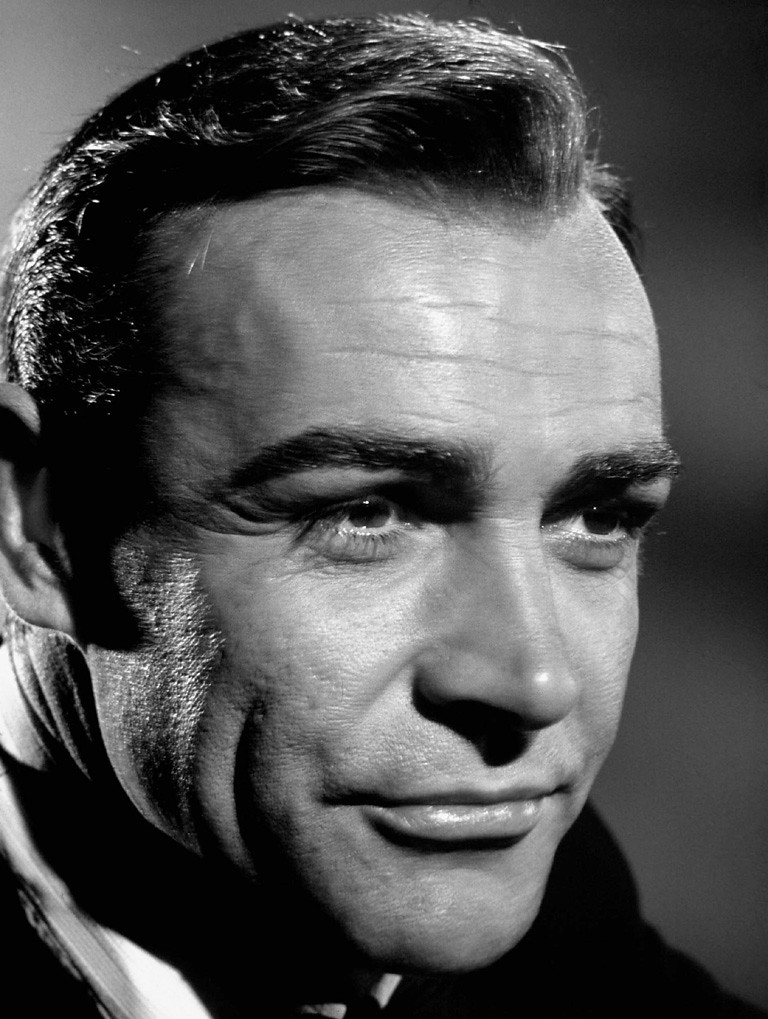
Sean Connery in Memoriam


Cinema lost another giant this year as the legendary Highlander Sean Connery himself passed away aged 90 in the Bahamas. Now, he might have had some very regressive personal ideas that have been repeated ad nauseum by leftists. But one can't claim that he wasn't a mesmerizing screen star, and also (his constant Scottish accent and lisping s's notwithstanding), quite a great actor as well. This post takes a look at some of his best performances.

From Russia with Love (UK, 1963)
Dir. Terence Young


There are many ways of approaching the Bond series, but it is also interesting to watch the earliest entries where everything was not that set in stone. While Dr. No already had a version of the basic formula, the first sequel in the series took a different path, having a more real world espionage-based and dark sequel. As it is one of the more serious entries in the franchise, I find it also surprisingly underrated.

It's still a Bond film, so there's plenty of ludicrousness. The entire film begins with a scene where Bond is seemingly killed, but it turns out it's just some guy wearing a rubber mask (for some reason) in Red Grant's (Robert Shaw) training exercise. Grant's dark reflection of Bond is one of the reasons people remember this film so fondly, but it has some other good characterizations as well, from the double-agent Tatiana Romanova (Daniela Bianchi) to the actual main villain Rosa Klebb (Lotte Lenya), who never even meets Bond face-to-face. 

But Red Grant does, in perhaps the best fight scene of the entire series.
 

Before Daniel Craig came along, Connery was the only actor who managed to get a sense of danger out of the Bond movies. He is constantly in over his head, but his cocky nature and luck also make him come out on top of any situation. Bond is probably the worst secret agent possible, but it just adds to the allure of the character. Espionage is well below his radar after women and boozing.

★★★★

Marnie (USA, 1964)
Dir. Alfred Hitchcock


Late-era Hitchcock films aren't also quite as well-known, and it may seem even surprising that Connery starred in a Hitch movie. Marnie is a exploration of trauma and lies and their effects on a relationship. It also has a Psycho-like table-turn, in which we at first follow Marnie (Tippi Hedren) as she cheats, swindles and steals money from each of her employers. When she gets caught by Connery's Mark Rutland, he takes it upon himself to get to the bottom of her personality flaws and functions.


As it was already the 60's, Hitch could have more graphic sex and violence than used to in his films. Connery is more of a hands-on actor than Jimmy Stewart or Cary Grant who had problems with their masculinity in Hitch's movies. The central character of Marnie, however, is way too half-baked, a damsel in distress with little agenda of her own. Hitchcock has interesting scenes play out her panic attacks, but is seems he could have grounded the end reveals a bit more with the role of Marnie's mother being almost nonexistant beforehand. I think the film showcases a little too clearly Hitchcock's problems with women, and as a result, it's a good try to have a multilayered psychological thriller, but times had already passed such a chauvinistic view of things. It's not among the best of it's director's standards.

★★★

The Offence (USA, 1973)
Dir. Sidney Lumet


Connery made four films in total with Lumet, and as directed by a veteran who leaned heavy on good scripts and getting the best out of his actors, he also made some of the best work in his career. Here he plays a British policeman driven evenly more desperate as a child-murderer's case lingers on.


I'd say the bleak outlook on a 20-year police procedure has probably been a major influence on Bong Joon-ho's Memories of Murder. Lumet, however directs this mostly like a stage play, with minimalist interrogation rooms and very dialogue-heavy scenes. Lumet is interested in a breaking psyche, and the growing desperation that brings a seemingly good police to do atrocious deeds. It covers similar themes than a lot of showier films which is probably why this small-scale movie has had such relatively light attention.

Connery's role, however, is yet another character that takes out his inner anger and frustrations on women, in this case his long-suffering wife. Well, he has violent tendencies towards suspects as well, so he's not entirely likable by any means, but still, one has to wonder why so many of his characters share this woman-beating tendencies.

★★★ 1/2

The Wind and the Lion (USA, 1975)
Dir. John Milius


Milius found a good historical epic with which to tell a story about one of his greatest heroes, Theodore Roosevelt. It wasn't his last Roosevelt film, and Ol' Teddy is restricted here to a quite brief supporting role, though he is the Wind in the title. The Lion, then is Connery's Raisuli, a Berber prince out for glory. At that point it wasn't considered problematic to have Scots portray Arabs. Rather, he is used here to be a world-class lover and a fighter, in the same vein as Rudolph Valentino


There's planty of action scenes equal to Milius's later Conan the Barbarian, and a Stockholm sydromish romance with Candace Bergen's reporter, who finds that there's more to the Berber lifestyle than meets the eye at first. Meanwhile, Teddy (Brian Keith) faces pressures on his foreign policy back home, but meets them with his personal philosophies, which isn't nearly as interesting. The seperate stories don't quite click together and the ending is quite underwhelming. nevertheless, it is an enjoyable film to watch since Connery's and Milius's approaches to tell manly men tales are tangentially similar.

★★★

The Rock (USA, 1996)
Dir. Michael Bay


Finally, among the last really entertaining romps Connery made, and also the movie was more or less to blame for many of Connery's late-era woes. The Rock's stunt casting sees him play pretty much a James Bond type that has been kept in a prison cell for 30 years. He's a quippy man of action, but at the same time a mentor too. That the aged Connery happend to fit into a thoroughly modern action movie so well gave the wrong imprsiion to other filmmakers who attempted similar approaches, the bottom of the barrel being 2003's LXG which made Connery quit acting altogether.


You can find plenty to blame in Michael Bay's approach. Connery seems to enjoy to play a character that sees things to be as black-and-white as they were in the 1960's, which extends also on his sex politics. He also seemingly kills or maims a lot of innocent people in a very tacked-on car chase, that's nevertheless a great showcase of Bay's strengths as an action director. By contrast, Nicolas Cage's weirdo, modern action man and Ed Harris's noble main baddie are more nuanced characters, but Connery holds his own against these two great performances. Bay has only regressive things to say, but that's only if you try to search anything meaningful in his cavalcade of outrageous plot turns and huge explosions. As a 90's romp, it's still great fun, and perhaps should have been Connery's actual retirement film so he could have gone out on top.

★★★★

Thursday, 15 October 2020

G is For Gothic Giallo

The golden age of giallo didn't last more than a few years from the late 60's to early 70's. But it was just the latest fad in Italian horror movies. Before all that we had gothic horror movies, as established by Mario Bava. That one used stark visuals on haunted castles, torture chambers and classical melodrama. They cashed in on the popularity of Hammer Horror films in the UK and  Roger Corman's Poe films in America at the same time. Besides Bava, there were plenty of other talented directors working on the subgenre as well. Let's take a look at a few.

Mill of the Stone Women (Il mulino delle donne di pietra, 1960)
Director: Giorgio Ferroni

Ferroni is someone that's a bit controversial in some circles due to his actions in WWII, but you can't say he wasn't a talented and effective filmmaker. This film is set in the Netherlands and in the similar art circles that Corman also sometimes depicted. A young art student travels to a Flemish village to see a windmill filled with stone sculptures of legendary women. He finds a mysterious woman and falls for her hard, but doesn't realize she harbors a horrible secret.

The ominous setting, with the gloomy Holland winter and ominous sound design from the mill's gearwork make the film's athmosphere of foreboding dread quite unique. Color photography wasn't that common this early, so that makes Ferroni's movie shine out compared to his contemporaries. It also emphasizes the meet of artistry and mad science also on display in the story.


 The major downside is the third act that gives a rather ludicrous explanation to all the murder and mayhem. The plot's romanticism also rings a bit hollow. Similar plot points were common in many contemporary movies, so it's a bit disappointing Ferroni couldn't top them in this one too.

★★★★

The Horrible Dr Hichock (L'orrible segreto del Dr. Hichcock, 1962)
Dir. Riccardo Freda

The Italian horror cinema owes a major debt to Hitchcock, of course, but still it's a bit much to use a misspelling of his name in a movie title or a major film villain. The titular doctor, played by Robert Flemyng, takes a new, young wife (Barbara Steele) to live with him in his vast old castle. Taking on the story of Bluebeard, the wife goes on to find out what happened to her predecessor and the doctor's deadly secrets.


This is another movie that takes a turn in the third act, but this time to be more outlandish and hysterical. It's a trick Italian horror movies tend to do perticularly well. Particularly as we've endured the uptight and very British manners of Flemyng for the first hour or so. This film was very taboo-breaking for its time since it's plot heavily circles around necrophilia. This started a sort of trend in Italian movies to try to up one another. Still, at this point everything was done mostly in good taste and avoiding explicit scenes of sex and violence.

Steele was one of the great leading women of the period, and she did admirable work here, too. The sets are lavish, gloomy and dark, as they should be, but otherwise this film seems to suffer a bit of lack of suspense being built until the final reveals.

★★★

The Whip and the Body (La frusta e il corpo, 1963)
Dir. Mario Bava


Our old buddy Bava again, with one of his filmograhy's most dark-toned movies. The movie is all dark moors, stormy seafronts, damp cellars and unlit torture chambers. Christopher Lee had a few days to shoot his role for the film, but he was put in good use. After all, in Hammer's Dracula films he usually didn't show up for too long.

He plays a cruel and ruthless nobleman that likes to whip girls. The puritans around him don't much care for him, so he soon winds up dead. Or does he? Something unexplained, perhaps a ghost, begins to haunt the mansion. At the same time his would-be bride (Delilah Lavi) seems to start to desperately pine for him and perhaps develop a relationship with the ghost. The increased scares and bodies beginning to pile up cause and investigation on the matter.


Bava was a filmmaker that used minimal elements to maximum effect, and this is a clear textbook study of that work. His use of minimal light in particular makes his film a lot more eye-popping than any of his contemporaries managed. Then again, his use of sound and music isn't quite as good, and his disregard for reasonable plot development may be a bit long-winded to follow. The name implies for more S&M but it's actually left mostly to our imagination.

★★★ 1/2

Castle of Blood (Danza Macabra, 1964)
Dir. Antonio Margheriti, Sergio Corbucci


 A true Italian answer to Corman's Poe films, it also features a connecting opening scene that features the author himself. A rival author bets that he can spend the night at a haunted castle. While there, he enconters various lost souls and is forced to live out the ways they have perished within the castle's history. In the end, the ghosts demand a blood sacrifice themselves.

Margheriti's step to the scene also meant for the genre to take a step more to psychedelia.The film was shot in black and white, but makes the most out of strong contrasts with candle-lit scenes and visible cobwebs in almost every frame. The film's castle is built so as to have a mystery or a secret attached to each room, corridor or nook. 


Legendary western director Corbucci worked as the co-director, yet was not credited for it. Barbara Steele is on top form in here as well, playing a sad remnant of a love lost. It's as melodramatic as they come and the finale takes on for a bit too long, but still, it's one of the brightest spots of the genre.

★★★ 1/2

The Long Hair of Death (I lunghi capelli della morte, 1965)
Dir. Antonio Margheriti

A true historical epic, this one takes place in the 15th century, witch a lover scorned threatening to burn his would-be wife on the stake for witchcraft. Death follows the entire family, until one of the daughters is old enough and the situation is apt to get revenge on the lord. A nice idea is to have everything revolve around the same castle through time, but I guess it's for the cost-effectiveness to limiting sets.


Another Barbara Steele classic that sees her do a dual role. The story and music repeat one another a bit too much with the witch-hunt, paranoia and hauntings going on. The cast of actors is particularly good here, as they manage to find a nice balance between hysteric melodrama and small nuances.   

The morality tale on display here is very Catholic indeed, utilizing the iconygraphy of the Church and basically be about a post-generational vendetta. I think Michele Soavi was very influenced by this.

★★★

The Possessed (La donna del lago, 1966)
Dir. Luigi Bazzoni, Franco Rossellini


Shedding light on how the development from gotchicness to giallos came about, we have this slow-moving arthouse movie, shot in black and white. At this point, it feels a bit odd to have this kind of cinematography used in modern setting, though it does help to make the film's athmosphere.


The film is a murder mystery where Peter Baldwin's Bernard arrives for a seaside holiday in order to be able to write. Even as he had spent time therein before, he notices most of the locals give him the cold sholder and act weird. He finds out that Tilde, the chambermaid he had been in love with, had killed herself during the year. But is there something more to the case?

The film depicts the gloom and depression present in neo-realism, with surreal images of leavless trees and the cold embrace of the lake in question. The film doesn't have too strong a pull though, and it's mostly due to the uncharismatic lead turn by Baldwin. Nevertheless, it is a sense of styling that proves you don't need ghosts or spooky castles in order to have some good old-fashioned gothic dread.

★★★

Sunday, 29 March 2020

Bloody Vikings


Vikings has very rarely gotten their due in cinema history, which I find it a bit odd. Even though a complex Nordic culture with interesting gods and a drive for both exploration and pillaging in early Medieval settings might seem like prone for exciting historical adventure movies, more often than not, something goes awry with these. Anyway, let's take a look at several of the more interesting ones.

Erik the Viking (UK/Sweden 1989)
Dir. Terry Jones


Freed from obligations from Monty Python, director Jones was free to do whatever he wanted. His interests in medieval history, comedy and children's books met with an adaptation of his own book. He should have aimed the film more obviously for children. As it is now, the film has problems with its tone, as there are parts where there's too few jokes to be a comedy, and parts where the adventure doesn't advance at all. As a visualist or a mythic world-builder, Jones is clearly secondary to Terry Gilliam and doesn't quite get how to work his more fantastic ideas into the story properly.

The worst thing about it is that the comedy itself is often lacking. The movie opens with some rape humor which certainly hasn't aged well. Jones seemed to have made the same mistake as Graham Chapman with Yellowbeard thinking that rape is a good source of laughs. It does introduce us to the timid lead character, but it is a bit of a cheap way to get sympathy when he has performance issues during a pillaging event, and have him turn on some of the more rapey vikings.

Tim Robbins does do a good job, and there are some actual good laughs to be had from Tim McInnery's childish viking complaining about sitting arrangements to John Cleese's cheery sociopath order people getting flayed. The contrast between the awfulness of the violence and people might have worked better today as a kind of parody of Game of Thrones -like sadist entertainment. Jones himself pops as a clueless leader of a lost continent. I admit I have a soft spot for the film and have seen it a lot more times than its actual qualities would warrant.

★★1/2

Erik the Conqueror (Gli invasori, Italy/France 1961)
Dir. Mario Bava


Bava's historically inaccurate film sees Vikings clash against the Brits in the 8th century. This is contrasted by having one of orphaned twin boys being raised by the Brits and the other by Vikings. A fate of countries laying on the schism between siblings of course has been seen used from the Book of Moses to New Gods by Jack Kirby. It is a reasonably epic, if not terribly original way of presenting conflict.

As is often the case in the director's works, visually it is purely stunning, with elaborate color lights and psychedelia. There are many Technicolor epics with a lot bigger budgets that never were this inventive in their visuals. The film was mostly shot in a studio, but several battles are also shot on location with natural light and the landscapes a Medieval Nordic adventure warrants. These scenes bring a little contrast, but are just as good-looking, with merciless natural powers highligting the brutality of the warriors fighting on the same canvas.

But Cameron Mitchell is not a very interesting leading man, and in the film his voice is in fact dubbed. I like him better on 80's trash movies phoning it in while visibly drunk.


★★★ 1/2

Knives of the Avenger (I coltelli del vendicatore, Italy 1966)
Dir. Mario Bava


Bava did another viking picture, with his star Cameron Mitchell also attached. As the audience's tastes have swithed from large epics to smaller, more spaghetti western -like character studies, this one is more akin a western set in the viking era. The obvious comparison is 1953's Shane from which the movie's plot is pilfered. A disgraced viking warrior becomes a protector of a woman and her child when a group of more violent warriors come calling for his past mistakes. If the previous film was about brotherhood, this one circles again around family, with its themes finding redemption in adopted fatherhood.

The film's look is decidedly more down-to-earth in tones and settings than his previous viking film. Nevertheless the gloomy athmosphere is strong and Bava has a knack for keeping things interesting with some wild camera angles and a nice sense of misé-en-scene. A lot of the action is set on limited sets, darkly-lit farmhouses, taverns and even caves. The pacing is quite slow and one does get a bit bored in the meantime, whereas Erik moved along quite swiftly.

I feel Mitchell has a better role here, having him act more of a stone-faced loner with undelying guilt and growing warmth, is more suited to his talents, as he manages to give his character an air of mystery. In action scenes, though Bava can still play gritty and dirty even if its not quite the blood bath that would warrant such a title in my opinion.

★★★

Viking (Russia, 2016)
Dir. Andrei Kravchuk


With several popular tv series set on either the viking era (Vikings) or a mythical age quite similar to it (Game of Thrones), there has been several small-budget films that have tried to capture that same audience. Some of them are laughable (like 2014's Northmen - a Viking Saga), and many of them have a similar boring gray scale, predictably boring plots and nothing interesting to say. From modern viking films I remember Nicolas Wingding Refn's Valhalla Rising to at least try a little as compared to most of them.

I feel the Russian Viking is a case in point. I would have wanted to like this a lot more since it took seven years to make, and expected more of a Russian flavour to the story, as opposed to just do the same thing everyone else is. It sells itself for being historically accurate, which is itself a very dubious claim, and doesn't really do the boring story any favours. In many parts it is confusing and goes off in rails when compromised would have at least made the plotline somewhat understandable. Plus, it's nearly 2,5 hours long so there's an extra hour of suffering through this when compared to most other films on this post.

The title in and of itself is false marketing. While it takes place roughly in the Viking era, it is more concerned with the goings-on in Russian Novgorod in Prince Vladimir's reign, his brother, the warlord Kievan Rus and the Slavonic wars during that era. The virtues of the film are firstly to generate interest in Russian history, and secondly of its (very expensive-looking) battle scenes, which are in parts very impressive looking. If you really want to see the movie, read up on history before viewing, so the logic between characters making decisions and the context of many actions are more easily understood.

★★

The Raven Flies (Hrafninn flýgur, Iceland/Sweden 1984)
Dir. Hrafn Gunnlaugsson


My favorite Viking film comes from Iceland, which I feel is the best-suited country in the world to tackle the history, since most of the country's occupants are descendants anyway. I wouldn't call this any truer to history, though, even if more care than usual is made to the Medieval costumes and armors. The film is basically a spaghetti western revenge story, with tiny ponies instead of horses, and I love the film for it.

The film captures the dark and gloomy nature of Nordic countries in a way a film like Knives of the Avenger attempted, but didn't quite feel genuine. Life is hard, cheap, brutal and over in an instant. Blood feuds reign from generation to generation. Yet the film concerns ways of trying to break a never-ending cycle of violence. It sees a Celtic underdog prevail by using his wits and knowledge of viking's superstitions against his enemies. With plenty of close-up shots and ugly glances.

The genuinety from the actual settings makes this feel a lot more down-to-earth and less exoticized than most viking movies. It pays a lot to show the real Icelandic shore line and the right kind of houses so it doesn't feel like a general Hollywood epic. One can practically feel the cold wind and the dread of the upcoming winter.

The film spawned a number of sequels, none of which I have sadly seen.

★★★★

Tuesday, 26 March 2013

Docpoint 2013

Room 237

Not too long ago, another of Helsinki's biggest film festivals took place. As always with DocPoint, the focus was on the year's most exciting, thought-provoking documentary films from around the world. There were several interesting movies to be seen, and it's took a while, but here's a brief look into this year's crop.

The Gatekeepers (Israel/France/Germany/Belgium)
Director: Dror Moreh


Will there ever be a chance for peace in the Middle East? Impossible to say, but at least not if one doesn't study both points of view of Israelites and Palestines. While at first glance this documentary about Israeli chiefs of Security seems to be on Israel's side, it provides criticism to the endless cycle of violence as well.

The film succeeds in contrasting the personalities of all the former leaders of Shoh Bet, or Shabak, the Central Israeli Security Agency. They provide insights on how the nation viewed various threats and wars. The endless cycle of violence has made the men develop a hard shell around them, yet there are points of them reminiscing bloodshed that are quite emotional nevertheless.

The stories of these men are filled with exciting details, confidential information, intrigue and contradiction. Their stories help one to understand at least Israel's dire need to keep its face and appear threatening and all-powerful. It's one of the reasons why the two sides can't really come to terms. This is an important reminder of how a life of ordering massacres affects the human psyche, and what comes from a nation that treats each of its foreign problems by reacting with more violence.

★★★★

The Queen of Versailles (USA/UK/Netherlands/Denmark)
Director: Lauren Greenfield


Here's a story of a wealthy family that lost everything. While this story's true, it might as well be a sitcom. The main characters are self-centered, dim, greedy, oblivious to any realities in life, and, sure enough, in a constant state of Arrested Development.

Before 2008, real estate billionaire David Siegel and his trophy wife Jacqueline loved to flash around their cash. They build skyscrapers, pay to have their daughter win beauty pageants and in the most outrageous move, build a multi-billion dollar mansion in the same vein as Louis XVI's Versailles Palace in France. Yet with the economic collapse, the Siegels lose their fortune. For the most part the film features them grasping onto last remaining shreds of their wealth.


Since the Siegel's are rich sleazebags, they refuse to recognize the moral of the story - the gambling, borderline illegal actions and political horsetrade having gotten them into the mess they are in. When the shoe's on the other foot, they blame others for destroying them and attempt to bounce back by doing the same mistakes again and again. It's incredible how dumb, vain and all-around unlikeable the main couple comes off, but it just makes the movie more intriguing. They don't care the least.

This movie is a testament to this age, a story on how people overemphasize surfaces, appearances and superficial values. They delude themselves to think they are happy when they can raise envy and outrage. But underneath all that surface is but a husk of a soul, one that has a child's idea on how society works, refuses to take responsibility and is doomed to repeat the same mistakes.

★★★★

The Pervert's Guide to Ideology (UK/Ireland)
Director: Sophie Fiennes


Leftist philosophy superstar Slavoj Žižek delivers another video essay using film clips from old movies, self-irony and societal critique. And, as always it is highly entertaining. This time around the lovable lisping Slovak talks about how Ideology has shaped the world around us, and can be seen in various cultural product we wouldn't necessarily expect to. Case in point are movies, both old and new, obscure and blockbusters, documentaries and fantasy.

While The Pervert's Guide to Cinema had (albeit a flimsy) thread with which to follow, this time around Å½ižek seems to ramble on whatever comes to mind. That's not to say the film is sloppy, on the contrary the scenes replicationg various film styles are done carefully and to a good comical effect. A lot of the things discussed are quite familiar to anyone who has ever read an article by him, seen his lecture or the documentary film Å½ižek! I, of course am guilty of all three, but still I enjoyed immensely to hear these theories again in another, more entertaining format. Whether I agree or not is another thing, but the strength of Å½ižek is that he doesn't pander but provokes and speaks out his mind. Thus, it's up to the viewer to decide what to make of it.

★★★ 1/2

Marina Abramović: The Artist is Present (USA)
Directors: Matthew Akers, Jeff Dupre


The conceptual performance artist Marina Abramović has had a long career of putting herself into her art since the 1970s. She has done this to such extent that without art at 63 years of age, she feels like a quite lonely, vunerable and uncertain person. The film chronicles her preparation fot the retrospective of her career at New York's MoMA. But it isn't just a case of putting art work on a gallery. Abramović also prepares to sit and stare at the museum guests all day, every day for three whole months.

Abramović's career has much been characterized by the search for boundaries of art. Not only allowing art lovers to look at art, but looking personally back at them is a concept as simple as there is. On a smaller scale, it could be done by anyone. Doing it with thousands of museum-goers day in, day out takes a lot of courage and endurability. But when does meeting another person, not saying one word, become art? Is it only when the other party is a respected artist by profession? The surrounding of a retrospective adds up plenty to the work, it puts on the emphasis that the artist is still present in all of her past work.

The film is ponderous and heartfelt, and like its focus, almost unbearably intimate. Just the sight of Abramović's stare brings some guests to the brink of tears. Documentarists Akers and Dupre explain Abramović's history extensively and understandably. The film is not qute as experimental as its subject matter, but it does feel like a real experiment, and makes ponder both the nature of art and humanity by itself. Not a small feat.

★★★★

Room 237 (USA)
Director: Rodney Ascher


The ominous, creepy atmosphere of the 1980 film The Shining, as well as the well-known perfectionism of director Stanley Kubrick, have made the movie larger than life. Since Kubrick tended to refuse to put all the pieces together, there was much left for individual interpretations. Thus, there are plenty of people obsessing over the film and coming up with several outlandish renditions of its meaning.

The documentary is illustrated almost solely with film clips, mostly from The Shining, but also from Kubrick's other films, as well as unrelated movies which deal with cinema-viewing and audience perception like Lamberto Bava's Demons. The interviewees are only present by sound and they are not recognized with texts or anything. It is a democratic approach, putting all the interpretations to the same line, whether observant or bug-out crazy.

Obsessing over the movie, some people have spotted out odd visual clues that provoke imagination, such as the unnatural geography of the Overlook Hotel. The theories surrounding the film's horrors sexual nature, or the retread of American bloodshed from history, seem kind of plausible. And then again, there are people who insist Kubrick framed the moon landings and uses the film to confess this to his wife. Danny's Apollo 11 sweater on one scene is the key proof of this cuckoo theory. Nevertheless, it is intriguing to hear both these accounts, and all in all the film both puts The Shining into a new light, all the while not taking anything from the mystical aura of the masterpiece. On the contrary, adding up to it!

★★★★

Roman Polanski: A Film Memoir (UK/Italy/Germany)
Director: Laurent Bouzereau


As controversial as directors come, there's no denying Roman Polanski is a character as fascinating as his films. This documentary is an attempt by his long-time friend Laurent Bouzereau to allow the man to speak his mind himself. Polanski spills his life story while on house arrest in Switzerland, waiting whether he will be handed over to US authorities for imprisonment or not.

Predictably, the story hinges on the major three disasters of Polanski's life: Fleeing the Nazi regime as a child, the relationship with his wife Sharon Tate and her consequent brutal murder by the Manson Family, and the director's actions on Jack Nicholson's house with a drugged-up minor, as well as the travesty of a trial that followed. Polanski is a humble man who doesn't attempt to shine his own shield too much and carries his tragedies as well as his successes like his current wife and children. Yet for a film titled Film Memoir, the movie glosses over Polanski's body of work in favor of a character study. His films stem from his private life, so you can't entirely seperate them, but I for one would've been eager to hear more insights on making a large number of brilliant films that disturb and challenge to this day.

★★★

Something From Nothing: The Art of Rap (UK/USA)
Directors: Ice-T, Andy Baybutt


The rapper that brought you Cop Killer is convinced that hip hop saved his life from life on the streets. Since Ice-T owes the music a debt, he attempts to serve it by going around his peers, rap legends and super stars, asking what makes the music matter. The array of artists is quite impressive, from MC Melle Mel through Ice Cube and Chuck D all the way to superstars of the modern era like Kanye West and Eminem.

This is another one in the series of music documentaries that attempt to serve as a gateway to a world of certain genre. It attempts to serve the field as evenly as possible (yet focuses on the most commercial side), leaves out niche groups and offers little information to true aficionados of rap's history. It's always nice to see music legends talk about their work and how they create their verses, so it's an entertaining piece but far from true art mastery.

★★★

Men At Lunch (Ireland, 2012)
Director: Seán Ó Cualáin


The famous photograph about the building of New York, hanging on the walls of bars around the world, has inspired this historical documentary. The movie attempts to find out who were the men sitting on a girder on top of the Big Apple eating their lunch without any fear of falling. Thus, it is a story about labor in the time of the Great Depression, and by extent, immigration.

Unfortunately, since the film is Irish, it is very biased. It attempts to prove a confession heard in one pub to be conclusive, while newspapers and competitions have come to different solutions that are dismissed entirely. Likewise, the story is quite thin since there is little evidence on who's who in the picture. The lazy, archival storytelling style is one for sunday afternoon TV documentaries, but doesn't really work on a big canvas. This could've been an interesting detective story, now it's as bland and unjournalistic as they come.

★ 1/2

Friday, 22 February 2013

O Scars 2013


Unless you've been living on the moon (and thus can't tell that this is a very worn-out way to start a text), you'll know that they are handing out the Academy Awards this sunday. Big whoop. But this year, the nominees do have a fair amount of wild cards among them, so I actually have a shred of interest in the whole thing. I might even stay up to watch the dang thing, despite Seth MacFarlane's racism, silly voices and inevitable song number. As ever, the films are what's the most important thing, not the glitz and glamour. So here's a look at how the major nominees are (32% new material).

Amour
Director: Michael Haneke


Famed Austrian analyst Michael Haneke surprised audiences worldwide for having such a heartfelt central theme in his latest movie. Haneke is one who usually tends to shy away from all sorts of basic Hollywood schmaltz and basic emotional manipulations. And the end result manages to be a worthy successor to the director's filmography, both done in the auteur's signature, distant style, yet with the sort of unforced emotional resonance that makes for a powerful cinematic experience. At the very least, it is a movie that can be enjoyed on multiple levels. It challenges you to think and analyze, but doesn't force you to. The central theme of love is strong enough as it is.

In the spotlight of the humane film are an elderly couple of wealthy music teachers, Georges (Jean-Louis Trintignant) and Anne (Emmanuelle Riva). They live together in a vast flat in the middle of Paris, where most of the film is also set. But then, their everyday routines and bourgeois cultural consumption  are threatened when Anne has a stroke and her health starts to falter. Georges takes care of his bed-ridden wife as best he can. Their worried daughter Eva (Isabelle Huppert) comes to visit and suggest that Anne could get better treatment at a hospital. Georges is adamant that she'll be best off in their home, and makes effort to get the very best treatment and care for her as he can.


It seems odd that so few movies dare to deal with the Autumn years of peoples' lives. It is the time when lives may be changes in a flick of a wrist, and may hang by a thread. Watching Amour is utterly devastating and hard, yet infinitely rewarding. One doesn't need flashy melodrama and luscious over-the-topness to tell about us as people. This is as honest and down-to-earth as one can get, never spoon-feeding the viewers with anything.

As is often the case with Haneke, this is less a story, more a study of emotions and situations. The director's characterization is precise and is helped tremendously by the excellent cast. Also faithful to the director's style, he devastates upper-middle-class living, where the keeping up of appearances of a dreadful situation may be the most important thing to do. As precious of his wife is to him, Georges can't stand the thought of humiliating her by allowing just anyone to treat her. All the possessions the rich pair owns eventually turn into empty relics at a tomb. We know from the beginning how the thing will play out, which adds to the hopelessness and emotional punch of the film.

Nominations: Best Picture, Best Director, Best Actress, Best Original Screenplay, Best Foreign Film
Will win: Best Actress: Emmanuelle Riva, Best Foreign Film
Should win: Best Picture, Best Director, Best Original Screenplay

Argo
Director: Ben Affleck


Argo has grown to be more controversial the more it wins awards. It's a bit too safe a bet for people voting for awards, while very good, it's scarcely about anything. It's Hollywood's very own pat in its own back, shying away from all the political dimensions of the time period it tells about. Nevertheless, no matter how many wrongly won awards it gets, I like it simply because it managed to be one of the year's most exciting films. The super-intense thriller about rescuing American ambassadors from the Ayatollah's Iran in 1980 reaches almost Hitchcock-levels in building up tensions and letting the viewer worry about the outcome. It may be historically poppycock, but it makes for a thrilling ride at the cinemas.

During the Islamic Revolution in 1970's Iran, the US Embassy gets overrun by an angry mob. The diplomats manage to destroy most of the documents about their identities before managing to escape. But the Iranians start to furiously recovering the shredded files. The USA had angered the Iranian people by providing medical care and a sanctuary to the last Iranian Shah, hated by the revolutionaries.


Ben Affleck has grown better and better with each of his directing duties. The film's a fun tribute to the hands-on approach to filmmaking, craftsmanship and B-movies of old. The time when smart-mouthed creative personnel still managed to get a project rolling in Hollywood, without the meddling of slick, money-hunting business executives.

The film does depict iranians as straight-up villains (although it lays the groundwork on why they are so upset of America's policies, what with all the spying). As such, it probably won't do any favors for the already icy relationship between USA and Iran. The more popularity it gains, the more it may hurt in the long run. But Affleck does offer as apolitical approach to the historical subject as is possible in such a real-life situation. The final scenes have little to do with reality, but as a climax to the tension, as well as a tribute to the little-cheesy American blockbusting filmmaking the movie celebrates, it works.

Nominations: Best Picture, Best Supporting Actor, Best Adapted Screenplay, Best Film Editing, Best Sound Editing, Best Sound Mixing, Best Original Score
Will win: Best Adapted Screenplay; Chris Terrio, Best Film Editing; William Goldenburg, Best Sound Editing; Erik Aadahl, Ethan Van der Ryn
Should win: Best Film Editing.

Beasts of the Southern Wild
Director: Benh Zeitlin


Now, for a film I have grown less fond the more attention it has gained, your every-hipster's do-it-yourself catastrophy movie. It's been praised for being a wholly original piece of filmmaking, while in fact it pulls a lot of familiar heartstrings and tells more or less the same story as Terry Gilliam's Tideland. I've been left wondering whether Gilliam's more edgy, cruel and audience-testing provocation was actually the better film. It may have had a handicapped stereotype, but it's a lot more easier to swallow than some of the racial stereotypes on display here.


In a fictional Deep Southern village of Washtub, lives the six-year-old Hushpuppy (Quvenzhané Wallis) in a run-down shack. Her mother has long since left so she attempts to bond with her father Wink (Dwight Henry). Unfortunately, Wink has severe mental and heath problems, and isn't too happy about them and is prone to bursts of anger. Hushpuppy has learned to more or less take care of herself, with the help of the other villagers.

Hushpuppy has an active imagination and gets lost inside it from time to time. When a tornado threatens the village, Wink and Hushpuppy rekindle their relationship, but the desperate situation also calls for desperate acts. Hushpuppy also ventures on an adventure to find her mother. The plot bounces here and there, making the point that childhood's innocence and imagination provides a philosophy where drastic situations can turn to magical adventures. Hushpuppy is never alone, and keeps the love she's received on her sleeve to help her along when his father is on a downswing or otherwise things appear to go from bad to worse.


The main problem of the film seems to be that it throws so many things in the air and quickly ties up the knots at the end. For instance, there isn't enough on he community and it's coping by the end, although it seemed like a major element in the beginning. Also the annoying, ever-constant voiceover from Hushpuppy hammers the points home too hard, rather than allowing people make their own minds and conclusions.

The film is visually very inventive, with some amazing sets that look like they've been lying around for years having actually been created from scratch. The overwhelming flood of striking imagery makes the viewer feel like a six-year-old him- or herself, being amazed of the vastness of the world and all the things in it. That's probably why the film had such a strong response. But this in turn also brings with it a sense of helplessness. We can't do anything to hold Hushpuppy's family together, or even to make her act sensibly to grow up to be a proper adult in time.

But nevertheless, for a first-time director, Benh Zeitlin has created an amazingly confident piece of work. It has been helping that the director and the crew form a strong creative collective that have supported each other with their decisions and visions. It's a good enough first step, but now the film is a piece that's easier to appreciate than to truly delve into.

Nominations: Best Picture, Best Director, Best Actress, Best Adapted Screenplay
Will win: Nada.
Should win: Nada.

Django Unchained
Director: Quentin Tarantino


The latest Tarantino joint offers the usual inter-textual movie references, violent battle scenes and tongue-in-cheek humor. But this time around the auteur at least has a good story and an actual character arc at the core of his moviemaking, rather than just a framework in which to drop dialogue scenes and movie references. Now all his characterizations and reference choices serve the main story, give or take a few gratitious cameos and a few beauty errors.

This is a movie that's more than just the sum of it's parts. The parts vary in quality a bit, but not as considerably as in the director's last few films. It's an angry, bitter and loud song against injustice and for equal opportunites in life for all. It's a hero's journey and while the end may be played mostly for laughs, it is really a bit grim tale on how a fish out of water grows to be a cynical and nihilistic mass murderer. There's, of course, a love story in the centre of it all.

And not just between two bestest buddies.

It would be foolish to think Tarantino's entertaining approach to a subject as grim as slavery would win any favors from the Academy voters, but he's still the black horse I'm betting on in the original screenplay category - simply because the Academy likes to right old wrongs and it's been 18 years since QT won the award from Pulp Fiction. And to add the insult, the auteur had to share the podium with Roger Avary of all people! He's due another statue, even if his script could have used one more polish this time around.

Nominations: Best Picture, Best Supporting Actor, Best Original Screenplay, Best Cinematography, Best Sound Editing
Will win: Best Original Screenplay
Should win: Nada.


Les Miserablés
Director: Tom Hooper


Musicals tend to be the sort of black horses in Oscar betting races, but they also tend to win quite often. In the case one doesn't think Argo will take home whatever few awards it's nominated, and Silver Linings Playbook is too weird for the rest, it is quite clear that this will be the major winner come sunday. It is an irresistibly super-melodramatic adaptation of a major Broadway play, epic in proportion, and allowing familiar actors to show some range. Tom Hooper is a major Oscar darling in that he's competent but not offensively ground-breaking in any way, so it's quite surprising to see he's not up for an award for directing, too.

There's a lot of these grumpy close-ups.

Based on Victor Hugo's classic novel, the story tells the story of the ex-convict Jean Valjean (Hugh Jackman) being doomed to a life of poverty and misery after being released. But one act of kindness makes him rethink his life, so he breaks his parole and devotes his life to serving God. Years later, he's become a wealthy businessman, employing also the desperate Fantine (Anne Hathaway). Valjean's manager fires her due to she keeping that she has a daughter and to support her does a little moonlighting on the side. Fantine's life is ruined as a consequence, but when Valjean finds out about it, he decides to give away his wealth and freedom to give a better future to Fantine's small daughter Cosette. He goes on the run from the vengeful Inspector Javert (Russell Crowe), bent on getting Valjean behind bars again.

The complicated story brings heaps of misery and death to each of its main characters. All are expressed through the power of song. This is a super-emotional story, filled with such melodramatism it should play well with the masses of Academy voters. Even though the film has quite a depressing story, the main themes of love, honesty, passion, sacrifice and strength in the face of hardships that work on most people. The style isn't all consistent with the burlesque/grotesque stylings of Sacha Baron Cohen and Helena Bonham Carter seeming to belong to a shithouse adaptation of Sweeney Todd instead.

The melodramatism does reach ultimate points at times, and several minor characters are not well-realized enough for the viewer to invest in them too much. The first half in general works much better than the muddled third act. Mostly the cast is superb, however, and one can expect at least Hathaway and probably also Jackman to also pick an award for their troubles. They both are former Oscar hosts after all. And their back now is needin' some scratchin'.

Anne Hathaway will cry either way.
My favorite thing about the film is the super epic opening, picturing a tattered French Tricolour from underwater before rising to the surface to show a massive war ship being pulled to the shore by singing worker-convicts. That's how you open a huge movie!

Nominations: Best Picture, Best Actor, Best Supporting Actress, Best Costume Design, Best Song, Best Makeup, Best Soundmixing, Best Production Design
Will win: Best Picture, Best Actor; Hugh Jackman, Best Supporting Actress; Anne Hathaway, Best Costume Design, Best Song, Best Makeup, Best Soundmixing, Best Production Design
Should win: Best Costume Design, Best Makeup, Best Soundmixing, Best Production Design

Life of Pi
Director: Ang Lee


While Ang Lee's novel adaptation isn't one of the best nominees, I'm still quite glad I went to see it in cinema. For whatever it's flaws are in audience-pandering and hokey religious-spiritual messages, it is still visually a quite striking epic. Clear, colorful HD shots of zoo animals, both real and CGI are something most people would like to test their new TV with.


The titular Pi, Piscine Patel (Irrfan Khan), reminisces his life and lost love for a journalist, eventually getting to the most important thing that ever happened to him. When he was young (and played by Shuraj Sharma) he attempted to move from India to the United States with his zoo-owning family. But at a huge storm there was a shipwreck and he as the only human managed to survive to a life boat. But alongside with him on the raft is a collection of various animals. Especially with the man eating tiger Richard Parker, the survival at sea becomes a fight for survival in another way as well.


The animals are, of course symbolic and in case the audience had their own interpretations for them, they are spelled out twice in the end. The story doesn't really make me believe in God as much as it makes me believe there are no point of obviousness Hollywood producers won't feel the need to talk down to. But as said, visually the movie is very nifty, with animals and various faces the sea has from a raging storm to the mirror-clear calmness. There's no reason this won't win an award or two for its visual ideas alone. I'm guessing cinematography and CGI effects are up for the gong at least.

Nominations: Best Picture, Best Director, Best Adapted Screenplay, Best Cinematography, Best Production Design, Best Film Editing, Best Sound Editing, Best Sound Mixing, Best Visual Effects, Best Original Score, Best Original Song
Will win: Best Cinematography; Claudio Miranda, Best Visual Effects, Best Original Score; Mychael Danna
Should win: Best Visual Effects

Lincoln
Director: Steven Spielberg


You can't make much more white bread account on racial issues than Steven Spielberg has done here. The movie focuses on the hardships the beloved US president (Daniel Day-Lewis) faced when attempting to pass the law abolishing slavery through the senate. The political climate of a war-torn country divided into two is a sort of parable to the political climate of today where Democrats and Republicans can't seem to agree on just about anything and oppose each other by principle rather than by what's best for the nation.

Good leadership is telling a lot of historical stories and jokes.

This is done by having a story with plenty of historical compromises and focusing more on Lincoln's skills in legislation and political horse-trading than in actually holding the duties of a commander-in-chief during wartime, or his famed speeches or such. Spielberg thinks these are so well-known mattersthat even characters within the story are super-naturally familiar with them. For instance, multiple characters recite the Gettysburg Address from heart to Lincoln a mere day or two after the president has spoken it aloud. The clunky script also has people reciting historical facts to other people that should know them already, as if they had never heard of them before.

"Gee, dad. Remember when you were born in a small log cabin?"
Black characters are of any use to the film only when used to boost some other character's image by showing him keeping them as equals. Towards the end the very few black actors on screen are so light-skinned, and shot in such a light, they might as well be played by white actors.

Most of the actors are still quite good, even though Daniel Day-Lewis can (and probably does) do such a role in his sleep. To create some sort of drama, Spielberg goes through his very basic motions of a too-distant father-son relationship between Lincoln and his son (Joseph Gordon-Levitt). Much squabble is had whether the young Lincoln can join the army, but without any payoff to the plot strain.

"I'll end this war rather than to see you join it!"
The outspoken, foul-mouthed Tommy Lee Jones brings home the little there is here to enjoy. But as a whole, the film is very cheesy, badly scripted and most of all, is a very boring account about an interesting subject. I hope this will reflect on how few awards it should get.

Nominations: Best Picture, Best Director, Best Actor, Best Supporting Actor, Best Supporting Actress, Best Adapted Screenplay, Best Original Score, Best Sound Mixing, Best Production Design, Best Cinematography, Best Costume Design, Best Film Editing
Will win: I hope nothing.
Should win: Nada.

Silver Linings Playbook
Director: David O. Russell


Silver Linings Playbook is an unique film that could have been very cheap but feels earnest enough to be rootable. Starting to watch this, I didn't care for it much at first, as the odd structure, weird characters and emphasis on mental illness aren't that instantly likeable. But as it goes on, the film grows on you, mostly thanks to the lovely Jennifer Lawrence. It's okay to have a crush on her now, isn't it?


At the core this is a romantic comedy that downplays the comedy. Russell revisits some of the themes he studied previously in Fighter. These include a romance giving the key to fix a broken family, and sport being the glue that allows the family find its place within the whole suburban working-class society. I didn't like the film quite as much, because these themes are sidelined to give more room into the growing relationship between Lawrence and Bradley Cooper. Cooper is fine, but a bit unworthy protagonist. It's a bit cheap to show you can conquer mental illnesses just by letting go of the past and moving on, and with the powers of love and trust.


But the film's reality feels inhabited and functional, for even the minor roles are cast well enough. Really, only the snooty professional dancers and judges feel like they're Barbie dolls. But the viewpoint of the film is very much on the underdogs. Everyone has been praising Robert De Niro's performance as a loving father prone to explosive or impulsive behavior, and with good cause. For once, he feels like a proper, fleshed-out character in a movie, and not just Bob De Niro popping by to collect another paycheck.

Jacki Weaver is fine too, but didn't leave as lasting an impression. She's subtler.

I would have no problems to see this emerge as the big victor of the evening, but sadly, don't really believe so. It's a bit too quirky, and a bit too un-melodramatic. Russell should win the director's gong for his past works as well, particularly seeing as Argo and Les Mis missed out on director noms entirely. De Niro is a shoe-in for Best Supporting Actor. Not only did he have the best performance of the nominees, I also like to think the Academy would want to push him into doing better-quality movies in general, again.

Nominations: Best Picture, Best Director, Best Actor, Best Actress, Best Supporting Actor, Best Supporting Actress, Best Adapted Screenplay, Best Film Editing
Will win: Best Director: David O. Russell; Best Supporting Actor: Robert De Niro
Should win: Best Supporting Actor

Zero Dark Thirty
Director: Kathryn Bigelow


Perhaps the most devisive Oscar nominee this year, Kathryn Bigelow's account on the War on Terror has been accused of many things, often inaccurately. However, I'm not sure if the final movie reaches the journalistically distant, equal tone Bigelow and Mark Boal claim to have been aiming for in interviews. Nevertheless, it is a gripping thriller. Suspenseful as all hell, and treating it's subject more seriously than the fluffy, more entertaining Argo. This is a movie to challenge you to think.

The main problem many liberal and left-leaning people have with the film is with the torture sequences that occur in the first part of the movie. However, the torture US soldiers are depicted as doing, is neither heroic or glamorous. It's described as disgusting and vile, and it really doesn't get any good answers. The fact that the search for Bin Laden takes even the slightest step forward is, due to the chaotic nature of the information, postponed by years of being insecure whether the intel is reliable or not.


The torture sequence also shows the first moral compromise the lead character (played by Jessica Chastain) is willing to make. First introduced as a viewpoint character, we learn heaps of this career woman in the one scene she refuses any mercy for the tortured prisoner, rather advising him on telling the truth to help himself. But even though her person has these wicked sides, we somewhat root for her. A woman's place in the military is to do everything at least with twice the effort and conviction then the men. She's just following the patterns she sees around her to get ahead, never minding her morale.

The film simplifies a rather large amount of CIA operations, and basically it's a revenge movie since she gets a lot more juice in her hunt once her only female friend and trustee gets killed by bad intel. As with Hurt Locker, the film's finale shows the ultimate unfulfilling nature of violence. Nothing has been solved by the death of Bin Laden and everything our heroine has strived for has been stripped. The dead caused by her hunt can't be brought back to life.


The film would deserve a Sound Editing Oscar simply for the fact that it mostly is a very talkative political thriller, but when there are explosions or helicopters chopping, they are so loud as you can feel them in your gut. However, I'm far from an expert on the subject. I just think that it was kind of a cool feeling in the theatre, for once the big screen acoustic seemed to be utilized.

Nominations: Best Picture, Best Actress, Best Original Screenplay, Best Sound Editing, Best Editing
Will win: Nothing.
Should win: Best Sound Editing
LinkWithin

Related Posts Plugin for WordPress, Blogger...