Showing posts with label 1980s. Show all posts

Tuesday, 1 December 2020

Three laughs: Kinjite - Forbidden subjects


It is hard to rate some trashy films. Films can be really good entertainment in spite of the quality of the filmmaking. In fact, it might be even harder to create unique trash that keeps surprising you than most "quality" films with which you know what you are going to get. It certainly is an even better pleasure to watch them. My friend says that he knows a trash film is worth something if it gets three laughs out of me. I mean proper, good belly laughs when you just can't believe what the film is showing to you, scene after scene. That's as good a rating as any for these movies. Any film that has these three laughs has a special place in my heart.

★ or ★★★★★


Three laughs case file # 25:
Kinjite - Forbidden Subjects (USA, 1989)

Director: J. Lee Thompson

I know we are still on the edge about police brutality. Yet the cop-on-the-edge trope is one that's been central to a zillion action movies throughout the years. Now, in movies we usually take the cop's point of view, which tends to show that you may have to break a few rules to get to the goal you're reaching. Meaning, it's ok to use excessive violence if it's for purging streets of nasty criminals, who are evil for evil's sake.

But this is why trashy low-budget movies are more honest than their big budget counterparts. They have less to lose so they say what they mean without diluting the statement. Dirty Harry is a small fry when compared to some of the characters Charles Bronson played at films produced by Cannon Group.

At 1989 Bronson was getting pretty old, so the usual action movie tricks, like chases and gunfights were out of the question. That's probably why they upped the ante and made his character a racist who especially enjoys torturing criminals in inventive ways. When a japanese diplomat's daughter is kidnapped, he must find her even though he realizes that the family's father is the same guy that groped his daughter on a packed bus (or "touched her holiest of holies"). 

Now, the film may have some idea that what Bronson is doing is questionable. But he is proven right in his prejudices in the end, and never faces consequences of killing a whole lot of people, so the point is mute. In fact, the entire film is kind of ridiculous in that it seems to contain a message that the Japanese are perverted and should be monitored. Not to mention latino criminals. So, a fair point is to give this film a content warning. If you can't find anything funny about a film that protects police rights to be racist and violent since "they all deserve it", I totally understand. This is one of those films that make me feel dirty for watching, let alone writing about.


Three laughs (SPOILERS):

1. Bronsons's cop specializes in capturing dirtbags. The first fight ensues when he interrupts a businessman trying to get it on with a teenaged girl. Now, Bronson's pretty old by this point, so he's never in the same shot with a punch or a kick being thrown, resorting more to stuntmen and quick editing. Where he is, however, is when the sleazebag is defeated and he decides to show him what's what. He grabs a handy dildo from his bag and the scene is cut just as he's about to shove it where the sun don't shine.

2. In another scene a latino crook tries to bribe Bronson in a parked car with a gold Rolex. Bronson takes a look at the watch and tells he's like to shove it up his ass. But since that bit has been done already, he reaches for his gigantic handgun and threatens to blow the guy's head off if he doesn't eat the watch. The face he makes after the gulping is one of the most hilarious things in trash movie history. He also burns his car and threatens to kill him "dead in a gutter -dead".

3. Since throughout the film he's tortured and killed suspects without a trial, one would assume that what he has in mind for the sex-trafficing main bad guy is especially horrible. And it is, but in a totally different way. Bronson locks him up in a cell with a bunch of sexed-up Mexican gangsters, including a young Danny Trejo. As the villain howls as he's impliedly raped, Bronson smirks while walking away and quips "Now THAT'S justice". That's this film's idea of justice, all right.

Saturday, 31 October 2020

Z is for Zombies


Happy Halloween! It used to be a tradition at this blog to each year take a look at a particular movie monster and talk about movies where they appeared. I never got to do the Zombie one, partly because everyone knows which ones are the good ones. George Romero's Dead Trilogy, Return of the Living Dead, 28 Days Later, Shaun of the Dead and the like. I would've liked to do top 10 more obscure zombie pictures, but never had the time to do enough research. But now I can talk about Italian zombies!

Most of the best Italian zombie movies use the walking dead pretty sparingly, as in Lucio Fulci's The Beyond. But that's not to say Romero's Dawn of the Dead wasn't really popular, and a major influence that showed how to do effective thrills on limited resources. Italians never really bothered with the light social commentary (we have Demons movies for that), they just liked the zombies as a cheap way of showing blood and gore. So, let's take a look.

Zombie Flesh Eaters (Zombi 2, 1979)
Director: Lucio Fulci


The grandaddy and best pure zombie flick Italians managed to do was marketed as a straight-up sequel to Dawn of the Dead (also known as Zombi). Fulci had the idea of doing a horror movie set on a remote island even before the premier of DotD, but relented in adding New York scenes in the beginning and end that can be seen of tying to Romero's film. One thing to note is that Italian films seem to have a better tie to the origins of zombie mythology in the voodoo culture... but use it mostly just to have insensitive depiction of natives and their savage ways. Zombi 2 is not the worst in this regard, it came later with movies that cashed in both the Cannibal movie craze and zombies, such as Zombi Apocalypse (a.k.a. Dr Butcher, M.D.)

Fulci's film is a rollicking good adventure, starring an adventure seeker named Peter West (Ian McCulloch) and a spunky reporter Anne Bowles (Tisa Farrow), who embark on a dangerous mission after investigating a mysterious boat in New York's harbor. Fulci had an excellent eye for set-pieces and planty of them linger on in your memory forever after seeing them, even if they are only tangentially related to the plot. The best among them are an incredible fight between and underwater zombie and (a real) shark, and a woman's eye being slowly pulled towards a sharp wood splinter (eat your heart out, Un chien Andalus).


While the zombies in Romero's movie were just cartoonish actors facepainted blue, here they are actually very creepy looking, wormy and worn-down corpses. I think the scene of the dead rising from their gravces is exceptionally creepy, with Fabio Frizzi's incredible score creating the necessary chills. Fulci's best skills are as a visualist, and this film started something of a golden age on his filmography (which we will take a closer look at soon enough).

★★★★

Zombie Flesh Eaters 2 (Zombi 3, 1988)
Dirs. Lucio Fulci, Bruno Mattei, Claudio Fragasso


A lot of unrelated films were sold as "Zombi 3" during the 1980's, but by the end of the decade, the aged Fulci was also lured to do an actual sequel. But the collaboration with the screenwriter Claudio Fragasso didn't work out that well. Due to creative differences, Fulci was let go and Fragasso finished the film with his regular collaborator, Bruno Mattei. Fulci later called the movie as made by "a bunch of idiots".

I think Fragasso was trying to do a more ambitious version of his previous movie, Zombie Creeping Flesh (more on which below) and he needed Fulci's visual eye to achieve this. The end result is actually pretty okay entertainment, even if it's pretty easy to spot the visually nice and athmospheric scenes as being done by Fulci, and the cheaper shots by the Mattei/Fragasso team. Tonally they can't even keep up with what the zombies can do, whether they can run, wield machetes or even speak... at... a.. very.. slow... rate...


A deadly virus gets loose from a research center and the military is employed to stop the spreading throughout Pacific Islands. There's also a group of rich dorks on a holiday that are on the way of the zombies. There's a lot of characters to follow, but never mind, most of them are zombie food anyway. There are some very memorable scenes, as one sees a zombie head fly out of a refrigerator and another a zombie baby burst out of its mother's belly, like a scene from Alien. The entire film is hosted by a radio DJ, who, in the end, is revealed to be a zombie himself. SURPRISE?

There are two other movies that are usually told to be official Zombie Sequels, After Death (1989) and Killing Birds (1988). Both are cheap, cheesy and not terribly exciting in any way, though the first one has a voodoo cult and ninja-looking masked zombies, and the latter some zombie birds attacking people in the vein of Hitchcock (although so does Zombie 3). So that's enough of them at this point.

★★★
 

Zombie Creeping Flesh  a.k.a. Hell of the Living Dead (Virus, 1980)
Dirs. Bruno Mattei, Claudio Fragasso


This cheapo Virus movie presents something Mattei always excelled at; marrying two very unrelated movies. As a deadly zombie virus takes over a military research center, most of the movie follows a group of soldiers of fortune travelling around Papua New Guinea. The film used mondo movie footage from Akira Ide's movie called L'isola dei canibali, and stole the score from Dawn of the Dead and Buio Omega. It's so shameless one has to give the edge out to it when compared to the more sleek Zombi 3.

But for a film made on such a shoe string budget, it had some ambitious gore scenes such as tearing out a woman's tongue and then grabbing the brain through the mouth with eyes bulging out. Also rare for a Mattei film, the plot moves along surprisingly briskly and keeps surprising the viewer. Of course, most of it is driven by the characters acting like total jerks or making the dumbest decisions the entire time. 

 One has to love Fragasso's ear for dialogue:
"Up your ass. Lt. Mike London, Shit Creek. The year is now."

★★★ 1/2


Burial Ground (Le notti del terrore, 1981)
Dir. Andrea Bianchi


For my money, however, the silliest of Italian cash-grab zombie pictures is this one, which tries to match Fulci's zombies in their creepiness, but just ends up having worm-faced mummy guys crawl out of flower beds and slowly stumble to grab the nearest overacter screaming their lungs out. Burial Ground is something of a morality take, as a swinger's weekend of debauchery in a secluded mansion takes a violent turn.


There's some very fucked up things going on in the family, particularly with the 12-year-old Michael (Peter Bark) who doesn't want to die a virgin so he tries to achieve his long-time dream and nail his own mother before the zombies get to him. It's one of the Italian films that uses the legendary Etruscan people as a source of ancient terrors, but neglects to include much of actual Etruscan culture to go with it. Nevertheless, we get a healthy amount of zombie monks, too.


It's a great film to watch during boozy nights with friends, as the actors themselves seem to be quite relaxed as well. I love how when cast member become zombies, they seem to be quite happy with the development.

★ or ★★★★★


Tuesday, 6 October 2020

D is for Demons! Demons!


Last month I missed out on doing any posts about Italian genre cinema, but October gives us the perfect time to catch up. And unholy monsters from hell gives us a perfectly seasonal adversaries to base a blog post on. In the late 80's, demons started to get the spotlight zombies used to have with a couple of fresh-faced directors.

Demons (Démoni, 1985)
Director: Lamberto Bava


The son of Mario Bava, Lamberto, started out as a assistant director in his father's films, but got to start his own directing career from the late 1970's onward. In the early 80's he was a ward of Dario Argento, who produced and co-wrote this 4th-wall-breaking movie to him. The artist also known as John Old Jr. considers this to be his best movie and probably is not wrong there.

Shot in Berlin, a group of different people have won a ticket to a film premiere in a brand new movie theatre. The showing is to be a horror movie that has effects never before seen on the big screen. The event soon turns to a nightmare as it turns out the group is trapped inside the theatre and blood-hungry demons start slaughtering them one by one. 


The film can't be said to be entirely serious. It has a sense of irony of having one of the cinema-goers be a blind man. Also the main theme from the soundtrack is probably the craziest composition Goblin's Claudio Simonetti ever did. But the film has a good eye for set pieces, a decent budget that paid for a lot of really expensive effects and a willingness to forget about certain details, such as the plot, in order to get going. The younger Bava never could quite match his old man's style, but still he was gifted as a creator of suspense and putting unique visions on screen. Not to mention gore, that comes bountifully. It was not actually a preference of Bava himself, so I expect Argento had his fingers in the game.


If there's a downside to this coked-up fever dream it's that Demons basically work too much like zombies, in that they can turn people into one of their own kind. That's why the apocalyptic ending seems way too familiar from plenty of zombie movies, Italian or otherwise, that show the disease spread to the entire world. But that was the 1980's when people had a common fear of an illness bringing about the end of the world.


★★★★

Demons 2 (Dèmoni 2... l'incubo ritorna, 1986)
Dir. Lamberto Bava


Like the Die Hard films, it seemed the Demons movies also were going to be set on bigger and bigger settings. This one sees an entire high-rise become a battlefield when Demons attack! This time they won't step out of the movie screen, but come from your TV sets standing in the most sacred places of your own homes.


The film has a new set of stock characters with their flimsy character arcs, or just colorful deaths. It feels the script is even more haphazard than the first one as a lot of set-up is just forgotten along the way. It's not bad, but it all just feels so uninspired. Almost all good ideas of the movie were already done in the first one.

There's still some points of interest in this. Fans of architecture in Italian films may get a kick on how the film moves between different apartments. It's critiques of modern living and entertainment are also somewhat similar to the mayhem seen in Gremlins 2 four years later, but it doesn't really go far enough into these to reach the same dizzying heights.
 

★★ 

The Church (La chiesa, 1989)
Dir. Michele Soavi

 Along the way, Argento had a falling out with Bava, opting rather to work with his own second unit director, Michele Soavi. The man also called last great giallo director had debuted with Stage Fright.  Reportedly, Soavi thought the Demons films to be "pizza shlock" and wanted to make a more sophisticated horror movie rather than a continuation. Still, his second film was sold to some audiences as Demons 3, as well as his next movie The Sect as Demons 4.

The Church is interesting in just how Catholic it is. Past bloodletting done in the name of the Church comes to haunt modern librarians and priests trying to work in a building built on the blood of innocents. In Italy in particular, it seems a lot of the most bitter agnostic attacks against the power of religion came from horror movies, which is probably why they were seen so subversive back in the day.

 
Soavi digs a hole for himself by having a too good, brutal and savage prologue set in the Crusades. The opening scene reads like something out of the catalogue of Paul Verhoeven, another critic of the violence done by institutions. But after the opening, the film lulls in athmosphere a bit too long. The Church itself with its dark corridors and ominous statues is a very nice environment, but after enough camera drives and crash zooms where scarcely nothing happens makes the audience groan for the movie to roll along. At this point Soavi wasn't that skillful in building up tensions, part of the reason being that his characters are always so paper-thin as to be boring to follow.


The film's music is an odd cocktail of Goblin, Keith Emerson and some Philip Glass compositions that seem to be taken straight out of Koyaanisqatsi. It's a good measuring stick on how Soavi has problems establishing a clear thoroughline for the film. Visually, though, it's very striking with magnificent effects work by Sergio Stivaletti. The gore and creature scenes in particular are nasty and memorable, so the film has plenty to offer for fans of Soavi's style, even if the film as a whole somewhat creaks at the seams.

★★★
 

Cemetary Man (DellaMorte DellAmore, 1994)
Dir. Michele Soavi


Since we are covering double D's, I have to throw in also Soavi's probably most popular and unique movie. Loosely based on the fumetti comic Dylan Dog, Dellamorte Dellamore is a kind of unique little gem in the horror comedy genre, a sort of match between the general skewed worldview and sense of humor of Danger: Diabolik and the hysterical antics of Evil Dead 2.


Rupert Everett
plays a lonely but cynical cemetary groundskeeper Francesco Dellamorte who has a surprising amount tof work on his hands. The cemetary turns the dead back to life after three days so he has to make sure the zombies stay underground. But the lovelorn young man can't help to fall for either widows or corpses of  young women, which is harder to combine with his line of work.


The film has a autumny visuals where it's all shades of brown and grey, down to earth, which contrasts nicely the cartoony aspects of the story and performances on screen. The film has a episodic nature, where it does resemble the comic books it is adapting. Likewise in the amount of sex and violence on screen, although to contemporaries like Braindead, the film seems downright tame.


Not only about the duality of love and death, the film also depicts the longing to escape a small town and its repetitive cycles. Dellamorte goes through the same loops every night, but refuses to learn or to move on. His mute partner Gnaghi (François Hadji-Lazaro) fares better, and genuinely falls in love, albeit to a severed head. The movie, as outrageous a premise as it has and dry humor, is actually in favor of enjoying life and seeing as much of it as one can.

★★★★

Wednesday, 30 September 2020

Urban Gauntlets


One thing that gets lost amid all this quarantine is that major cities are seething hellholes. That's probably where I'm particularly drawn into the sort of neo noir films, where a hapless protagonist tries their best, but it seems the entire cities (usually NYC) are against them in every way. So, let's take a closer look at three of such examples.


Killing of a Chinese Bookie (USA, 1976)
Director: John Cassavetes


In the sweaty seventies, John Cassavetes was making his own minimalist art in between shoots of major big-budget Hollywood epics. He bled his own situation into his films, like here where an owner of a burlesque house (Ben Gazzara) strives to make art out of making middle-aged men horny.

He's also a gambling addict that gets into trouble with the local mob. The only way out is to do a favor, which in turn might suck out the last of humanity out of him. These kinds of films are basically tragedies about the failure of the American dream. The plucky underdogs dream of being big, but always have to face some harsh realities, and in the end, violence as well. Cassavetes didn't really like violence in films, so it's shot very discreetly, but the realities it causes changes the tone of the entire film. 


Unlike the two other films in this list, this one is set in Los Angeles. It can be seen in the greater emphasis on cars, distances, and heat eminating from the entire film. Cassavetes as a director usually had a very limited color palette to his films, this one also looks like the film was overexposed in the sun, even though it's mostly set during the night.
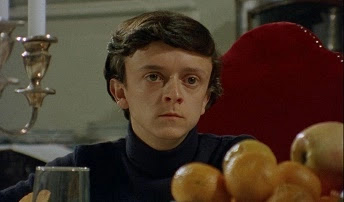
The film is mostly talk and no action. One shouldn't expect it to even have a climax of sort. Cassavetes is interested in the implications of the situation more than anything. The entire thing also works as a metaphor for the corruption of the power of money. How far are you willing to sell your soul?

★★★★

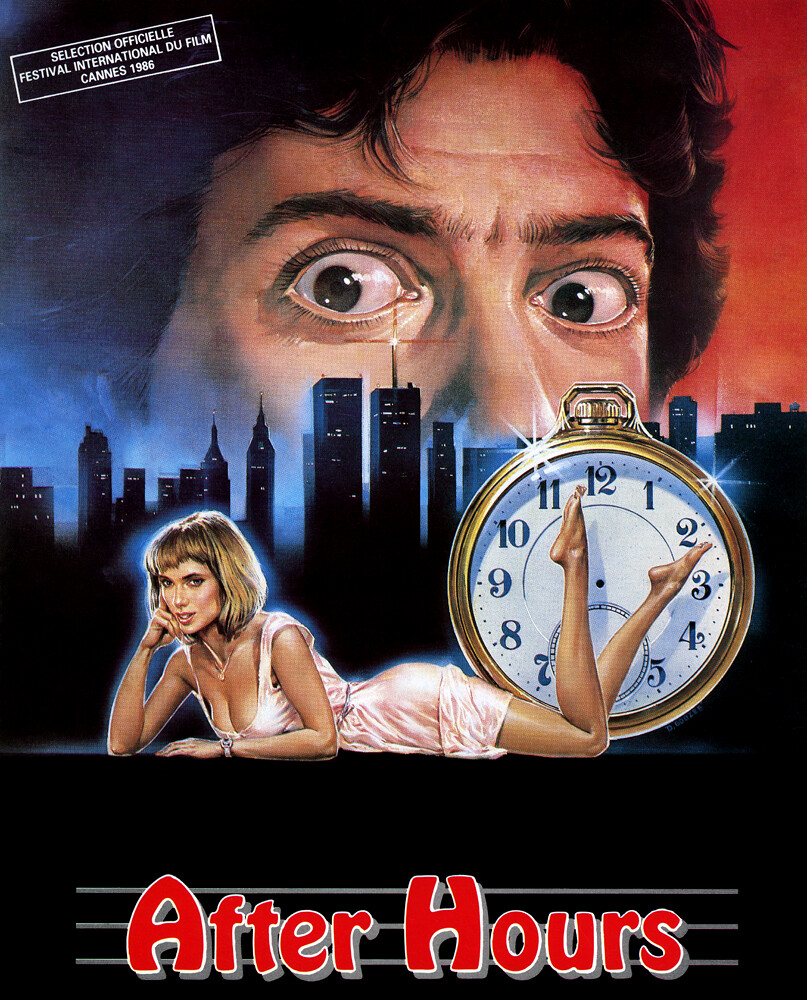
After Hours (USA, 1985)
Dir. Martin Scorsese


It used to be thought that the 1980's weren't really that good for the director Martin Scorsese. I beg to differ, I find he did some great work that riffed on ideas and themes he had set up in the previous decade. After Hours is one of his rare more comedic movies. But in fact, it's a thorough New York movie that sees the city, yuppified since the days of Taxi Driver, as dangerous as ever.

A hapless office worker (Griffin Dunne) is a regular young man but takes a few steps out of his comfort zone as he's looking for love. Out in the middle of the night in a weird part of the town alone and with no money seems to attract him to oddballs and authorities that don't mean him well and are out to get him. The neon-lit, cold and smoky New York never looked better but at the same time, more terrifying.


The film is emphatethic towards everyone who's down and out in the Big Apple, even if it casts most of the characters of the city with major mental issues and cynicism. But the key is that circumstantial setbacks can pile up and minor things like losing a $20 bill may cause a chain-reaction that only adds to the plight of the outcasts. It's a film that also gets to the heart of the loneliness felt in cities, even if there are plenty of people around. 

Scorsese has borrowed from Woody Allen a distrust of the city's intellectual and artistic class and mercilessly mocks it. He also manages to sneak in some of his personal obsessions, from late-night diners to talking about film classics to the mix as well, making this one of the movies surely influencing a young Quentin Tarantino. The only major problem with the movie is that it hits so close to truth it's not that funny as a comedy, but hey, you can't always have everything.

★★★★


Uncut Gems  (USA, 2019)
Dirs. Benny & Josh Safdie

The latest one, and the one that particularly inspired this writing comes from the arthouse cinema production house A24 and has Scorsese and Cassavetes in particular as influences. The seediness in the previous ones is now contrasted with more modern sports centers and auction houses. But even if it's not done in the open any more, the threat of violence looms even stronger behind every scene.

Lando Calrissian -styled gems dealer Howard Ratner (Adam Sandler) is at once a sleazy little rat, and a fast-talking trickster you can't help but to like even if his self-destructive adrenaline addiction is putting not only himself, but his his family and friends on harm's way. Ratner is about to make a huge sell on a particularly beautiful opal, which puts him in a position and mindset to make increasingly dangerous bets on sports. The movie follows as Ratner ups the ante again and again, always surviving by the skin of his neck, until finally the bets become way too big to handle.


For the fast-paced modern audiences, the movie is fast-cut and has plenty of side-plots going on at all times. The effect may be anxiety-inducing for some viewers, but the film also warrants repeat viewings if one is interested in seeing the strings of plotlines getting pulled. Given the chance, Sandler can be a great character actor, so it's a bit sad he didn't get the rcognition he deserved from this which will surely make him go back to making very half-assed comedies with no effort. But such are the joys and victories that the film presents, too. They are fleeting, and something much worse is yet to come soon enough.

 ★★★★ 1/2

Friday, 25 September 2020

Three laughs: Rocky IV


It is hard to rate some trashy films. Films can be really good entertainment in spite of the quality of the filmmaking. In fact, it might be even harder to create unique trash that keeps surprising you than most "quality" films with which you know what you are going to get. It certainly is an even better pleasure to watch them. My friend says that he knows a trash film is worth something if it gets three laughs out of me. I mean proper, good belly laughs when you just can't believe what the film is showing to you, scene after scene. That's as good a rating as any for these movies. Any film that has these three laughs has a special place in my heart.

★ or ★★★★★


Three laughs case file #38:
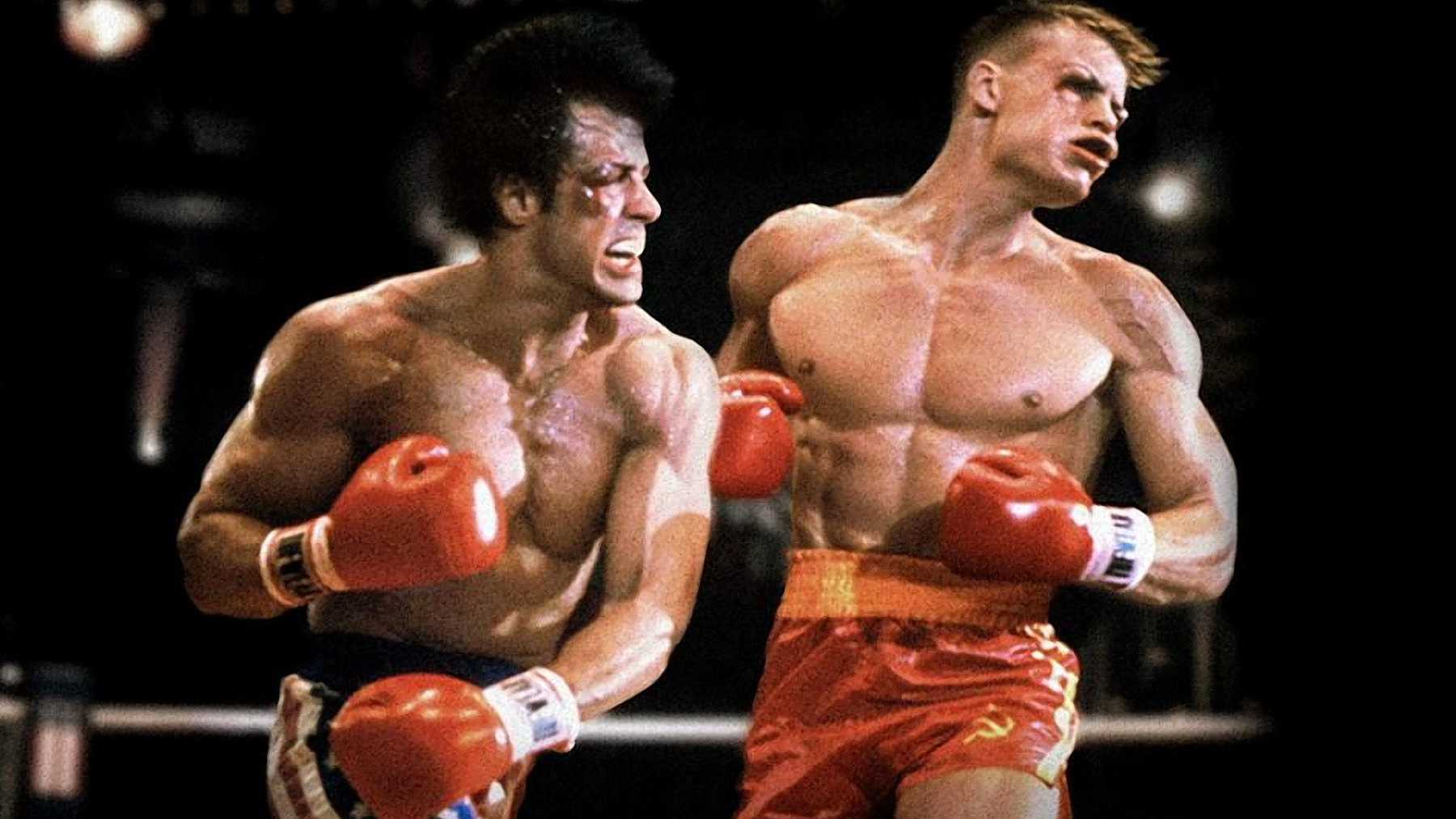
Rocky IV (USA, 1985)
Director: Sylvester Stallone

So, as many movie directors these days have too much time on their hands, many have started to recut some of their films they feel didn't really work in their first form. Francis Ford Coppola is working on Godfather III, Steven Soderbergh has probably already gone through half of his filmography, and Sylvester Stallone has Rocky IV.

But why Rocky IV? It's as close to perfection as anything Stallone has ever made, and Creed notwithstanding, my favorite of the never-ending Rocky series. It turns out Stallone has changed his mind about Paulie's robot and he explains he doesn't like it any more. So, it would seem Stallone would cut out some of the movie's bizarreness and make it just a so-so melodrama, which the Rocky saga already has in abundance.

Well, here at Last Movieblog we are undoubtedly pro-robot. Stallone may recut all he wants but we will always have the original version (Right? He's no George Lucas, right?), so let's have a look at some of the laughs offered by the Rocky Ivee.


Three laughs (SPOILERS):

1. Before the movie has even settled to be a metaphor for the fight against the US and the Soviet Union, we see Ol' Rock has become a wealthy man since his underdog days. He lives in a huge mansion with his family. In fact, he even buys his friend Paulie (Burt Young) an expensive birthday gift. But he doesn't get the sports car he wanted, he gets a weird, bug-eyed robot that's probably meant more for Rocky's young son. In fact, the reason the robot is in the movie is that it's a helper tool that Stallone's actual son used for his autism.

Nevertheless, there's a big laugh coming on when inexplicably Paulie has switched the robots controls later on, so it uses a chirpy female voice and serves him beer. Knowing the background makes it even doubly bizarre that Stallone implies Paulie would use his robot for sex.  

2. I always enjoy Dolph Lundgren and feel like, as an actor, he got served the short stick and could have given so much more in his heyday. The scene when he's raised to his fight with Apollo Creed is carried by his face of confusion when he sees a Las Vegas -style gaudy James Brown musical number with small airplanes in the roof, showgirls, acrobats, and some sort of giant golden calf statue. Is Stallone implying that Americans are worshipping a false god? The sneeding way Lundgren delivers his line "You will lose" to Creed who he's about to kill in the ring, is also nothing short of magnificent.

3. A usual critique of the movie is that it's half montages set to the cheesiest arena rock the 80's had to offer. My personal favorite is the one set to Robert Tappert's No Easy Way Out where Rocky is driving around with tears on his faces thinking about his friend Apollo and the homoerotic scenes in Rocky III when they were running on the beach and bear-huuging in the waves. There's some shots of Adrian and classic Rocky training montages thrown in for good measure, of course, since the film is no homo.

Sunday, 13 September 2020

DePalma x Hitchcock

 
Director Brian DePalma just turned 80 years old (yesterday, but I'm having trouble keeping schedules), so it's a good opportunity to take a look at three of his movies. Throughout his career, DePalma has been criticized for outright stealing scenes, set ups and camera angles from well-known directors, mainly Alfred Hitchcock. As a sort of postmodernist, both winking at people familiar with films and developing them into something new altogether, DePalma is a clear forerunner for filmmakers such as Quentin Tarantino or Ben Wheatley. So in this post, I have three thriller films of DePalma's that really go all in in swiping stuff from Ol' Hitch, and see whether the steal made for a better movie or whether it's just a lukewarm version of stuff better made before.

Obsession (1976)

Pilfers from: Vertigo (1958)

While Sisters (1972) was DePalma's calling card for the world of the thrillers, this was a certain turning point in his career. For one, he managed to snatch Hitchcock's frequent collaborator, composer Bernard Herrmann to do the music. For the other, he got ire from Hitch himself, who considered the film to be a remake of his own Vertigo. Both movies are stories of an obsessed man (played by Cliff Robertson here) losing his beloved, but later finding a doppelganger who he remakes in her image. But in both cases, the "new" woman has a secret and some knowledge of the past that comes to cost the protagonist.

The original script was done by Paul Schrader, who is an expert in having troubled characters with an inner life in total turmoil. It was extensively rewritten by DePalma to better touch upon what he wanted from the film. Schrader had different ideas for the entire ending, which probably would have been considerably different from Vertigo. It would have been interesting to see another time-hop, since the 16-year skip in the beginning takes us quite by surprise.

Robertson is perhaps not the most charismatic leading man, he does sell the inner anguish, but is like a cold fish in romantic scenes. DePalma has later said he didn't really buy his performance here, also perhaps due to the actor being difficult to work with. John Lithgow as his best friend and business partner steals a lot of the intrigue, and if you're familiar with some of DePalma's later efforts, you'll know what kind of a role he's playing here as well.


The film goes into a lot more taboo subjects Hitch couldn't, including incest. They both don't really care on whether the central criminal plot makes little sense, but Hitchcock as a more mature filmmaker can better drive the focus of the film to be solely of the central character's, well obsession. Both movies are interested in trauma being played out, surfacing as PTSD in sudden bouts of madness. But the film is also perhaps too slow for its own good. Vertigo packs a huge story in a very compact running time, but here one keeps hoping the film would roll along, having mainly an interesting ending. It also seems like the ideas of the pain of lost love being mirrored in art or restauration thereof, was approached with more sophistication by Hitchcock.

DePalma also takes cues from Dial M for Murder, Rope and Marnie.

★★★

Dressed to Kill (1980)

Lifts from: Psycho (1960)


This one starts and ends with a threatening shower scene. Also one of the key scenes of this film is a heavy reference of the seduction scene from Vertigo; both of the take place in an art museum, and use very little dialogue. DePalma can and will use a lot more explicit sex scenes. Classic Hollywood star Angie Dickinson is surprisingly game, even though in nude scenes she used a body double.

The most notable steal from Hitchcock's sole horror movie comes from the structire. Both films kill off the main female character midway through, and from thereon follow her sister trying to solve her murder, played here by Karen Allen. The film also uses other similar stock characters, such as a young man hung up on his mother, a sleazy private detective and a psychiatrist trying to find the reason on theories of sexual repression (played by Michael Caine). But DePalma also enjoys a bit of misdirection, having some familiar seeming roles be entirely red herrings. 

DePalma can easily be criticized for misogynist attitudes in films, and in here too, an adulterer woman gets her comeuppance very bloodily. It's a bit of a SPOILER, but the trans community has also heavily criticized the film's portrayal of transsexual tendencies and, having the early 60's Psycho-like idea of having them act as serial killers. There really isn't anything positive the film will say about any sexuality out of your basic monogamous cis-sexuality, but at least Allen's character is a sex worker who also works as an active protagonist.


The film also has a point in pointing how Hitchcock's voyeristic tendencies are obsessive, damaging and toxic, taking their ideas to their logical counterpoint. But it also revels in these very same tendencies. DePalma also plays on his own experiences, since the infidelity that starts out the film was something that was happening in his own family as well. The film has great camerawork and a beautiful soundtrack that makes murder of women highly aestethicized and thus making the audience complicit of the filmmaker's perversions. Also the film's ending is frustratingly bad, having odd conclusions and a dumb jump scare straight out of Carrie.

★★ 1/2

Body Double (1984)

Purloins from: Rear Window (1954)


The idea of duality of an identity or dual personas is very central in DePalma's filmography which probably explains why he's so obsessed with Vertigo in particular. This one dives also deep into ideas of voyerism, prevalent also in Hitch's Rear Window and Dial M for Murder. It makes Hitch's distrust of authorities also an aspect of shame and self-hatred following from obsessive and sexual thoughts.

The film has a cold open on a B-grade horror movie which reminds of Blow Out. The main character (played by Craig Wasson) here is an actor struggling with mental illnesses such as claustrophobia. He wanders off the set and notices a woman who does erotic dances in her apartement every night. Looking at her through telescope, he becomes somewhat obsessed, but also starts to suspect her life may be in danger, giving him an excuse to stalk her in the streets. But even as he witnesses more and more evidence of brutal crimes being committed, he is not believed by the authorities because they see him just a pervert.


At the time, DePalma was seen having gone too far with his use of sex and violence in his films. It's easy to see DePalma just following on with what the Italians were doing a little prior (even if he himself strongly denies it), yet his success opened doors for plenty of Hollywood Erotic thrillers in the late 80's and 90's (most of which were a lot more moralizing). Also DePalma was very much on top of the neo noir movement, making sleek, beautiful pictures to go with gritty stories he was telling. The film even incorporates a Frankie Goes to Hollywood music video in the middle of itself. It's all highly entertaining.


One can see how DePalma is working to solve some mysteries of film entertainment and its use in the world himself. With this and Blow Out a craftsman working in the film industry finds a "true life" plot which affects his way of working. Which is of course just as outlandish and over the top as anything else in Tinseltown. Is real world violence catching up, and does it have a symbiotic relationship with thriller films as well? Do they feed each other? In this case, the lines between movie and reality really fall apart in the 4th wall-breaking finale. Was all the suspense and thrills for nothing? Is the film completed?

When he worked these ideas into his Hitchcock thriller, I think his constant steals also started to actually work for the film's own benefit.

★★★ 1/2

Tuesday, 1 September 2020

Three laughs: The Last American Virgin


It is hard to rate some trashy films. Films can be really good entertainment in spite of the quality of the filmmaking. In fact, it might be even harder to create unique trash that keeps surprising you than most "quality" films with which you know what you are going to get. It certainly is an even better pleasure to watch them. My friend says that he knows a trash film is worth something if it gets three laughs out of me. I mean proper, good belly laughs when you just can't believe what the film is showing to you, scene after scene. That's as good a rating as any for these movies. Any film that has these three laughs has a special place in my heart.  

★ or ★★★★★


Three laughs case file #35:  
The Last American Virgin (USA, 1982)
Director: Boaz Davidson

It's time to go back to school! I'm not usually big into teen movies, but there's an exception to this rule, a kind of ultimate how-I-spent-my-summer-vacation movie. As it turns out, it's also a straight remake of an Israeli American Graffiti ripoff, Lemon Popsicle. A lot of the modernization of Cannon Group's The Last American Virgin tries way too hard to capture the hearts of 80's teenagers, which makes it so preposterous and funny.

In particular, the movie's soundtrack is full of the cheesiest early 80's ballads you could imagine. The melodrama may suit the teenager mindset when every little crush is a matter of life and death, but it seems quite silly when half the movie is dumb dick jokes. Also the sad sack main character Gary (Lawrence Monoson) looks about to cry at any given moment. 

The film quests Gary and his two meatheaded friends during one summer in a quest to get laid. They find plenty of opportunities, but insecurities keep Gary from gatting any. That, and a love for the new girl in the neighborhood, Karen (Diane Franklin). But sadly, there's a triangle drama as Rick (Steve Antin) picks her up and starts developing a relationship. One of the reasons I find this better than most teeny fare is the more realistic feelings of lovelorniness and unfairness throughout. I'm a cynic, but it feels more comfortable than fairy tales. The end scene in particular is a real coup de grace.


Three laughs (SPOILERS):

1. As Devo's Whip It plays on the background, first we have a nerd peeping into the girl's dressing room, and as he's caught in the act, it devolves into a scene with the entire gym class measuring and comparing their ding-dongs.

2. In a particularly unrealistic scene straight outta the letters column of Penthouse, the boys are seduced by a sexy Spanish woman, alone at home with her boyfriend being a sailor. The boys take turns in entertaining her in the bedroom. As the tubby Victor (Bryan Peck) get's a go, the other boys peep from the keyhole. KC and the Sunshine Band's That's the Way (I like it) plays as Victor thrusts.

3. In what is undoubtedly the best use of U2 in anything ever, I Will Follow plays on the background as Gary has to work his ass off in order to pay for Karen's abortion. It is intercut with the procedure. Yes, this movie has a U2 Abortion Montage.

Monday, 31 August 2020

Three laughs: The Texas Chainsaw Massacre 2

 It is hard to rate some trashy films. Films can be really good entertainment in spite of the quality of the filmmaking. In fact, it might be even harder to create unique trash that keeps surprising you than most "quality" films with which you know what you are going to get. It certainly is an even better pleasure to watch them. My friend says that he knows a trash film is worth something if it gets three laughs out of me. I mean proper, good belly laughs when you just can't believe what the film is showing to you, scene after scene. That's as good a rating as any for these movies. Any film that has these three laughs has a special place in my heart.  

★ or ★★★★★


Three laughs case file #34:
The Texas Chainsaw Massacre 2 (USA, 1986)
Director: Tobe Hooper

It's strange how some horror sequels can get away with a more silly tone, such as Evil Dead 2 or, to lesser extent, Phantasm II (maybe one could also argue Dawn of the Dead). Some that try out similar things are reviled, such as The Texas Chainsaw Massacre 2. To be fair, Evil Dead 2 sets a gold standard in horror-comedy filmmaking and others that go that route aren't nearly as good or funny. But that's not to say they are bad movies, far from it!

Director Tobe Hooper has insisted that even the first one is a sort of black comedy. There are perhaps some chuckles to be had from the mad exploits of the Hitch-hiker or the dinner scene late in the movie. Nevertheless, the sequel goes a lot further in this aspect.  The film was made as a part of the director's deal with Cannon Group, which has brought up suspicions that it was made in order to secure funding to the more ambitious Lifeforce (1985), or perhaps earn back a little of what it lost.

The sequel sets out to skewer much more of the Americana than the previous did, with digs about the state of consumerism, media, sexual repression, dual moralism and 80's eat-or-get-eaten capitalism in general. It also dives deeper into distorted ideas of family values. Cannibalism and murder is a way of life, but the film's insane characters also revel in and enjoy it.

Basically the film's plot (such as there is one) is very similar to the one in the previous film. The lady DJ Vanita Brock, or "Stretch" (Caroline Williams) gets kidnapped by Leatherface and his family and must fight to survive in their secret lair, now close to Dallas in order to easier capture victims. Meanwhile Sheriff Lt. Lefty Enright (Dennis Hopper) is out to avenge the disappearance of his son in the previous film. This time, though having a "Chainsaw" massacre is not just empty talk, and power-tools buzz for a lengthy part of the movie. It's also made pretty clear on which body part these long blades are meant to be an extension of.


Three laughs (SPOILERS):

1. The very first scene makes clear the intentions and approach of the sequel as opposed to the first. A bunch of obnoxious yuppie teens hoot and holler, and blow people's mailboxes as they're driving to a party on their minivan. But when the night falls, they get a taste of their own medicine as a zombie geek jumps on the youngsters' car. In fact it's leatherface doing a bit of a puppet show with a corpse and soon gives them a show in the use of a massive chainsaw as well. Oingo Boingo is playing on the background for this scene.

2. The film's biggest new character, Chop-Top (Bill Moseley) is a truly slimy and obnoxious dude, out to make Stretch as uncomfortable as possible. It's almost a relief when suddenly Leatherface burtsts through the door. But the clumsy oaf can't catch Stretch as she makes good use of a fire distinguisher runs through a safety door.  Instead, he manages to injure Chop-Top's head, revealing the metal plate he got in 'Nam. But he woes more of the destruction of his terrible Sonny Bono wig.

3. Towards the end there's a touching but blackly comedic scene of Lt. Enright finding the remains of his son, which happen to be a gruesome skeleton on a wheelchair. He proceeds to destroy the entire lair with his own chainsaw. He comes to Stretch's rescue later on and declares himself "The Lord of the Harvest". But Leatherface isn't going to let the guy threaten his family, culminating in a once-in-a-lifetime duel with chainsaws. This was this franchise's high point. It was all downhill from there on.

LinkWithin

Related Posts Plugin for WordPress, Blogger...