Showing posts with label catastrophy. Show all posts
Monday, 20 April 2020
Three laughs: King Kong Escapes
It is hard to rate some trashy films. Films can be really good entertainment in spite of the quality of the filmmaking. In fact, it might be even harder to create unique trash that keeps surprising you than most "quality" films with which you know what you are going to get. It certainly is an even better pleasure to watch them. My friend says that he knows a trash film is worth something if it gets three laughs out of me. I mean proper, good belly laughs when you just can't believe what the film is showing to you, scene after scene. That's as good a rating as any for these movies. Any film that has these three laughs has a special place in my heart.
Three laughs case #18:
King Kong Escapes (Kingu Kongu no gyakushû, 1967)
Director: Ishiro Honda
About time to talk about giant monsters in this column. One of my favorites of the genre comes from the deal of the Toho company to have King Kong fight Godzilla. They did an independent sequel/spin-off after that which sees Kong take on a Mecha-Kong, 7 years before Godzilla met his own robotic doppelganger. I think the idea was to have Kong fight against a giant Frankenstein's monster. Ol' Frankie did later get his own two Japanese kaiju movies, but without Kong, whose rights reverted back to Universal.
Nevertheless, this one is fun precisely because, even though Kong is a King, he tends to be a very vunerable character in his fights, even more so than Godzilla, which creates some more excitement. But here much of the fun is due to the grotesque ape costume they have on the main character with its droopy eyelids and sharp brown teeth. And wobbly way of moving.
The villainous doctor and builder of the giant ape robot is named Dr. Who, in a probably another copyright-infringement I seem to love so much. The robot, which has Kong's famed abilities, is used to drop bombs in a crack in the Antarctic in order to obtain some radioactive material. But the radioactivity makes the robot malfunction, and thus Who must scheme a group of scientists heading to Skull Island to grab King Kong to do his dirty work for him. But Kong does not like to be held captive...
Three laughs (Spoilers):
1. On Skull Island, things are same as always. When a really grumpy-looking dinosaur growls a bit at a woman, we get the first glimpse of the film's hero. Glassed-over eyes slowly opening, staggering around and revealing its rotten teeth, this Kong is a thing to behold. After a tender moment with the blonde, he soon gets into a drunken brawl with T-rex, though. The japanese have some extra flourish in their monster mashes, though, like when the dying T-rex starts foaming at the mouth.
2. Later, helicopters arrive to dose Kong with sleeping gas, but it just makes it seem like ten beers and six vodka shots did the guy in as his eyes start drooping. And as with these kinds of cases, he has to be carried away from the bar, I mean, island. When he wakes up in a ship's hull he even seems appropriately hungover.
3. I takes a while, but we finally learn excatly what Dr. Who wants with Kong, and it's his world-famous digging skills, of course! One could have thought Kong wouyld be more famous climbing, though he gets to do that on the famed Tokyo Radio Tower late in the film, too. But long arms appear to be as useful as any machine when it comes to tunnel-digging. Swirling his arms away at the Earth's crust he still acts as mind-numbingly clumsy that he seems as drunk as ever. In-story, he's drifting in and out of sleep. A fun drinking game would be to take a drink every time the film shows a close-up of his golfball eyes. One would be as drunk as Kong in no time!
Thursday, 6 February 2020
Three laughs: Thunder of the Gigantic Serpent
It is hard to rate some trashy films. Films can be really good entertainment in spite of themselves, and it is an even better pleasure to find some trash that keeps surprising you than watching most quality films. My friend says that he knows a trash film is worth something if it gets three laughs out of me. I mean proper, good belly laughs when you can't believe what the film is showing to you. That's as good a rating as any for these movies. Any film that has these three laughs has a special place in my heart.
Thunder of the Gigantic Sepent (Hong Kong, 1988)
Director: Godfrey Ho (as Charles Lee)
If Bruno Mattei is known for combining two movies' worth of stolen ideas into one movie, then Hong Kong's maestro Godfrey Ho does that literally. He used to buy film stock and combine multiple films into one with English dubbing. Mostly these are Ninja pictures, which have main characters that never meet, and more abandoned plot threads left unexplored than the last seasons of Lost and Game of Thrones combined. But Ho really did also test out which movies sold.
Case in point he bought out a Korean giant monster movie and combined it with a spy thriller. The end result is Thunder of a Gigantic Serpent, a title which sounds like an euphemism of farting before having to go to the bathroom. As you can imagine, much of the pleasure of this film comes from trying to combine a gritty crime thriller leaving plenty of corpses behind, and a silly family comedy of a pet snake growing into impossible size. But you know, some of the Godzilla movies were pretty violent, too. Somehow it all stays together.
Three laughs (SPOILERS):
1. The titular Gigantic Serpent starts out small, as a tiny snake that befriends a little girl. As the girl is asking on what to call her new pet, the snake waves its head first horizontally in disapproval, then vertically when the girl comes up with a name. She decides to call it Mozlov. The snake is in parts played by a rubber hose on a string, other times by an actual snake. Either way, the boneheaded way of having it nod or shake its head gives out a giggle each time.
2. The dubbing in general in this film is kind of hilarious. The main little girl sounds like a British lady talking with a very soft voice. The main bad guy seems to try out a voice somewhere between Cobra Commander and a cartoon vampire. The voices of his minions, gangsters and criminals are trying to sound as tough as they can. This includes swearing, which works to further destroy the illusion that this is supposed to be a family movie. "He lost the fucking formula!"
3. Once Mozlov the snake gets electrocuted with a groth ray, we enter the phase of the rubber puppets. The snake has a really irritating parrot-like scream. The sitcom-like comedy of a little girl trying to hide a huge snake in her room seems to have some Freudian undertones. I also love the scenes of the snake helping the girl out to win a roller-ski race pushing her around are to be seen to be believed.
One must add that the titular Thunder the Gigantic Serpent makes once the gangters start to threaten the little girl, is as underwhelming as they come. Just rattle a few bridges and skyscrapers and that's it. But being denied of your expectations is all part of the charm of these VHS-era clunkers. I wish we could have had a proper dvd or blu-ray release of this.
Tuesday, 21 January 2020
Three laughs: Maximum Overdrive
It is hard to rate some trashy films. Films can be really good entertainment in spite of themselves, and it is an even better pleasure to find some trash that keeps surprising you than watching most quality films. My friend says that he knows a trash film is worth something if it gets three laughs out of me. I mean proper, good belly laughs when you can't believe what the film is showing to you. That's as good a rating as any for these movies. Any film that has these three laughs has a special place in my heart.
Maximum Overdrive (1986)
Director: Stephen King
Stephen King on cocaine is much like any 13-year-old. A massive dork. Nothing else could explain how such an immature movie as Maximum Overdrive could be created. Of course in the 80's, King could do anything and moneymen would be ready with their checkbooks. I'm glad he made this. Much of the movie seems to play like an Itchy & Scratchy cartoon, even though somehow this was supposed to be scary in some way.
Basically it's the most clichéd cowboys vs. indians story, with self-driving trucks (lead by a toy store novelty truck with the face of The Green Goblin) serving as the Indians, and Emilio Estevez (straight outta Repo Man) as the straigh-faced cowboy. This film seems to be a major influence on M. Night Shyamalan and his film The Happening, another film which attempted to modernize an old-timey sci-fi B-movie about the tables getting turned on humanity. The both movies had too few genuinely scary ideas and too many campy laugh-out moments and bad acting for anyone to be able to take them seriously. Nevertheless, as cult comedies, these are unbeatable.
Three laughs (SPOILERS!):
1. The first laugh comes in the first scene. This spot is usually used to create an athmosphere of dread and fear in competent horror films. King, however uses first the opening text to explain some mumbo-jumbo about a passing meteor. And then, he himself is seen walking to an ATM under a big banner that says FUCK. The machine doesn't dispense cash, it just tells him he's an asshole. Self-deprecation of the highest order.
2. The next scene is just as funny, as a draw bridge raises unexpectedly and ruins many a people's day. Watermelons get squashed, some guy falls into water and of course cars are crashed in some prime Blues Brothers -like stunts. The funniest thing, however, is seeing the AC/DC truck go, since they are the fellows blasting WHO MADE WHO on the soundtrack.
3. The laughs keep coming when a junior-league coach is killed by a Coke machine shooting cans at his junk and a little kid gets flattened by a self-driving steam roller. I would give it to one stock racial hustler losing at an arcade and letting out an exhausted SHIIIT before the machines first give him a lot of money, then hypnotize him for a bit and then zap him dead. Overly convoluted, don't you think?
Sunday, 3 March 2013
The New Batch Revisited
Fed up with Hollywood right now? I know I am. And I know another who most certainly was in 1990: Joe Dante. So, what better time to join us all together for the first installment of a new recurring series in this blog. The Revisited takes a look at a cult movie I've already seen multiple times and picks out the elements that make it work so good. The series also takes a look on how the movie holds up today. The best way to begin this series is to take a look at one of the most unusual, and best, movie sequels ever made. So here you go: Gremlins 2: The New Batch!
The Face Value
Joe Dante is a director straight outta Roger Corman's stable. He's an exploitation filmmaker that found fame and fortune waiting in Hollywood, mostly thanks to his peers like Steven Spielberg and Robert Zemeckis who had risen in power and were able to produce any kind of films they wanted. With Dante, it was his unique mix of slapstick humor straight from Looney Tunes and Tex Avery cartoons, monsters and set ups from 50's science fiction, and biting satire of the good old', red-bloded mom's apple pie Americana. While such subjects undoubtedly sold in the golden age of Amblin entertainment and VHS horror films, studios tended to not quite get Dante's unique visions. One of his better-fared, however, was the anarchic Christmas tale of 1984: Gremlins.
The movie the director himself calls "The Muppet Show on Acid" showed another side to the kind of cute and cuddly plush toy critters the public of the 80's was lapping up. It's also a parody of Christmas movies, what with magic being brought to a small town consequently wrecks everybody's lives rather than brings them together. Dante clearly had a lot of fun with cartoon violence and havoc wrecking little monsters but he felt that the entire story was there. But studio execs had another idea. Ironically, the movie set to destroy the idyllic image and the cutesy feel-good everyone was selling, turned out to be a profitable machine in its own right.
Since Dante didn't want to do a sequel, the producers searched around. No one was eager to follow Dante's footsteps, and Spielberg stuck to his friend's side. So, finally the negotiations got Dante back, but also gave him more free hands to play around with the concept. As it happened, Dante had already planned to do a satire of movie sequels and how useless they are at core. The director's idea was to wreck the entire franchise to the ground before the studio could find someone to direct Gremlins 3. And he was about to have the time of his life doing it.
The Plot
The old Chinatown block where Mr. Wing (Keye Luke) keeps shop is set to be demolished in way of a hyper modern office block built by businessman Daniel Clamp (John Glover). While Wing opposes, his health is in a bad condition, and the property passes on as he dies. After that, his pet mogwai Gizmo runs away from home. He gets captured by the scientists Martin & Martin who bring him to their lab. But Gizmo manages to escape again before they find out that mogwais breed by getting them wet.
Meanwhile, Billy Peltzer (Zach Galligan) has moved into New York with his girlfriend Kate Beringer (Phoebe Cates) to build a career as an illustrator in Clamp's company. He founds the wandering Gizmo in the building and promises to keep him safe. But of course a freak accident gets the mogwai to breed and soon there's a whole new batch of Gremlins growing. They make a mess of Clamp's building first, and then plan to take over the whole of New York.
The Contents
The characters of the film are quite wise to how the whole ordeal is going down, going from rememberance of the first film to a whole new meta-level of consciousness. The scene where John Astin's clumsy janitor fixes a water fountain with Gizmo attempting to dodge the spraying water is played out purely for laughs. Likewise Dante makes fun of the two other rules. The characters get into an argument of the vagueness of the eating rule: how soon after midnight can mogwais start eating again without turning into gremlins? Also, gremlins can't be beaten by luring them into the sunshine since it happens to be a rather cloudy day. Plenty of scenes show them in quite bright environments anyway.
![]() |
| No "bright light?" |
Most of the film works as a bitter letter to plastic capitalism, with gremlins standing in as ravenous consumers, always wanting more and more. But the thing is, the creatures won't succumb to society's norms and act all meek in front of rich people. They do what they want and have no need for hierarchies. Yuppie bistros, late night cable shows, even Leonard Maltin and his damning movie reviews - all get parodied in a machine gun pace.
The building itself has a lot of places set up for various types of comedy. There's a tv station for media satire, a sci-fi lab for some B-movie shenanigans and a food court for some old-school slapstick. A movie theatre set hosts the most meta joke of the movie, with Hulk Hogan appearing to break the fourth wall in order to stop gremlins from wrecking the movie they're starring in and the audience is watching! Did I mention this movie is really, really awesome?
An interesting character is that of Daniel Clamp, a clear stand in for the likes of Donald Trump and Ted Turner. In the beginning of the film he's played off as a villain, a ruthless magnate who won't allow tradition get in his way of progress. He's always seen through a monitor, video-conferencing from his office rather than to appear in place. Later on, small-time bosses in his building have ridiculously tight standards of appearance that they rule to minute detail.
But when Clamp makes his full appearance, he really isn't such a bad guy. He's a clueless buffoon that doesn't fully realize the consequences of his business decisions, yes. The real villains are his underlings, trying to suck up to the billionaire by trying to please him in the most absurd fashions possible. During the gremlin ordeal, Clamp gets a whiff of the old-timey Americana he had so forgotten, and plenty of his yes-men get their punishments in the forms of various gremlin skits.
![]() |
| The crudest and one of the funniest being saved for last. |
In the midst of such a colorful cast, the human actors can't help but to feel like staticians. And that is, even though the actors are awesome. Veterans like Christopher Lee and Robert Prinsky do their outrageous roles with both grace and glee. Dick Miller, a xenophobic and a little racist all-American fruitcake in the first, has transformed into an unlikely action hero for this one. My favorite is still kathleen Freeman's Microwave Marge, a hysterical woman bringing the same kind of layers of camp to this as Una O'Connor did for James Whale's monster movies back in the day. In the nastiest, most vicious blow to the original movie, Dante even undermines its blackest, darkest scene, with Phoebe Cates having a pervertedly tragic reason for hating President's Day as much as she does Christmas.
It's American pop culture and consumerism thrown into a blender and dyed colorful and splashed to screen. Dante evokes the cartoons of old with the same kind of fast-moving never-stopping energy. Which is why it's so apt that the film begins with a short Bugs & Daffy segment animated by none other than Chuck Jones himself. Here's a clear changing of the guards if I ever saw one. It's a shame the studio interfered with Dante's actual Looney Tunes movie so much. That film has several segments good enough to make the viewer wonder if corporate culture cost us another as big a masterpiece in mischief as Gremlins 2 is.
The Legacy
Or: Why the world doesn't need Gremlins 3
Gremlins was a big hit of its time, and there were plenty of films that replicated its formula, such as Critters, Ghoulies, Troll, Hobgoblins and so on. While most of these were aimed at children or pre-teens, Gremlins had an unique nastiness that worked well on adults too, that proved hard to replicate. Seeing it as a child was actually as exciting as watching a grown-ups horror film. And there are so many pop-culture riffs and spoofs, it's impossible for children to catch them all. I only got the Public Enemy -referencing grapefruit squeeze the last time I watched it, and I've probably seen the movie 10 times.
While Gremlins 2 doesn't have as many horror elements as its predecessor (save perhaps the scene with Spider-Gremlin), it did everything else bigger and bolder. And inexplicably, fell short on the earnings. Perhaps it was due to audience's tastes having modified. Joe Dante himself believes he waited too long after the first movie. Nevertheless, that fact served Dante's ultimate goal of preventing further sequels. Nevertheless, the auteur has now and then toyed with the idea of doing another, simply because, well, the director hasn't had the kind of freedom in his work since.
But having celebrity cameos and broadening the scope just wouldn't work any more. The reason is because there eventually was a bigger film, Tim Burton's underrated 1996 film Mars Attacks! The movie plays out much like Gremlins would if they had access to ray-guns and flying saucers. Mars also takes a step further into mean-spiritedness. While the body count in Gremlins 2 is relatively low, Burton gleefully executes celebrities by the hoardes. His offs include A-listers such as Michael J. Fox, Danny DeVito, Pierce Brosnan, Glenn Close, Martin Short, and Jack Nicholson twice! Burton also plays out with an all-you-can-eat buffet of disposable plastic pop culture relics, and has silly cameos from such unlikely sources as Pam Grier, Paul Winfield, Christina Applegate and Tom Jones.
Since Mars Attacks! still isn't quite as good as either Gremlins movie, I'm thinking the most important thing is that Gremlins are hand-crafted works of love. Mars Attacks! is "just" a silly little catastrophy movie parody and a cartoon movie with plenty of now-shoddy mid-90s computer effects. At best, that's what any new version would be, since Hollywood execs think computer effects are the only way to go now. While that could bring an impressive Gremlin army to the screen, it wouldn't have the same soul.
They should rather remake Critters.
Sunday, 9 December 2012
Coping With The Cloud
So after the smoke has cleared and the world has been devastated by nuclear holocaust, what then? Should society be rebuilt as it was, or should the remaining mankind adapt to the situation in a wholly new level? There are a number of ways the world might turn up after the drop of the bomb, but unfortunatelly they are mostly not very fun. Mostly.
Damnation Alley (1977)
Director: Jack Smight
Taking place in the futuristic year of 2012, Damnation Alley is based on Roger Zelazny's 1967 novel, which has been seen as an important predecessor to all sorts of post-apocalyptic stories since. In the book, a ragtag group of survivors take the role of pioneers and drive across America's radioactive wasteland. The loose film adaptation however, released on the same year as Star Wars, is more of an old-fashioned adventure romp than a truly horrifying cautionary tale with barbarian motorcycle tribes. Nevertheless, it does have several quite effective scenes.
First, we have a lengthy opening scene that explains the background of the holocaust of World War III. Lieutenant Tanner (Jan-Michael Vincent) and Major Denton (George Peppard) of the US Air Force see incoming missiles on their radar and launch a nuclear counter-attack. The nuclear apocalypse turns the weather unpredictable and mutates the flora and fauna all across the continent. The world turns increasingly hostile against mankind.
Two years later, Tanner and Denton, still surviving in the Southern California military base, have been waiting for a radio signal to give sign of any other survivors. They finally manage to capture one in Albany. As an explosion destroys most of the base and kills most survivors, they, along with Airman Keegan (Paul Winfield) equip a truck to take them through "Damnation Alley" all the way to Albany. On their way they face numerous dangers and various survivors.
Most of the film is spent (cost-effectively) in the cockpit of the military truck with the survivors arguing. This is not very intersting to follow. But bits here and there make the film worth your while. We meet Tanner two years after the holocaust as he drives a dirt bike across attacking hoardes of giant radioactive scorpions, and lures them away by dropping a decoy woman among them. Later on, there's a particularly nasty scene featuring a swarm of flesh-eating roaches. The story has cannibal mutant hillbillies involved! And a very young Jackie Earle Haley! And we get to see post-apocalyptic Las Vegas (much like the Vegas of our time, except the people).
The special effects are also noticeably striking for their time, particularly the odd-colored and deadly nuclear storms on the sky. It's a fairly entertaining film, but the setting of the thing post-Apocalypse is incidential at best. It could be a space tale, featuring the new pioneers just as well.
★★★
On the Beach (1959)
Director: Stanley Kramer
In the late 1950's, as Hollywood's studio system had started to crumble, and the Cold War about to reach its peak, even major ensemble Hollywood films could be surprisingly dark and morbid. Case in point is this film about the holiday village at the end of the world, which somehow also reflects some features of WWII-era romances but turns their optimism completely upside down. This is a movie with a message, and it's not afraid to rub the audience's face in it.
An Australian harbor town hosts the last surviving Americans after an apocalyptic nuclear war. The American nuclear submarine USS Sawfish comes to the shore. The vessel's commander Towers (Greogory Peck) still harbors hope that his family had survived the nuclear war. He meets the lonely old maid Moira Davidson (Ava Gardner), the owner of a nearby farm. Even though the pair start to harbor feelings for eacho other, Towers can't come to terms with his past and his wife and children's death. At the same time it dawns to the surviving scientists that the Nuclear cloud is heading to Australia and wiping all life in a mere month. This news is taken the worst by the Australian Lt. Holmes (Anthony Perkins), whose wife is expecting their firstborn child.
As post-apocalyptic stories go, this one seems to be adamantly of the opinion that even the most extreme conditions won't disrupt well-worn societal structures. Even with the certain Apocalypse looming in, the rich go to their gentleman's club to enjoy vintage wine, and to be served by common folk. Also military ranks remain, and the end of the world has no effect on their work shifts, nor the respect they receive from the people. Only on the last day of his life, does the faithful butler dare to take a sip of fine wine himself.
As a holiday resort for the damned, the people have the opportunity to do everything that they ever wanted, such as the race car-building and competing Julian Osborne (Fred Astaire). At the same time the looming doom does bring down spirits in even the happiest occasions. There's an odd feeling of uncertainty all through this film, which creates quite an unusual mood to surround it.
Moreso than any season of Lost, this is a movie where it's easy to come to the conclusion that between the lines all the characters are already dead and just spending time in limbo before their final judgement.
★★1/2
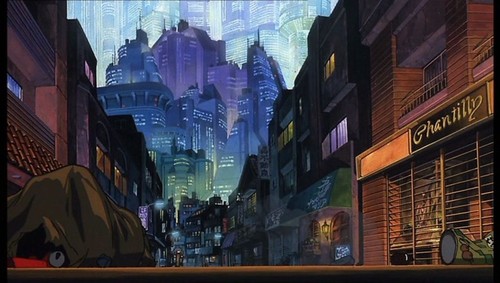
Akira (Japan, 1988)
Director: Katsuhiro Ôtomo
Of course, the petty western fears of nuclear annihilation can't hold a candle to horrors in the Japanese subcosciousness. That country is the still only one that has suffered through actual nuclear attacks. The most visually stuning representation of life under the threat of atomic annihilation is of course this classic anime film, based on director Katsuhiro Ôtomo's own multi-part manga series. Whereas the manga series featured gigantic nuclear explosions after another in pretty much every volume of its run, the film has to keep things more streamlined. It's a good decision, since it places more weight on the megalomaniacal explosion that does occur.
Neo-Tokyo has been rebuilt from the rubbles of a gigantic explosion that totally vanquished it 30 years prior. In 2019, the city is still military led, that at least attempts to keep a society together. In reality, however, the city belongs to criminals, juveline delinquents and their bike gangs. The leader of the Capsules, Kaneda keeps a tight leash on his best friend Tetsuo. While the gang is fighting their rivals, The Clowns, Tetsuo is kidnapped by government agents.
It turns out Tetsuo has powerful psychic skills, which has been caused by a government project to create mind weapons even stronger than nuclear weapons. Akira, the child-god that caused the destruction of Tokyo in 2019, was such a weapon. Unfortunatelly, drunk with power, Tetsuo sets out to search and awaken Akira from his hibernation. It's up to Kaneda and the young revolutinary Kay to stop him.
Despite Hollywood's best efforts, Akira is really a story that can only belong in 80's Japan. The dark, nihilistic world-view is connected to the growing fears of nuclear war in the Reagan era. The film's body horror caused by biotechnological fusion also shows that being blown to molecyles isn't really the most frightening thing about nuclear holocaust. The mutating survivors would envy the dead. The film is also very unremoreseful, killing people in a massive scale.
As a teenager when first viewing this classic, I didn't care for the main character, the frankly quite assholish Kaneda. But Ôtomo's strength as a storyteller comes from the fact he's not doing a straightforward hero's journey story. Rather, the case is a little like it is with Clockwork Orange: the youth is fucked up. We can't do anything about it, but the future will belong to them no matter what we do. In both, the sociopathic, druggy individual is the creation of the society that surrounds it. Stronger, militaristic grip on the little people just creates starker resistance. As the government, also the people opposing give as many shits about collateral damage while fighting against it.
![]() |
| There's only one thing this pill-popping fiend really cares about. |
So this decay may be the biggest thing to fear in the case of societal collapse: a lot worse than any radioactive cloud or radiation disease.
★★★★
Friday, 30 November 2012
Come, come, nuclear bomb
We have only three weeks to live in the case the Mayans were right. So, in terms of public service announcements, I will be writing a bit more on various visions of how life has been cinamatically wiped off of Earth in movies, and how people have come to terms with the fall of civilization.
During the time of the Cold War, there was an ever-looming threat of the United States and the Soviet Union wiping each other out by their massive arsenals of nuclear missiles. The threat of nuclear war went so far as to treaten the very destruction of life on Earth, particularly in the Bay of Pigs crisis in 1961.
That's why nuclear disaster has also inspired a great number of filmmakers for decades. James Cameron wouldn't have as successful a career without the threat, for one. I'll take a look at three visions of events leading to nuclear disaster, which take different viewpoints.
Fail-Safe (1964)
Director: Sidney Lumet
One of the most famous Cold War thrillers that faced the threat of nuclear annihilation was this film, based in part on the same book as Dr. Strangelove. Fail-Safe deals mostly with sweaty politicians trying to fix the catastrophy a minor error causes, to little avail. For anyone who has seen Strangelove, the film is a little hard to take seriously since it shares a number of plot twists and turns with Kubrick's satire classic. Nevertheless, the film is held to high acclaim today, thanks in large part for Lumet's unrelentingly dramatic direction and strong lead performances.
A radar alert for possible intrusion to US airspace causes nuclear bombers to fly off to Moscow. It is soon found out that an out-of-course airline plane was the cause of the alert, and the Rush'N Attack is meant to be called off. But a human mistake, as well as Russian radio wave jammers, cause the message not to reach the bombers. High tensions with the Soviet Union leaders would cause them not to believe any explanation of the accident. The President (Henry Fonda) is called to make tough decisions to make sure mankind would survive the tragic catastrophy. And this includes doing the unthinkable, attacking New York City by themselves.
The film uses stark contrasts and is shot mostly indoors, in stuffy cabinets, with people watching monitors and radars. There's a strong sense of claustrophobia since neither the characters nor the viewers have any means of getting out of the sticky situation. Most of the time the film plays like a chamber drama, with the tensions arising in discussions and the stakes getting to impossible heights. In the end the president's solution is quite hard to swallow. This twist makes the otherwise naturalistic film drive off the cliff of being too fantastic. But the incredible final scene, shot in an expressionist manner, makes up for most of the major flaws in the movie's script.
★★★ 1/2
The Day The Earth Caught Fire (1961)
Director: Val Guest
While Americans tend to look upwards to authority figures and decision-makers, the Brits tend to choose more down-to-earth viewpoint characters in their catastrophy films. Made on the same year as the Bay of Pigs Invasion took place, Val Guest's thriller is a nuclear disaster only indirectly. It's still quite clear the fear of the cloud and tempering with the power of the atom is the catalyte for disaster here. The movie centers on reporters out to make a story on the fall of planet Earth.
The young Peter Stenning (Edward Judd) and the experienced Bill Maguire (Leo McGuire) are reporters for the London-based Daily Express. Stenning has gone through a messy divorce and is in a slump of his career, getting only boring assignments. The friendly Maguire attempts to help him out when he can. While investigating odd weather reports, Stenning realizes something horrible. The recent nuclear tests ran by both United States and the Soviet Union have caused the Earth's rotation to change and hurl the planet closer to the sun. Nothing can survive the rising temperatures, unless drastic measures are taken to fix the situation.
The film perhaps suffers a bit for imitating the studio-era Hollywood style rather than embracing a bit wilder 60's aesthetics. The film's scenes of pandemonium and looting look awfully tame when compared to the news reports that began to flood in during the same decade all across the world. Yet the film features several awfully clever visual ideas. One is to tell the back story in flashback in regular black-and-white, while the moments of reckoning are shot in a scorched sepia-typed tone. One can almost feel the temperature rising while watching this. Guest manages to tighten the suspense sufficiently, although wastes time for a pretty tacked-on romantic subplot. Another great idea is to close the film on ambiguous church bells. What will the future bring? We may never know.
★★★
Threads (1984)
Director: Mick Jackson
Another British drama, film this goes to lengths not possible two decades before. The 80's were a lot more cynical and not as much on the edge as the common atmosphere 60's. It seemed that there was no doubt nuclear annihilation would come. The question was only, when. The film tells the documentary-styled ugly story of total nuclear devastation in England, as seen through the eyes of two families of regular people. They have no particular hopes or dreams, except for to survive. The film is made-for-TV, but in its effectiveness it's been raised on the level of other movie classics. Shows how TV is thought to be the inferior medium. Even it's major classics are always compared to cinema.
In Sheffield, northern England, the families of Becketts and Kemps come together since the proposal of Jimmy Kemp (Reece Dinsdale) to Ruth Beckett (Karen Meagher). At the same time, Cold War is going global and heating up, fast.
Fear grips England and people start hoarding food and survival supplies in case of the worst-case scenario. Loud protests and riots erupt on the streets, which Chief Hirst (Michael O'Hagan) is unable to control. Little by little society crumbles, starting with politics and moving on to the mico-level. In turn comes just a simple battle of survival. When the bombs finally hit, the remains of civilization burn to the ground, leaving the survivors in a frantic search to find their missing loved ones. Charred corpses and collapsed buildings litter the streets. Even the very basics of human culture start to falter, with people repressing to the state of animals.
At the center of the movie is not just an apocalyptic nuclear disaster. It's still a central element to the story and delivers several horrific scenes, but the larger details on why the bombs drop are never really explained. Instead, as the title suggests, the film is about the British society and how it's hanging by a thread. When all chips are down, no element of the intricate network of society works and people are left to fend for themselves.
The film offers no warmth, distancing itself from the terror with a narrator and intervowen nature film footage. This is harrowing, as terrifying and cynical as a film can get. It's no wonder the film is often categorized to belong in the "horror" genre. No knife-wielding maniac or monster attack could dream of being as terrible as the notion that people cease to be humane when civilization fails.
★★★★
Friday, 17 February 2012
Review: Iron Sky
![]() |
| Iron Sky (c) 2012 Energia Productions. |
So is the end result any good? Sadly not that much, even though the film does have its moments, which might make the film more enjoyable for more forgiving audiences. But personally, I like my nazi exploitation nasty and dirty. Simply put, Iron Sky isn't mean enough to be a cult exploitation film, nor is it funny enough to be a good sci-fi comedy. To be fair, there are plenty of chuckles throughout, but no belly-laughs. The film's also been in production for so long, a lot of the gags feel polished to the point they have no edge, and even worse, seriously outdated.
![]() |
| Flieg, Zeppelin, Flieg! Flieg nach Krieg. |
In 2018, a Sarah Palin-like President of the United States (see?) has put a man on the moon again. This time, one of these astronauts, James Washington (Christopher Kirby), happens to be black. This is of course mere white-washing to make the president seem more diverse, and to ensure her re-election in an upcoming vote. The real reason for the expedition is to find some of the precious energy source Helium 3. But on the moon Washington soon runs into trouble as he finds a long-hidden Helium mine and Moon base on the Dark Side. And gets himself captured by the runners of the facilities, long lost Nazis.
These Nazis, led by their Führer Wolfgang Kortzfleisch (Udo Kier) are planning an all-out invasion of Earth. The Führer's sinister second-in-command Klaus Adler (Götz Otto) attempts to use these plans to organize a coup d'etat among their own ranks. He also realizes that the captured Washington could help him gather some of modern Earth technology to ease his attempt. Adler's wife-to-be Renate Richter (Julia Dietze) is a happy-go-lucky supporter of the Reich, believing Nazism to be a peaceful ideology. When she decides to help Washington survive in the hostile environment, it begins to dawn to her that maybe there's more to Nazism that has met her eye on the Moon.
So, the film juggles between all these characters that actually come together only occasionally. Washington himself is played as a stereotypical movie black man through and through, altough this might be part of the joke. Nevertheless, as a lead he would need to have more to do. His blossoming romance with Richter, along with her change of heart, seem tacked on. As do a lot of the movie's other various plot threads. Director Vuorensola can't really seem to grasp the film as a whole. He has troubles choosing whether the film is a light-hearted parody or played-as-straight exploitation. So he has to balance both of these options. Maybe also the film's production has forced the crew to shoot the scenes so seperate from each other that there is scarcely much connection between them. But one shouldn't give pity points to sloppy storytelling, no matter what the reason.
Vuorensola has troubles trying to build up the film's suspense to it's climatic space-battles. At least those are cool-looking, innovative and silly enough. The film's comedy tends to be goofy, and there are some fan-pandering to both tech-savvy nerds and film nerds. The funniest parts are seen in an International war conference room, channeling the spirit of Dr. Strangelove. It's just too bad that the film's political commentary is so dumb and black-and-white. It wipes the viewer's face with its comparison of Nazis and Right-wing conservative Americans. With a little more ambition it could've had the ingredients for a smart satire, but most of the tricks it does utilize have already been used better in classic films, which are also referenced.
![]() |
| "As Nazis rear their heads and come into the air space of the USA, where do they go? It's Alaska. You betcha!" |
★★ 1/2
IRON SKY
FINLAND / GERMANY / AUSTRALIA, 2012
Language: English
Director: Timo Vuorensola
Screenplay: Michael Kalesniko, Timo Vuorensola, based on a story by Johanna Sinisalo, and an original concept by Jarmo Puskala
Director of Photography: Mika Orasmaa
Starring: Julia Dietz, Christopher Kirby, Götz Otto, Udo Kier, Stephanie Brown, Peta Sergeant
Subscribe to:
Posts (Atom)