Showing posts with label anime. Show all posts

Sunday, 9 December 2012

Coping With The Cloud


So after the smoke has cleared and the world has been devastated by nuclear holocaust, what then? Should society be rebuilt as it was, or should the remaining mankind adapt to the situation in a wholly new level? There are a number of ways the world might turn up after the drop of the bomb, but unfortunatelly they are mostly not very fun. Mostly.

Damnation Alley (1977)
Director: Jack Smight


Taking place in the futuristic year of 2012, Damnation Alley is based on Roger Zelazny's 1967 novel, which has been seen as an important predecessor to all sorts of post-apocalyptic stories since. In the book, a ragtag group of survivors take the role of pioneers and drive across America's radioactive wasteland. The loose film adaptation however, released on the same year as Star Wars, is more of an old-fashioned adventure romp than a truly horrifying cautionary tale with barbarian motorcycle tribes. Nevertheless, it does have several quite effective scenes.


First, we have a lengthy opening scene that explains the background of the holocaust of World War III. Lieutenant Tanner (Jan-Michael Vincent) and Major Denton (George Peppard) of the US Air Force see incoming missiles on their radar and launch a nuclear counter-attack. The nuclear apocalypse turns the weather unpredictable and mutates the flora and fauna all across the continent. The world turns increasingly hostile against mankind.


Two years later, Tanner and Denton, still surviving in the Southern California military base, have been waiting for a radio signal to give sign of any other survivors. They finally manage to capture one in Albany. As an explosion destroys most of the base and kills most survivors, they, along with Airman Keegan (Paul Winfield) equip a truck to take them through "Damnation Alley" all the way to Albany. On their way they face numerous dangers and various survivors.


Most of the film is spent (cost-effectively) in the cockpit of the military truck with the survivors arguing. This is not very intersting to follow. But bits here and there make the film worth your while. We meet Tanner two years after the holocaust as he drives a dirt bike across attacking hoardes of giant radioactive scorpions, and lures them away by dropping a decoy woman among them. Later on, there's a particularly nasty scene featuring a swarm of flesh-eating roaches. The story has cannibal mutant hillbillies involved! And a very young Jackie Earle Haley! And we get to see post-apocalyptic Las Vegas (much like the Vegas of our time, except the people).

The special effects are also noticeably striking for their time, particularly the odd-colored and deadly nuclear storms on the sky. It's a fairly entertaining film, but the setting of the thing post-Apocalypse is incidential at best. It could be a space tale, featuring the new pioneers just as well.

★★★

On the Beach (1959)
Director: Stanley Kramer


In the late 1950's, as Hollywood's studio system had started to crumble, and the Cold War about to reach its peak, even major ensemble Hollywood films could be surprisingly dark and morbid. Case in point is this film about the holiday village at the end of the world, which somehow also reflects some features of WWII-era romances but turns their optimism completely upside down. This is a movie with a message, and it's not afraid to rub the audience's face in it.


An Australian harbor town hosts the last surviving Americans after an apocalyptic nuclear war. The American nuclear submarine USS Sawfish comes to the shore. The vessel's commander Towers (Greogory Peck) still harbors hope that his family had survived the nuclear war. He meets the lonely old maid Moira Davidson (Ava Gardner), the owner of a nearby farm. Even though the pair start to harbor feelings for eacho other, Towers can't come to terms with his past and his wife and children's death. At the same time it dawns to the surviving scientists that the Nuclear cloud is heading to Australia and wiping all life in a mere month. This news is taken the worst by the Australian Lt. Holmes (Anthony Perkins), whose wife is expecting their firstborn child.


As post-apocalyptic stories go, this one seems to be adamantly of the opinion that even the most extreme conditions won't disrupt well-worn societal structures. Even with the certain Apocalypse looming in, the rich go to their gentleman's club to enjoy vintage wine, and to be served by common folk. Also military ranks remain, and the end of the world has no effect on their work shifts, nor the respect they receive from the people. Only on the last day of his life, does the faithful butler dare to take a sip of fine wine himself.

As a holiday resort for the damned, the people have the opportunity to do everything that they ever wanted, such as the race car-building and competing Julian Osborne (Fred Astaire). At the same time the looming doom does bring down spirits in even the happiest occasions. There's an odd feeling of uncertainty all through this film, which creates quite an unusual mood to surround it.


Moreso than any season of Lost, this is a movie where it's easy to come to the conclusion that between the lines all the characters are already dead and just spending time in limbo before their final judgement.

★★1/2

Akira (Japan, 1988)
Director: Katsuhiro Ôtomo


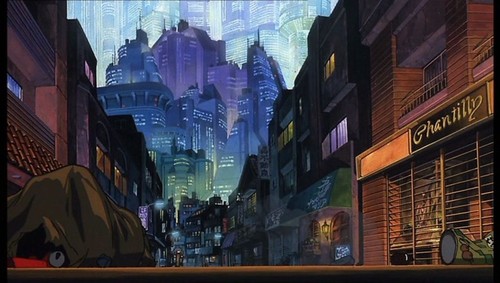
Of course, the petty western fears of nuclear annihilation can't hold a candle to horrors in the Japanese subcosciousness. That country is the still only one that has suffered through actual nuclear attacks. The most visually stuning representation of life under the threat of atomic annihilation is of course this classic anime film, based on director Katsuhiro Ôtomo's own multi-part manga series. Whereas the manga series featured gigantic nuclear explosions after another in pretty much every volume of its run, the film has to keep things more streamlined. It's a good decision, since it places more weight on the megalomaniacal explosion that does occur.


Neo-Tokyo has been rebuilt from the rubbles of a gigantic explosion that totally vanquished it 30 years prior. In 2019, the city is still military led, that at least attempts to keep a society together. In reality, however, the city belongs to criminals, juveline delinquents and their bike gangs. The leader of the Capsules, Kaneda keeps a tight leash on his best friend Tetsuo. While the gang is fighting their rivals, The Clowns, Tetsuo is kidnapped by government agents.


It turns out Tetsuo has powerful psychic skills, which has been caused by a government project to create mind weapons even stronger than nuclear weapons. Akira, the child-god that caused the destruction of Tokyo in 2019, was such a weapon. Unfortunatelly, drunk with power, Tetsuo sets out to search and awaken Akira from his hibernation. It's up to Kaneda and the young revolutinary Kay to stop him.


Despite Hollywood's best efforts, Akira is really a story that can only belong in 80's Japan. The dark, nihilistic world-view is connected to the growing fears of nuclear war in the Reagan era. The film's body horror caused by biotechnological fusion also shows that being blown to molecyles isn't really the most frightening thing about nuclear holocaust. The mutating survivors would envy the dead. The film is also very unremoreseful, killing people in a massive scale.


As a teenager when first viewing this classic, I didn't care for the main character, the frankly quite assholish Kaneda. But Ôtomo's strength as a storyteller comes from the fact he's not doing a straightforward hero's journey story. Rather, the case is a little like it is with Clockwork Orange: the youth is fucked up. We can't do anything about it, but the future will belong to them no matter what we do. In both, the sociopathic, druggy individual is the creation of the society that surrounds it. Stronger, militaristic grip on the little people just creates starker resistance. As the government, also the people opposing give as many shits about collateral damage while fighting against it.

There's only one thing this pill-popping fiend really cares about.

So this decay may be the biggest thing to fear in the case of societal collapse: a lot worse than any radioactive cloud or radiation disease.

★★★★

Friday, 5 October 2012

HIFF 2012: Animated Dreams

 
We're back with another post about this years Love & Anarchy festival. This time, I focus on the animated movies shown at the festival. As animations go, this year really wasn't among the strongest, since there were precious few titles screened. And from those, even Ghibli's newest didn't really work for me. But there was one absolute jewel among a bunch of average movies, which always makes it all worth it.

From Up On Poppy Hill (Kokuriko-zaka kara, Japan)
Director: Goro Miyazaki


Annually, Love & Anarchy presents Studio Ghibli's animations, new and old. This year's effort is from Hayao Miyazaki's son Goro, who previously directed the ho-hum adaptation of Tales From The Earthsea. But where that movie got lost along its overly complex plotting, it seems that Goro has learned from his past mistakes and is keeping things simpler this time around. His new film represents Ghibli's often-forgotten string of more down-to-earth teenage romance movies. And it's loosely based on Papa Miyazaki's own youth experiences, with the father of Goro and all of Ghibli having scripted the piece. The film takes place in the early 60's.

Umi is a teenaged girl living with her family in a beautiful garden villa on Tokyo seaside. Every morning she raises a flag to the sea to salute the passing ships. Her reasons are to greet her father who was lost at sea during the Korean war, but the message is noticed by an orphan boy called Shun, who lives and works in a ship. He sends a flirtatious poem for Umi to the local newspaper. However, the teens have never met, until their school is facing some renovations due to the upcoming Olympic games. These include the demolition of the old club house of the students. Both Shun and Umi rise up to protest against these plans. And at the same time they begin to fall for each other. But the history of their families has a secret, which may destroy the prospects of a blossoming romance altogether.


The story of two kids from different backgrounds coming together using a common cause as an excuse is nothing new. The old Ghibli charm makes it a hell of a lot more charming, but it is still lacking in the magic and originality so often attached to the studio's work. What's worse is the creepy undertones that the center romance has, which don't feel suitable to a movie aimed at kids and teenagers. But the hand-drawn animation and painted backgrounds are once again beautiful and the film has plenty of silly memorable minor characters to keep it barely afloat. Goro has at least learned to have a better rhythm in his storytelling, even though this is still patchy.

★★ 1/2

A Letter to Momo (Momo e no tegami, Japan)
Director: Hiroyuki Okiura


While Ghibli may have failed to make a Ghibli-quality movie, a former Ghibli employee succeeded in it just fine. Ghibli. Hiroyuki Okiura's first feature animation is one of those animated films where the mundane worries and troubles of a pre- to early-teens girl faces a vivid and magical fantasy world. Story-wise this is familiar stuff. But it still works quite well due to the final touches being so charming.

14-year-old Momo and her mother move to a suburban island near Tokyo. It is the island Momo's mother grew up in, and she has to rely on relatives and friends since she can't afford the rents of the big city any more. Momo is saddened by the recent death of her father, which is made worse by the fact that she had a fight with him soon before that. She is clutching on to the father's final letter that only has "Dear Momo" written on it. She also fears loneliness, since she finds it hard to make new friends. Since Momo's mother goes to work on a boat every day, Momo has to spend a lot of time home alone.


Momo is also scared of her new house and comes to believe it to be haunted. She discovers that three paranormal goblins have moved in with them, the always hungry Iwa, the shy but big-mouthed Kawa and the small, odd and soft-speaking Mame. She is the only person that is able to see these creatures. The goblins cause a lot of trouble with their ravenous appetite, yet they also have a mysterious mission to carry from the afterlife. Unsurprisingly, these three characters steal the movie and run with it. But best animations always have good use for comic sidekicks, and these Three Undead Stooges are really what sweetens the whole cake here.

As in many best family animes, the craft is in the small details. The old house creaks and is seemingly full of mystery. Water surrounds the house and feels isolating at times but becomes more inviting towards the end. The film knowingly does things very traditionally as it stars goblins straight out of old Japanese folklore. The film uses some animation help from computers, particularly in one big money shot towards the end, but it relies much on hand-drawn lines as well. Several scenes of the film feel a bit tacked on. Sometimes this doesn't matter (like in the superbly rapid wild boar chase), but it could at least have one less ending to avoid The Lord of the Rings syndrome.

★★★

Le tableau (France/Belgium)
Director: Jean-François Laguionie


Possibly the most innovative animation from this year's program, this is a new film from a true animation auteur. Laguione is a somewhat obscure French artist who often takes years to perfect his vision. This is his first film since 2004. And it concerns the inhabitants of a painting.

In an unfinished painting, the occupants aren't living as equals. The fully-painted Alldunns live in a luxurious castle, throw parties and frown on Halfies, the people who weren't quite finished and still have unpainted body parts or clothes. The Halfies have to live in a forest, but even they have it better than Sketchies, the people who were left as mere sketches and are persecuted and hunted by Alldunns. The Halfie girl Lola is an adventurous sort, and wants to venture far into the desert, where no painting has gone before. At the same time a forbidden love causes Lola's best friend Claire and her Alldunn lover Roma decide to run away together. But they are discovered and soon separated. Running for their lives, Lola, Roma and a Sketchie sentenced to death join together. The trio ventures beyond their limits and go to search for the artist of their painting. Lola hopes the artist could finish painting everyone so they all could live in harmony.


It's probably not a very big spoiler to tell that the trio finds new painting which to visit. The resulting film has no clear parallels, but reminds a little a classic Looney Tunes short where Daffy Duck visited various paintings and their inhabitants as well. The film utilized various different painting styles and thus each painting does seem like its own world. A war painting's world is grim and aggressive, a painting featuring the Venice festival is vast with surprises lurking behind every corner, and the artist's self-portrait has grown grumpier with years passing, alongside its creator.

If this was all achieved with beautiful hand-drawn animation, I would love it to bits. But budget limitation (I guess) mandate that this is mostly a computer animation, using Flash to create movements. It undermines the diversity of different styles and the message of the value of the art quite a bit.

In the end, the artist figures his most successful works should have a life of their own. He's not an angry god, but a gentle father, allowing his works to sort everything out by themselves. It's an exciting animation with plenty of creativity, but it also would've needed a bit more of a personal touch to its animation as well.

★★★

Pablo (USA)
Director: Richard Goldgewicht


This documentary about the legendary movie title credit auteur Pablo Ferro isn't actually an animation as such, but it does feature lengthy animated sequences. It's entirely reasonable that a movie about someone who does a lot of drawing for a living would be animated. Sadly, the film seems to be more surface than heart or information.

Ferro is best known for his typography used in credits. The films which include his signature style include Dr. Strangelove, Stop Making Sense and Men In Black. But Ferro wasn't limited to just lettering, he is a cracking visual artist to boot. He did the entire title sequences for such films as Psycho, Bullitt and The Russians Are Coming! The Russians Are Coming!. He also did some ground-breaking commercials, such as the pre-music-video fast-cut trailers for Strangelove and A Clockwork Orange.

You might remember him from this.
The documentary, narrated by Jeff Bridges, goes through the life of the Cuban-born visualist, which has seen a lot of hedonism and bohemian vices, but also poverty, divorce and being left unrecognized for his work. His friendship with director Hal Ashby is in a central role, yet there are a few amusing anecdotes about Stanley Kubrick as well. In modern day setting, Ferro is suffering from achy joints and is recommended a sauna bath.

Even though Ferro has done so many iconic movie titles, the film just glosses over them quickly to tell about another party Ferro was having or a girl he once picked up. This decadence is shown to be kind of cute (due to it mostly being in animation). For a serious film fan, the fact that they don't go deeper into how Ferro got his groundbreaking ideas, or even how he created them, is a serious flaw. Big Hollywood names are brought to sing his praises, yet it never really dealt with, how much Ferro's work changed the face of movie titles or commercials.

Fortunately, Ferro is presented as laid-back and easy-going as they come. One wouldn't dare to nit-pick the movie while watching because his company is so enjoyable. Only afterwards does one realize that after watching the film, one didn't really learn much about title sequences after all.

★★

Wrinkles (Arrugas, Spain)
Director: Ignacio Ferreras


Remember the one really good animation I mentioned in the opening paragraph? I referred to this one. As one can guess from the title, this Spanish gem deals about growing old. But at the same time it also has a warm, melancholic look at human lives, dignity, and the value of memories. So it's a kind of a sibling piece to Michael Haneke's magnificent Amour. But it has two key differences. First, Wrinkles deals with an institution and how it suffocates little people, a little in the vein of One Flew Over The Cuckoo's Nest. Second, it places much higher value to friendship, pulling together through hard last years, and doing whatever one can to make life better for people trapped in a corner with no easy way out. All in all, it's not cold and analytical in the way Haneke tends to be but warm and compassionate.

Emilio is a former banker, living with his grown up son and his family. But Emilio is getting more and more absent-minded and at times thinks he's still working at the bank.After having enough of this,  Emilio's son decides to put him in a retirement home. There, Emilio is horrified to learn that many of the inhabitants are demented to the pint of madness, reliving their old days without any idea of what goes on in the outside world.


He befriends his roommate, the Argentinian Miguel, who is one of the few people in the home who has kept his mind together. But Miguel isn't above cheating some of the inhabitants and staff of the house to gain items to sell, or some money to gain. Nevertheless, Miguel gives advice on how to avoid being put to the upper floor hospital department, where the most vegetable-stated seniors are put to. But Emilio's mind starts to crumble and he also starts to lose his own possessions, of which he suspects his new friend.

The film is based on a comic book and its style resembles the stark lines and panel framing of one. The animation is still gracefully done, since with animation it's easier to mix the real world and the version of the past many old people go through in their heads. Mist is a notable element of the film and is featured in many key scenes and transitions. As a symbol, it could be taken to mean various things. One action/chase scene is also fitted to the film, which it could've also done without.

The film makes one ponder about how we treat the elderly, who are seen more or less as a nuisance, in our societies. It forces the viewer to put him- or herself in the position of not realizing what is happening around him. It's a stark message, but the animated style helps to get it across without being melodramatic or pushing the issue. It is also a buddy film, with the best pair of buddies I've seen in a while, going even back before Pixar started out. But most importantly, it works as a metaphor of being between a rock and a hard place in life. Happiness is found not through rebelling against the inevitable, but concentrating on the important things in life. This helps one go on.

One of the whole festival's best films.

★★★★ 1/2

Wednesday, 1 February 2012

Dragons!

Image used with Creative Commons licence © Copyright Walter Baxter 

As you may be aware, we are all now living in the Chinese Year of the Dragon. I should've published this post on the 23rd of January when the actual New Year was, but I had personal things in the way, so shut up. You're getting it now.

Dragons are creatures, that ancient cultures all across the Earth share. Perhaps they are surrogates for the vague primitive memories of dinosaurs, who can tell. But while the giant lizard-monsters who can breathe fire and fly remain similar, the dragons are usually seen as sinister creatures in the west, and as wise and powerful, ancient creatures, and symbols of happiness in the east. I will now take a look at how dragons are portrayed.

Bad dragons:

Reign of Fire (USA/UK/Ireland, 2002)
Director: Rob Bowman


I have a certain affection with Reign of Fire, altough that is even harder to pin down than usual. I mean, it's not good enough to be a guilty pleasure, and it's not bad enough to be so-bad-it's-good. But as it is, it is an ultra-gritty film about a Dragocalypse! And that itself scores some points in my book. As a child, Christian Bale awakens a dragon sleeping in an underground mine. After waking, the dragon breeds quickly, and the dragons soon take over the word. 20 years later, in a post-apocalyptic world, only a few humans survive and fight against the fire-breathers. Could the yank played by Matthew McCounaghey be the key to destroying the foul creatures scorching up the world?


It's a really stupid film, but I like how super-seriously it is all played out. It does have a few comedic scenes as well, including one of the best Star Wars-references I've seen. Plus, Bowman seems to enjoy the irony that the future soldiers shield from dragons at old scottish castles. See, they're just like postapocalyptic knights! Dirt and screams come aplenty. McCounaghey doesn't play a hunk for a change, but a bald, bearded badass. Who has a master-plan, of course. And it includes shooting dragons with tanks and machine-guns! Nothing much makes sense in the film, but it hopes that adding layers of dirt and bad CGI-dragons would help audiences forget its omitting holes. Might be more fun drunk. Must investigate further.


★★ 1/2


D-War (a.k.a. Dragon Wars, South Korea, 2007)
Director: Shim Hyung-Rae


Whereas Reign of Fire's action scenes were a bit underwhelming (altough they had a sizeable chunk of explosions thrown in), the Korean D-War shows how it is done! Or not, as all scenes depicting someone reciting an old legend, anyone attempting any "acting", or really, with the plot moving forward or any characters talking, is pretty terrible. But the film more than makes up for it with its crazy action scenes. Have you ever wanted to see a giant serpent strangle up a hospital? Giant dinosaurs with guns toted at their back leveling a city? Hordes of black knights and dragons exploding at once? If so, you're in luck as this piece has it all!

And as much giant serpent battles you can get outside gay porn.

What it doesn't have is much in the way of the plot. An ancient Korean legend supposedly prophecises that forces of evil awaken every 500 years. Only a chosen girl, (protected by a boy, of course), can turn into a dragon of goodness that can defeat the lead serpent of the evil forces. Or some crap like that. What actually happens is a bunch of characters get whisked in the eye of the storm of rampaging dragons. While running away they shout a lot of exposition. This is sheer Dragon porn. Everything else in the film exists solely to ground the impressive money shots. But if you like dragons, the money shots are very metal indeed.

★ or ★★★★★

Neutral Dragons:

Harry Potter and the Goblet of Fire (UK/USA 2005)
Director: Mike Newell


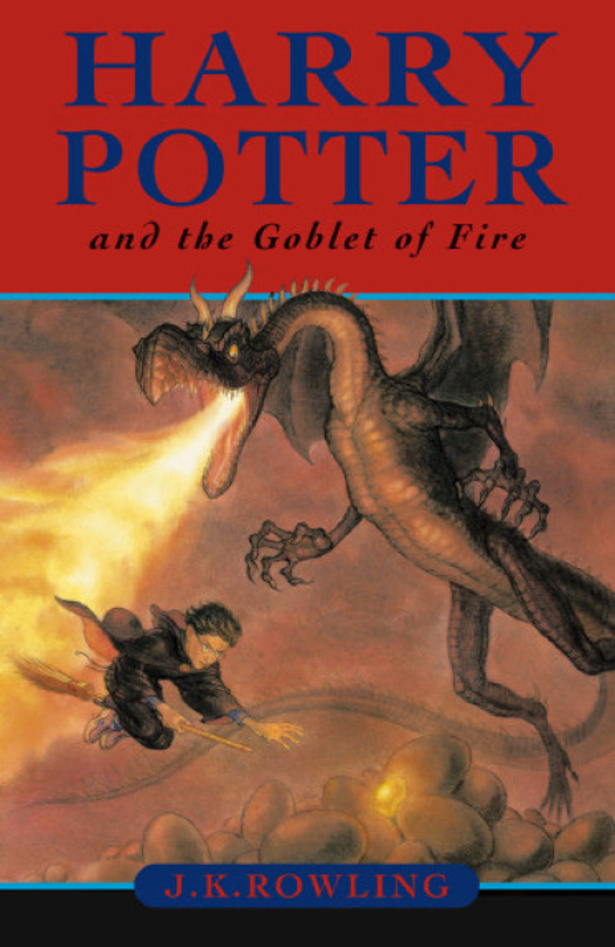
This is probably the worst Potter film out there, which is unfortunate as this is an important chapter in the overall saga. Whereas the previous chapters were all more or less individual adventures, this begins the arc that is taken to its conclusion at the very last film, The Deathly Hallows Part II. Harry is chosen to compete in the Tri-Wizard tournament, while at the same time a sinister plot to resurrect Lord Voldemort is going on in the shadows. There are also about a billion small sub-plots and things going on at the same time. The film promptly runs through all of them as fast as it can, never lingering long on anything.


The Dragons in the film are a part of the Tournament. It is mostly used as an obstacle that Harry has to find a way around to capture its golden egg. Harry has helped his friend Hagrid to hatch a dragon's egg way back in the first Potter film/book, but this act of gentleness towards dragons has clearly not earned him any favors or a chance to ride the beast – yet.


Potter-verse's dragons are animals, and have no honor codes, or capabilities to speak or plan. Rowling is more interested in describing their different breeds than how does the species function. Like many other magical things and objects, they are used only these two times as plot vessels, and promptly forgotten, even if they would be useful for other things later on. How awesome would it have been if Potter had ridden the bank dragon to his final battle in the Deathly Hallows? With a soundtrack by Manowar and Slayer.

★★

The Flight of Dragons (USA, 1982)
Directors: Jules Bass, Arthur Rankin, Jr.


The animated TV films of Rankin/Bass are not as well-known in Europe as they are in America, so it seems fitting to see one for this task. This fantasy adventure proved so popular in the US, it got a theatrical release elsewhere in the world. The film's heart is clearly in the love for dragons shared by the directors. While the central dragons in this film are as good as they come, there are also a number of dragons who fight for the forces of evil. Dragons in the film are trusted companions of wizards. Whereas good wizards have good dragons, evil wizards have evil ones. Yet dragons can also be corrupted as the sinister Omadon (voiced by James Earl Jones himself) does.

The wizard Carolinus (Harry Morgan) decides that magic can't co-exist with the natural world, and thus announces to his colleagues that they must create a new realm for magic and magical creatures that would be shielded from outside forces threatening it. The evil Omadon refuses, as he would rather see magic fall into the wrong hands and help destroy the nature. Carolinus brings the aspiring young chemist Peter Dickinson (who is actually a real person, he wrote the source book, a speculative guide to natural history; the character here is voiced by John Ritter) to the magical kingdom to battle Omadon with his knowledge of science. During the journey, Peter is fused into the mind of the dragon Gorbash by accident, but him learning the rules of life as a dragon brings him and his fellowship an edge against the dark forces of Omadon.


Based on a fairly interesting book, the film's dragons have well laid-out physiology. For instance, the fact that fat dragons can fly with small wings has probably never been explained as well as in here. The film is a sort of Tolkien re-hash in that during the journey the fellowship gains members from various races living in the magic kingdom. But the characters are well-rounded and likable, and the voice acting is superb. The animation is not half-bad either. At the centre is a question whether science and magic can co-exist, and the film has some fairly good ponderings about the subject. The film's weak point is the TV format, which allows for a too even string of small cliffhangers, which are faded to black at the time of commercial breaks.

★★★ 1/2

Good Dragon(s):

Taro The Dragon Boy (Tatsu no ko Tarô, Japan 1979)
Directors: Kirirô Urayama, Peter Fernandez


This classic Japanese anime film features an old folk tale about the adventures of a son of a dragon. The titular Taro is a superpowered small boy in search of his mother, who has been turned into the scaly monster. The film is based on a number of ancient japanese legends, and its basic plot was concieved by anime's grandfather Isao Takahata. That ensures that the film is charming, spiritual and culturally relevant, if not entirely solid plot-wise. The characters are not purely good or evil, more determined to reach their goals. The film also dares to be a bit disturbing and even sad at times, altough it has a warm, healthy sense of humor, too. It is thus a sort of proto-Ghibli flick.

The film begins with other children mocking the lazy Taro, who likes sleeping and has a healthy appetite. Taro himself likes more to hang out with the animals in the forest, like sumo-wrestling with a bear and winning. This prompts a wizard to give him even bigger physical strength. Thus, it is clear that Taro is awesome. The boy's life is changed when he meets and falls for a pipe-playing girl in the forest. Taro's grandmother also reveals that his mother is still alive, making the boy determined to find her. The girl he met could help him in the mission, but she is kidnapped by the impish troll Red Oni, who in turn gives her as a gift to a bigger and eviler troll Black Oni. Taro will also have to face witches and a giant serpent to find his mother, and to end the famine suffered by his home valley. But no stack of obstacles is too big for Taro to overcome. Along the way he learns many lessons, including that he should wear underwer, because when he's standing on his head, the sight of his weiner makes girls blush (seriously).


Altough the dragon in the film is recluctant, in that she has been turned against her will, she is clearly a power of good. Motherly gentle dragons are not often seen. But the dragon is also powerful, able to crush mountains with her face. The dragon in the film can live underwater and also fly. I obviously think the omnipotent dragon who chooses to use her power for good should be more what we all should aspire to this year. It at least makes for a much better narrative than Reign of Fire-style world-scorching.

★★★★

Friday, 30 September 2011

HIFF - Love & Anarchy Report 2011

Whew! The 24th Helsinki International Film Festival was exhausting for me, with most of my free time having been spent at a movie theatre or waiting to go to a movie theatre. I'm also still recovering from the profound effect the 24 films I saw this year had on me. Now, luckily I already did a post with some of the most notable films of the festival, so I don't have to write 24 reviews. Thing is, 18 is a bit too much too. I'll aim for 14. You can thank me later. I'll include the most notable ones so you can seek them out or nod in agreement.

Opening Film:
The Skin I Live In (La piel que habito, Spain)
Director: Pedro Almodóvar


The spanish director Pedro Almodóvar seems to want to return to his early days judging by his latest film. Not only does it star Antonio Banderas like so many times in the golden years, but the film itself isn't a multi-dimensional drama about humane relationships. Well, not conventionally anyway. Instead we have got the wild and crazy Almodóvar back, the one that had outrageous ideas about the natures of sexuality and no shame in splashing them all across screens.

Banderas plays the brilliant plastic surgeon Robert Ledgard, who has huge ambitions, not all of which are recognized as ethical by his colleagues. He has recently created a sort of indestructible skin by splicing human genes with pig's. Years ago, Ledgard lost his first wife. She burned in a house fire so bad, she preferred to commit suicide rather than look at herself in the mirror. Currently Ledgard lives at his mansion with his housekeeper and his new girlfriend Vera (Elena Anaya), who strangely spends most of her time locked up in a single room. Her face also closely resembles Ledgard's late wife's, and Ledgard uses her as a human guinea pig for his new skin. When Ledgard's no-good long-lost brother Zeca arrives to the house, it triggers a chain of events that will reveal the real deal about the affair and Ledgard's depravity.


This is exactly the sort of film I had been waiting for Almodóvar to make. However, while I had loads of fun with this one, it is actually just an entertaining piece. Almodóvar doesn't actually have much new to say about sex, gender and the ways one can lose both of them. All in all, it is either a strange thriller or a horror movie without big scares. Almodóvar does create the tension and the athmosphere of weirdness well throughout the film. So while it's one of his lesser efforts, it is still well worth watching, particularly if one likes his earlier films.

★★★

Gala Film:
Drive (USA)
Director: Nicolas Winding Refn


Praise has been flowing through doors and windows for this gritty crime drama. Is it worth it all? The answer is yes. Yes it is. Drive is one of the best films of the year, and personally I think it flew straight to my all-time top 10. I actually prefer it to a lot of other pulp fiction crime films it has been compared to, such as To Live And Die In L.A. or Collateral. Like those films, this is also both a love letter to Los Angeles, as well as a depiction of it as the worst nest of corruption, seediness, betrayal, brutality and greed on the planet.

The unnamed Driver (Ryan Gosling) does two jobs. At day he's a stuntman for the film industry, which doesn't really recognize his talents. But at nighttime he's a tough-as-nails getaway car driver, that promises to get criminals out of a jam in five minutes. And does deliver on that promise too, in the film's gorgeous first chase scene. However, in person Driver is a little shy and anti-social. His only friend is his boss and culprit Shannon (Bryan Cranston), and he hangs around in his garage. Shannon does business with some pretty seedy mob guys, such as Nino (Ron Perlman). Driver is a gentleman so he helps out his neighbour Irene (Carey Mulligan) on a shopping trip. He starts to develop a friendship with her and her young son Benicio. Eventually, Irene's husband Standard (Oscar Isaac) is released from prison. He owes a lot of protection money to the mob, and to help the family out, Driver agrees to do a heist job. But one double-cross later he's left with a bag full of money, no idea where to leave it, and a pack of killers on his trail.


Director Refn approaches the film with a no-nonsense attitude like was the standard in the 70's, and with the strong audiovisual sense of the 80's. Both of those choices reflect the film's tone perfectly. The film doesn't have to explain every damn thing thoroughly, and there's not a snippet of dialogue that's not important for the advancement of the plot or to build characters. But where the film excels is the use of violence. It comes by fast, unexpected and brutal. It's not entertaining but feels a little sick. When Driver kills the first people in the film we are actually not rooting for him, but a little scared that the man we've grown to like is capable for such deeds. Indeed, Gosling stone-faced performance really drives the film forward (I'll never apologize for such puns). He's vunerable like a lost child, yet ruthless and determined at the same time. The scorpion on the back of his jacket isn't just for show.


Refn's wonderful choices in music also work like a charm and the film's synteziser score is also one of the year's best. The film is a story of unrequited love and how even a hope for redemption can make an individual drift ever further from it. There are no clean getaways, says the tagline. How rarely are those so spot on for the film in multiple levels.

★★★★★

Festival Favorites:

Play (Sweden)
Director: Ruben Östlund


As the European societies become more and more firmly aligned to the right, immigration is a problem that is widely pondered. It does create a number of problems, but xenophobia and straight-out racism only manage too feed them further. Östlund ponders these problems multi-dimensionally in his film Play. It is based on the real-life events where a group of black immigrant children managed to play with the fears of white-bread suburban children so skillfully that they could rob them of all valuables without resorting to violence or straight-forward threats. In the end, the angry adults go on to blame any dark-skinned immigrant that can be found, even though these culprits are first and foremost bullies that pick on smaller children just because they can. The bullies torment their victims and force them to play an increasing number of humiliating games for them. It is like a more realistic Funny Games that doesn't wipe your face with its message. The film is mostly improvised, but for one that has been grown in the suburbs of a major Northern European City, such as me, the characteristics are familiar and spot-on. Östlund does have a sense of humour about the thing and a wicked sense of irony, portrayed by in-between shots of a cradle being stuck on a train. The film is shot laconically, with the camera barely moving, and much of the action happening just outside the screen. It is a clear message that the issues on hand here are bigger than just the events portrayed in the movie.


★★★★

Guilty of Romance (Koi no tsumi, Japan)
Director: Sion Sono


Sion Sono sure is as fast as he is talented. This is the third movie he's made in the time of two years, and the third to have festival screenings in Finland during one year. But he has to be a bit more careful to not go in the way of Takashi Miike. For while Guilty of Romance is good, it is nowhere near the madcap inventiveness and solid storytelling of Love Exposure.

A group of detectives are investigating a particularly cruel and twisted murder. As the events starts to unfold, we flash back to the beginning. The timid housewife Izumi (Megumi Kagurazaka) is bored to serving her husband all day and not even getting sex as a reward. Thus, she gets a job as a sausage saleswoman. She is spotted by Mitsuko (Makoto Togashi), who is a cunnng and calculating woman that makes her living as a prostitute. She sucks Izumi into living life her way. Izumi first gains a boost of confidence. Yet selling sex is a business that has a dark side beneath any glamour as Izumi will discover.

Sono is as great at unfolding tales of ever increasing cruelty as always. The film's actresses also portray the strain they have to endure really well. Sono's studies about the nature and meaning of sexuality make this more than just the female version of Cold Fish. There is a strong sense of losing traditional values while looking for sexual liberation. Sono aims to shock and has suitable amounts of full frontal nudity, perversions and sick gore to achieve this. GoR also has big amounts of Sono's trademark black humour and many times the film is so comical to be almost a black comedy. The cinametography bathes in neon lights in the dark. But it is all uneven and repeats itself a bit.

★★★

Arrietty (Kari-gurashi no Arietti, Japan)
Director: Hiromasa Yonebayashi


The latest Ghibli film as charming and visually stunning as always. Papa Miyazaki has contributed to the script, which shows in well-rounded character work. A terminally ill boy is sent to his aunt's country home to rest. There, he discovers the excistence of Borrowers, tiny people that live by stealing tiny objects from people. He is especially taken upon Arrietty, the 14-year-old feisty girl borrower that seeks to learn the trade from her father. The Borrowers are a dying breed and during the course of the film they have to ponder whether they can live with people any more. Thus, the film also touches on Miyazaki's basic theses such as the fragile relationship between people and nature and the nostalgic final days of innocence before taking responsibility. The biggest downside of the film is that it actually has a villain that has motivations that are clearly sinister. Is Ghibli going turn to the black-and-white of Disney movies? I really hope not. A toady old she-male prone to catching and collecting tiny people isn't eactly Maleficent, but a Gargamel rip-off is a start...

★★★ 1/2

The Bengali Detective (Great Britain/India)
Director: Philip Cox


This certainly was one of the strangest documentaries in a while. In modern Kolkata (former Calcutta) the police force is quite corrupt and unreliable. That's why the locals turn to private detectives to solve crimes. We follow one of these detective agencies, Always, while they solve crimes. And the crimes vary from selling counterfit products to infidelity cases to tough murder cases. The detectives are a happy bunch. They practice their fighting moves at the park and watch Indian Dance shows on YouTube. The main character is the tubby leader of the agancy, Rajesh Jin. While he has a lot of stress from trying a solve a triple homicide and treating a terminally ill wife, he still manages to keep his sunny side up. That's why he orders all of the detectives to take part in the dance contest with him. And that's not a negotiable term. The film is quite silly, but has really tragic and sad life stories to tell, too. The problem is that director Cox can't quite balance them in the right order. That's why the viewer is confused a lot of time of what he should feel. But nevertheless, the film has a lot of great footage, and most of the time it is a spot-on documentary. Recommended, but with caution.

★★★

This Is Not A Film (In film nist, Iran)
Director: Jafar Panahi


Jafar Panahi is an internationally acclaimed director and a damn skillful one, too. It's too bad he has to live in Iran, where the authorities won't take kindly to any artist who dares to ask questions. That's why Panahi has been sentenced to jail and forbidden from making movies for an absurdly long time. But the anarchist Panahi is, he made a giant Fuck You to the iranian authorities: a film that can hardly be called a film. Panahi wasn't forbidden from acting, so he gave a camera to his friend and started reciting pieces from his upcoming script. Thrilling! We also see him make telephone calls about his situation. Exciting! He also gives us a brief lesson in film directing. The director can't really control everything, and the end result is both a compromise and a collaborative piece to which each part brings something essential. I appreciate the gesture, like Panahi, and won't give out stars because This Is Not A Film. But I will say that the end sequence where Panahi takes an elevator down with his building's garbageman is one of the greatest I've seen in a long time. Like Dante, Panahi ascends to the hell that is Teheran at New Year's Eve. The local people have a bonfire on the street and get their explosions by throwing gasoline into the fire. The accidental metaphor couldn't be more poignant.

Detective Dee and the Mystery of the Phantom Flame (Di Renjie, China)
Director: Tsui Hark


Director Tsui Hark used to be the go-to guy of chinese epic adventures. He is best known from the Once Upon A Time in China films, as well as A Better Tomorrow III. But something happened in the late 90's that resulted in Hark to produce mostly boring garbage. His latest film proves that his comeback with 2005's Seven Swords wasn't a fluke. In fact, the latest adventure of the classic pulp hero Dee is a lot more fun than that stuffy epic. China is preparing for the crowning of its first female Emperor. The Empress has ordered to build a giant statue of Buddha for the ceremonies. Yet in the construction site, high-ranking officials start to spontaneously combust. The only one that can crack the case is Dee (Andy Lau), a detective and a rebel that's been jailed for life. Dee gets his pardon in order to solve the mystery, which makes him ponder about where his allegiances lie. The semi-mythical adventure takes Dee to weird places, such as underground Beijing and to a temple dedicated to a talking deer god. He must use all his wits and fighting skills to solve the mystery and make it out alive. Treachery is afoot and he can't really trust anyone.

As much fun as all this is, like many modern Chinese films you feel a bit guilty as the message is that resisting the authorities is wrong, and it is noble to take orders from higher-ups. Fortunately the action scenes coreographed by the legendary Sammo Hung are good enough to not ponder on such issues. And the whole thing ends with a truly legendary battle.

★★★ 1/2

Tatsumi (Singapore)
Director: Eric Khoo


Yoshihiro Tatsumi is one of the most beloved manga artists of all time, and a crucial artist in creating the manga for adults, gekiga. His autobiographical graphic novel A Drifting Life is an Eisner-award -winning masterpiece. So it was intriguing that it would, along with some of Tatsuki's greatest short stories be made into an anime film. Alas, the film is little more than motion-comics, those barely animated panels that form a film that's for people that are too lazy to read. Tetsuki's visual style is of course stunning, and the bittersweet tragedies of his wonderful short stories still poignant. But all of it is animated switching between a powerpoint presentation and a cheap flash animation. The short stories are glum and fit the crucial parts in the life story poorly. It is not a whole waste of time, because of the quality of Tatsumi's body of work. But, y'know, I would've rather spent the time reading A Drifting Life. And that's a really bad sign for an adaptation.

★★

Hesher (USA)
Director: Spencer Susser


Every year I try to watch at least one quirky american indie comedy at the festival. Of course their quality varies a lot. I'm happy to report that Hesher kicks ass. A pre-teen kid, T.J. (David Brochu) and his father are living with grandma, trying to cope with the grief of losing the family's mother. T.J. can't deal with school and rather wanders around, going to forbidden places. At a building up for demolition he finds Hesher (Joseph Gordon-Levitt), anarchist, loner and rocker. Hesher starts following T.J. around, even moving in with his family by his own invitation. Although he is seen as a nuisance at first, it turns out that even such a misanthropic character might have a word or two of wisdom behind his crude words. He also teaches T.J. to fight for himself, and that you can't always get what you crave. Of course, a dysfunctional family coming together and a coming-of-age tale aren't the most original of indie film tropes. Luckily Gordon-Levitt's outrageous central character and awesome performance pull the film forward, making it funny and heartdfelt in an equal measure. It also helps that Natalie Portman has a cute bit-part as a cute cashier.

★★★ 1/2

Robot (Endhiran, India)
Director: S. Shankar


At this point the YouTube video of the collected action scenes from the end of this Indian epic action film has become a viral meme. Yet the movie itsef has so much more to offer that I would rather suggest watching the whole thing than to spoil yourself by just eating the sweet, sweet dessert. Endhiran is the most expesive film ever made in the Tamil territories of India (Tollywood), and stars the area's biggest film star, Rajinikanth. He has a dual role as the robot engineer Dr. Vaseegaran, and the super-powered robot Chitti that's his latest, greatest creation. The Doc's girlfriend Sana (Aishwarya Rai) feels neglected, because he is so dedicated to his work. But when she meets Chitti she is smitten and grows to love the robot as company and a protector. Vaseegaran's former tutor, the jealous Dr. Bohra (Danny Denzongpa) is less endeared of the multi-tasking robot, and plans to steal its blueprints to create his own 'bots. That's why he manipulates Chitti's tryouts to get into the Army (!) and the fire departement, claiming that the unfeeling machine can easily kill his friends. Dr. Vaseegaran installs Chitti with emotions, which results in him falling in love with Sana and going rogue.


The three-hour epic is filled with everything you could hope for in a movie: romance, comedy, action (the fights were coreographed by Yuen Woo-ping himself), nutty musical scenes (shot in Sahara and the Machu Picchu, for no apparent reason), and of course robots. Lots, and lots of robots. Altough a lot of money were at play here, director Shankar wasn't afraid one bit to try out different feverish ideas that drop the viewer's jaw to the floor before the uncontrollable cheering and laughing begins. James Cameron should take notice. Rajni in particular is awesome, and perfectly capsulates both a nerdy scientist and a supercool no-nonsense robot. Chitty's billions of abilities and dance moves make Inspector Gadget die in shame. Which is why it's strange that Vaseegaran insists that he is built only for military purposes. There is certainly an Indian nationalistic theme underplaying here. As strange from the viewpoint of a westerner is that apparently it is better to die burning in flames than to appear naked in public in India. In the film are a few dragging parts and a few unnecessary comic sidekicks. But all in all, this was by far the most entertaining film of the festival.

★★★★

In Cold Blood 2 (Yksinteoin kaksi, Finland)
Director: Jussi Parviainen


Jussi Parviainen is an Artist with a capital A. The theatre legend has never been shy about his private life and has always openly incorprated it into his art. I'm one of the select few who have seen the original, uncencored documentary film Yksinteoin (directed by Pekka Lehto) on a big screen. In that film, Parviainen rages to the camera about the break-up of his then-wife, and his worries about losing custody of his children. The result was one of the most harrowing, the most controversial, and the best Finnish films ever made. History tends to repeat itself, and thus Parviainen also had to manage another painful divorce. This time, Parviainen directed the film himself and took on a lot more artistic way of making it.

Parviainen catched his astrologist wife Satu Ruotsalainen cheating on him. Soon after that they divorced. On the interviews of women's magazines Ruotsalainen told that she was happy that the relationship came to an end. According to Parviainen, she also straight-out lied that there was violence in the relationship. In the film, Parviainen splits into two persons, his regular, rational half, and the jealous, ranting, crazy Black Jussi. For the role of Black Jussi, Parviainen gained 47 kilograms and lived half a year in an abandoned mental institution. As you can probably guess, Parviainen is a couple of sandwiches short of a picnic.

Whereas the original Yksinteoin felt like raw, pure burst of anger, regret and pain, the sequel is a bit more tricky. Parviainen adds so many artistic filters into the film, it feels like a product of an over-eager film student at times. This time, the film isn't exactly a documentary, but a fictional film that takes its inspiration from real-life events. It recreates a few of the original film's setpieces. It's actually a wonder that such similar circumstances have happened to Parviainen again. The custody of a small child is again at hand here. Most of the film is reserved for monologues of Black Jussi, that are done straight to the camera. With this Parviainen spits out everything that he feels was wrong with his ex-wife. Amid all the self-pity and the accusal the viewer starts to feel more than a little uneasy of all the dirty laundry made public.   

In advance, Parviainen bragged that this film would end on a better note than its predecessor, and he had a real-life victim of brutal violence in a relationship to tell her story on the film. Annika Sirén plays Parviainen's psychiatrist and has one heart-breaking scene where she tells it how it is. Too bad it fits poorly amids all of Parviainen's misanthropy and self-loathing. There is also a graphich oral sex scene between the leads, but it has been cencored since the film's NSFW trailer. It's probably because the TV network MTV3 has financed the film and perhaps wants to show it at some point (although I can't imagine where it would fit in an over-commercialized channel that mostly broadcasts reality TV). All in all, the film is confusing and more than a little self-centered around Parviainen's own ideas of his grandieur. But still, one can't claim that listening to the Finnish Klaus Kinski rant on front of the camera for 75 minutes isn't captivating to see.

★ or ★★★★★

So, that was this year's set. Thanks a billion times to everyone at Rakkautta & Anarkiaa Ministry. I'm already looking forward to next year! 
Cartoons: Ville Tiihonen

LinkWithin

Related Posts Plugin for WordPress, Blogger...