Showing posts with label korean. Show all posts

Tuesday, 15 September 2020

Night Visions: The New Ab-normal

 
Things are different this year around, which meant for the regular spring edition of Night Visions film festival getting cancelled. But at least here in Finland things got a little better, so there was an opportunity to have a festival in August. Things are changing also in the way I'm writing a festival report after a long while.

Butt Boy (USA, 2019)
Director: Tyler Cormack

 
This is a movie about an obsession, addiction and the willingness to wreck lives to achieve it. It's also a serial-killer movie about a dude, who (SPOILER) sucks people and objects inside his cavernous butthole. As far as crazy premises go, this one takes itself as seriously as it physically can.

As a whole, this film moves quite slowly. It has some perks, like watching the slowly ravelling cat-and-mouse game between Tyler Cornack's perp and Tyler Rice's cop on the edge. When the actual reveal comes, it changes the film's dynamic entirely, making the last quarter or so a real blast of butt-jokes. It is not quite as crazy as I had hope it would be, but I got some good chuckles and the melancholic feel of the movie really got to me.

★★★

Luz: The Flower of Evil (Columbia, 2019)
Dir. Juan Diego Escobar Alzate


This latest word in folk horror sees a reclusive cult live off the land. The cult leader El Señor (Conrado Osorio) keeps multiple wives and declares his youngest child to be the next Messiah. The other children, three daughters, find an object of the outside world and have different reactions, from wanting to escape to undying loyalty and laboring hard for the cult. The film doesn't really manage to give a good athmosphere or raise the stakes as one would wish from a horror film. Visually, it's clearly a fan product of the works of Alejandro Jodorowsky. But the actors are quite good in their roles, and one manages to sit through the film woith relative ease, even if it doesn't ever really deliver as good as one would want.

★★ 1/2

Tezuka's Barbara (Japan, 2019)
Dir. Macoto Tezuka

 
The pinku film seems to follow pretty clearly the godfather of manga Osamu Tezuka's comics. It is a story of a regular guy becoming increasingly obsessed by a homeless girl he meets on the streets of Tokyo. Like most pinkus I've seen, this one is quite slow with very few and not very graphic sex scenes. The ideas and obsessions around sex are more important than the act itself. There are a few scenes of note here that remind of Tezuka's odd sense of humour and richness of his imagination. But as a whole, the film is quite stilted, not utilizing what film can bring to the table as opposed to manga. So, this one felt quite dull in the end.

★★

Klovn The Final (Denmark, 2020)
Dir. Mikkel Norgaard

 
After the bit disappointing Klovn Forever, it's fun to see the third part in a trilogy somewhat return to its roots. At this point, Frank Hvam and Casper Christensen's rowdy comedies know what audiences are expecting, and both tease them with it but in the end, also deliver. It's not quite as graphic as the two previous ones, but altogether it might be ruder. It's crazy funny, at least.

The movie opened in Denmark just before the Corona crisis, so it's weird to see it tackle self-isolation for a length of its time. However, since an embarrassing mishap has cost them their trip in Iceland, Frank and Casper have to hide out in a vacant house next door to Frank's family. One small lie leads to bigger and bigger ones, and the strain to Frank's marriage in particular is stretched to a breaking point. Casper works as a ruthless id, caring little about anything else besides getting laid and getting the two into bigger and bigger troubles.

Not all of the film's gags quite land, and they are eager to set up some scenes that they oddly drop off at the blink of an eye. But when a good joke is laid out, waiting and then suddenly given an unexpected punchline, one can't help but to fall over laughing. I laughed, I cried, I hurled.

★★★★

Rabid (Canada, 2019)
Dir. The Soska Sisters

 
Even if 1977's Rabid isn't the most popular film in David Cronenberg's filmography, it is still risky to even attempt to redo one of the corner stones of the body horror movement. The Soska Sisters realize this, and while the end result is definitely going to split viewers, I do think they managed to update the ideas to a modern setting quite well. Maybe this should be a Re:Make blog post later on?

The new version downplays sexuality and the inner shame caused by it, as seen in regular horror movie tropes. The idea this time around is more like a feminist satire showing a woman being punished by outside forces for showing initiative in general. Timid fashion designer Rose (Laura Vanderwoort) isn't getting the recognition she deserves until she has an accident and an experimental skin operation to fix it. Too bad it also makes her a Patient Zero in a vampiric disease that starts to wreack havock.


It's kind of a wonder how ahead the curve the Soskas were last year. The vampire disease and the reactions of it, ranging from trying to shrug it off and continuing as if nothing is happening to outright maliciousness of trying to benefit from people dying, seems like satire from the reactions to COVID-19. There's even a barb at the police violence against poor people that have the disease. The Soskas make plenty of changes to the original, with a lot of emphasis on a sisterly relationship, and a thoroughly bonkers final reveal to match. All the bitterness surrounding the depiction fashion industry don't quite work, but the film bursts with ideas enough that one can give or take a few clunkers as something entirely else is just around the corner.

★★★★

The Gangster, The Cop, The Devil (Akinjeon, South Korea, 2019)
Dir. Lee Won-tae

 
Supposedly this south korean crime actioner is based on actual events of a mob boss testifying in court against a serial killer. It does deliver some grisly violence, surprising twists and well-rounded characters. The actors are wonderful, especially Ma Dong-seok as the burly kingpin who has to revalue his pendant for violence and need for revenge as an even more ruthless murderer (Kim Sung-kyu) tries to kill him. There are only shades of grey here, as the cop (Kim Mu-yeol) himself is a corrupt gambler and a drunk, happily spending his spare time in mob-owned casinos. The film is well-done entertainment, but has a bit of an abrupt ending, like you would expect from a TV series, and it doesn't really feel to have a central idea strong enough to really elevate it into a classic. 

★★★

Dolls (USA/Italy 1987)
Dir. Stuart Gordon


Night Visions also paid tribute to the late horror master Stuart Gordon with a screening of his classic horror-comedy. Dolls may not be quite among the very best of Gordon's filmography, but as is usual for the director's oveure, it is better than you would think. And it's generally thought to be the best of producer Charles Band's various killer toy movies that also include the Demonic Toys and Puppet Master franchises.

For the hardcore horror buff, the film might be a bit childish, though. It's central character is a little girl (Carrie Lorraine) and all the adult characters are overplayed caricatures, like you would find in a Roald Dahl book. They also meet similar grisly ends in a magic mansion filled with creepy dolls, or getting turned into dolls themselves. There are a couple of rowdy punk girls, evil yuppie stepparents, a weird elderly couple, and a plump but well-meaning dweeb (Stephen Lee). 


While the plot isn't anything terribly extraordinary, nor scary, the film is kept reasonably short and gives a few good one-liners to chuckle now and again. The puppet effects are kind of crude, but kept in a way that makes them mysterious enough. That was some of the magic of Gordon's filmmaking, he always knew how to stretch his budgets to suit the storytelling he aimed for.

★★★

Thursday, 27 December 2012

PÖFF 2012


The always-charming Pimedate Ööde Filmfestivaali (Dark Nights Film Festival) in Tallinn this year's November was as full interesting programme as ever. While it offered some treats that have not yet been shown anywhere in Finland, most of the programme was familiar to Helsinki's avid festival-goers and arthouse cinema fans. But no matter, it will once again give me an excuse to take a look back at this year's offerings before the annual Best Of -lists.

Pieta (Hangul, South Korea)
Director: Kim Ki-duk


It seems that following his recovery from nervous breakdown, director Kim Ki-duk has started to shift away from his trademarked slow, artistic storytalling and more towards the Korean mainstream. His latest film is a Revenge Thriller, much in the vein of Park Chan-Wook's Vengeance Trilogy or Bong Joon-Ho's Mother. The film is based on a very fucked-up morality idea, which Korean films seem to specialize in. At least it doesn't go as far as Kim Jee-woon's I Saw The Devil.

Lee Kang-do (Lee Jung-jin) is the most violent and ruthless debt collector in mafia's paycheck. He hasn't any emphaty for anyone, and is glad to maim his "customers" for insurance money. Back home he usuallu spends time sleeping or masturbating. One day, a strange woman follows him home. He tries to drive her away, but she enters his house by force, and insists on cleaning up. She reveals herself to bee Kang-do's long-lost mother, Jang Mi-sun (Jo Min-su).


Initially Kang-do refuses his mother, and acts as if she's not there. He goes on his work, even though she insists on taging along. of course, she doesn't approve of the violence, but nevertheless attempts to win her son over by helping along. Slowly, Kang-do starts to warm up to Mi-sun. But she did have another reason to return to him after so many years, and this is just one step in her major plan.

Kim uses a lot of Christian iconography in the film, making a stark contrast on the people who certainly aren't living by Jesus's Golden Rule. He also doesn't spare the audience in awkward sexual content nor bone-crunching or skin-frying violent scenes. Yet for all the effectiveness of the cinematography and sheer skill in the storytelling, the whole film has a very slight feeling. As if the master is afraid to bring on his A-game. There have been good thrillers that have pondered the same sort of questions between family, morality, duty, sexuality and politics before. Pieta for all it's worth, can't really bring that much new things in the mix.

★★★

Call Girl (Sweden)
Director: Michael Marcimain


The most talked-about film this year in Sweden was this intriguing political thriller that is based on several real life scandals from the 1970s. While the film certainly takes some liberties to fill in some gaps, and makes some indirect accusations on past politicians, the depiction of 70's Sweden is noticeably realistic. The result is something like The Wire meets Tinker Taylor Soldier Spy in the Red Lights district.

Iris (Sofia Karemyr) and Sonja (Josefin Aspelund) are two misbehaving 14-year-olds living in a school home. The rebellious teens tend to run away to meet boys, drink alcohol and trick themselves into bars. But they run into a wrong crowd of girls who seem to have it all; a free apartment where to party, free alcohol with no questions asked, and plenty of money to use. The girls fall down deeper and deeper into the rabbot hole, until they find themselves to be in the service of bordello keeper Dagmar Glans (the magnificent Pernilla August).


Meanwhile, the small-time government clerk and pencil-pusher John Sandberg (Simon J. Berger) runs an operation to check Dagmar's shady business. He taps phones, plants tails and reads everything connected to her. Soon he starts to realize that Dagmar's clients aren't just faceless rich people, they are socialites from the very top of the Swedish society. Included might even be the rising Minister of Justice (Claes Ljungmark). But in trying to expose this scandal, Sandberg runs into a lot of trouble. But election day is coming and he remains adamant that the people will have to know the truth about their minister, who at the same time is strongly preaching about democracy and women's rights.

The film has three viewpoint characters, Iris, Dagmar and John. Each one has an intriguing story that has a lot of nuances and insights. It seems that the Swedes really like the archetypal characters of heroic jounalist finding the black spots in Social democracy, as well as the young girl who gets mistreated by misogynists working within the social norms. At times the film almost feels like it has too much content. A lot of these nuances get lost from the viewer when the story is suddenly skipping from one main plot to another. This approach would work better in a television series or a book.


In the end this society-shaking thriller is still superbly exciting stuff. The retro-styled electronic music, as well as pop hits from the era make a perky soundtrack, that houses a much more sinister core. While Swedish spying within the country in the 70's wasn't as large-scaled as in the Cold War setting, the stakes were still quite high. The film contains the idea that the country is willing to turn a blind eye on injustice, while at the same time the country poses as the moral superior and forerunner in the world. I'm almost certain I will enjoy the film more on subsequent viewings, since it contains so much to chew.

★★★★

God Bless America (USA)
Director: Bobcat Goldtwaith


Could it be the Western civilization is nearing its end? At least it seems that our mutual culture has reached some lows that aren't easy to climb back up, as well as the political system is bitter, feuded and utterly divided, particularly in America. Stand up comedian Bobcat Goldthwait's satire attempts no less to be a Natural Born Killers for the Naughties, a satire about a kill spree that reveals all that's wrong with the world today.


Sad-sack middle-ager Frank (Joel Murray) hates his job, neighbors, television programmes and life in general. He has to see his estranged daughter grow up to be just another prissy little asshole, living with his ex-wife and her new husband. The final straw is drawn when Joel is diagnosed with a fatal brain tumor. So, before ending his miserable days, he takes a last-ditch effort to make the world a better place by getting rid of his daughter's role-model, a spoiled rich brat whining on MTV about the wrong-colored car her parents got her as a birthday present. But by killing her, Joel also attracts the attention of her class-mate Roxy (Tara Lynn Barr), who insists they should go on a kill-spree to rid the world of assholes.


I suppose everyone has had fantasies of brutally executing parking violators, loudmouthed teens at movies, fugly screaming babies, uncompromising extreme-right wing politicians or douchebag tween stars. Goldthwait's murder fantasy balances on a fine line, particularly since America has had their share of tragic gun mishaps lately. But while the assholes in the film are really obnoxious, this is also a film smart enough to constantly question the morales and minds of its protagonists. While Joel is symphatetic, Roxy in particular often comes across just as bad and annoying as everyone she would like to end.

But all in all, as a satire, this is a bit slight. It really targets just one side of a culture and doesn't offer much in the way of analyzing how the society has come to this. It's more of a check list of everything annoying it's eccentric screenwriter/director. However, the film's main question on whether people can't be nice to each other any more, is a very valid one nowadays.

★★★

Caesar Must Die (Cesare deve morire, Italy)
Directors: Paolo & Vittorio Taviani


This year's Berlinale's top prize went to this sort-of docu-drama by Italian filmmakers Paolo and Vittorio Taviani. I say "sort of" because this certainly isn't an easy film to be comfortably fit in any pre-given characterization. Shot mostly in black-and-white, and in flashback, the film chronicles inmates at a high-security prison staging a play of William Shakespeare's Julius Caesar.

We get to know the inmates for the most part only from the short scenes of the applying for a part in the play. They tell what they are in prison for, and at the same time heaps of their back story. The major flaw in the film is that one would like to learn to learn more of them. Now watching interviews for a long period of time is a little exhausting, and one can't remember most of it for what comes next. There are mafiosos, hotheads and people just trying to make ends meet, and the only thing that really connects them is the punishment at first, and the play later on.


Practicing for their roles, the inmates become to utterly inhabit their roles. Since there isn't much else to do in prison, the play becomes the sole reason for their existence. The prison architecture begins to look like a huge stage, and the similarities of Ancient Rome and the hierarchy at the Big House begin to get mixed together. But what comes after the play is done? The film is very experimental, twisting a famed tale to have a couple of layers more, but it is captivating to watch.

★★★★

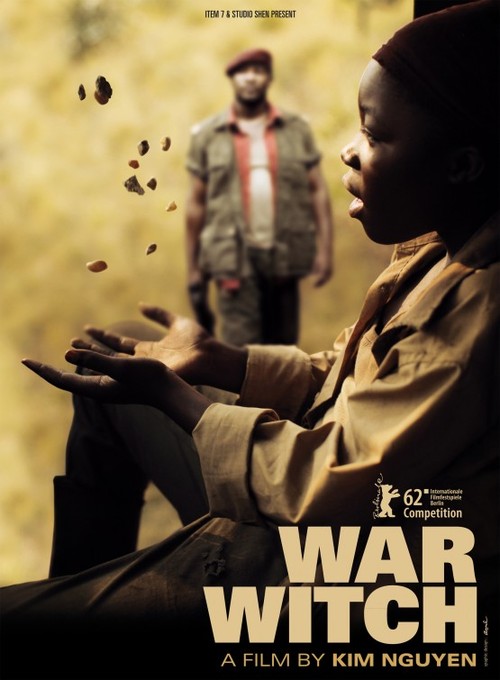
War Witch (Rebelle, Canada)
Director: Kim Nguyen


The film's two names tell a lot of it's two sides. It's about a girl who is a Soldier and a Magician at the same time, but fights constantly against the poor lot given to her in life. Komona (Rachel Mwanza) lives in the civil war-ridden Sub-Saharan Africa. At the age of 13, she sees her home village destroyed, and her being forced to murder her own parents. But this scarring experience seemingly also gives her the ability to communicate with the dead and stay out of harm's way. The invading soldiers equip her to fight for the Rebellion, but soon find that her abilities have better use to them as an Oracle, predicting the course of fighting.


The film chronicles Komona's life for three cricial years, during which she leaves her home, fights as a soldier, falls in love with a fellow wizard, the albino known as Magician (Serge Kanyinda), gets married and pregnant, and seeks to please the spirits of the dead by giving her parents a proper burial. Her life has several tragic twists for the worse, but adamant she keeps on going, even against the odds.


For all its darkness, War Witch embraces the African way of life from multiple angles. The belief in magic and mysticism isn't drawn out, but rather a comfortable part of all human interaction. At peaceful time, people are willing to help each other, and not taking worries of any petty details. When the Magician goes on a search of a rooster, people have a good laugh at his expense, even if he's pointing an AK-47 at their faces. His eagerness to find an extremely rare creature for love is endearing to people, even if he threatens their very lifes. People living in the war-ridden territories are well used to it.

★★★★

Marley (USA/UK)
Director: Kevin McDonald


This two-and-ahalf hour documentary chronicles no less than the whole life of Bob Markey, poet and a prophet. The most popular reggae star of all time had a bumpy career, with success that didn't come overnight but which was fought for years. The documentary gathers an impressive cast of interviewees, from Marley's immidiate family (mother, sons) to close friends and co-workers (including Lee "Scratch" Perry and Jimmy Cliff). The film also captures the rise of Marley-mania, beginning from Jamaica and taking over the whole world from teh United Kingdom to Japan to the United States.

The film is all business, to the point where it starts to resemble a historical documentary more than a mere music biography. The basics of Marley's life are well-covered all around, but at the same time, the movie also doesn't go very intimately into any subject. Any new revealations are scarce, even if Marley's sons remembering him as a father, and his beloved remembering his final days are quite touching. Altogether this works as a good 101 on Bob Marley's music, but I would always like that a biography film would look more like its central subject. This is a bit too distant and the cinematic tricks generic to reflect a truly innovative artist.

★★★

The Thieves (Dodookdeul, South Korea)
Director: Choi Dong-Hoon


The English subtitles didn't work on the PÖFF screening of this South Korean caper film, so I have little to say about it's plot. But it's a colorful, fast-paced film, with kinetic action scenes, globe-trotting exotiscm in the vein of the best James Bond flicks, plenty of sexy ladies and double-crossing. It seems like the cast is filled with colorful characters as well. Mark this one a prime candidate for a proper rewatch at some point in the future.

Captive (France/Philippines/USA/UK)
Director: Brillante Mendoza


The latest film by Brillante Mendoza is a naturalistic look into the captivity endured by western tourists in the hands of Abu Sayyaf guerrilla fighters in  . The film is mostly told through the eyes of the French schoolteacher Thérèse (Isabelle Huppert). She had come to Palawan for humanitarian aid, yet goes into long-winded soul-searching after her kidnapping and harsh life hiding out in the jungle. She does fill the role of taking care of the elderly and the sickly among other captives. Yet the terrorists have little use to any hostages that can't manage to flee any spot as quickly as possible to avoid capture.


The film is repetitive and harsh, although this does reflect the nature of the situation the main characters are in. At several points, mednoza winds down, and offers some magificent jungle footage. The flora and fauna live on, caring little about the quarrells of people. In this nature, the clear predecessor of this film is Terrence Malick's The Thin Red Line. However, Mendoza is not capable of balancing the poeticism and harsh realities as masterfully. The film drags often, and its characters remain quite thin, even if they are tried to flesh out now and then. The resulting film is a pick-and-mix bag, sometimes quite good, some times dull.

★★★

Shame (UK/USA)
Director: Steve McQueen


Director Steve McQueen's look into sex addiction has reaped a lot of critical acclaim. A lot of this comes from his quiet, slow-moving and very visual style, even though the filmmaker doesn't always seem to think it through on what kind of storytelling the style would fit best. But Shame is certainly a better told story than McQueen's previous, too-experimental-for-its-own-good debut Hunger. Michael Fassbender does a good, convincing main role as Brandon. The 30-something stock-broker is udes to picking up girls at bars, subways or really, everywhere he might run into a flirt. He also has huge stacks of porn, a subscription to live internet sex camera sites, and a tendency to hire call girls for his pleasure.

When Brandon's younger sister Sissy (Carey Mulligan) comes to an unexpected visit, he has to start rethinking his life. The shame of his condition forces him to move his sexual activities out of his apartement. At the same time he is disgusted when his boss picks up Sissy and the pair have sex. Brandon has serious problems with intimacy and angrily and bitterly refuses any close contact with Sissy. It appears that he's overcompensating for some guilty feelings, and the movie suggests he has trouble seeing women in anything other than sex objects.


Sex addiction is not an easy subject to make a film about, since it often falls into the pit of exploitation (as in the notorious Finnish film Levottomat 3) or moralization. McQueen does manage to have a cold, distant view on the films for the majority of the running time, but falls head first into the latter by the end. The cheesy pouting and extremities that are on offer put some unnecessary weight, when McQueen had put so much weight into individual images earlier. When Brandon's hedonism also goes way overboard, the film starts bordering on the line of exploitation after all. McQueen's hard-pressed style doesn't stay intact throughout the film, which is a true shame.

★★★

Saturday, 10 December 2011

International Films for the rest of the year, or: PÖFF 2011

"I hear Tallinn has a pretty groovy film festival. Let's meet at the harbor." Le Havre (c) 2011 Sputnik Oy.

The biggest film festival in Estonia, Tallinna Pimedate Ööde Filmifestival (Tallin Black Nights Film Festival, or PÖFF) turned 15 this fall. The prestigious international film festival was held 16.-30. November. I only had time to visit the festival for one weekend, even though it would've offered a lot of highly interesting international films. Luckily, a lot of them I had already seen or had the chance to see back in Finland. So here is an end-of-the-year roundup of interesting films from PÖFF's lineup.

Le Havre (Finland/France)
Director: Aki Kaurismäki

Le Havre (c) 2011 Sputnik Oy.
The pitiful Finnish film industry always gets a boost whenever our last and only recognized auteur, Aki Kaurismäki makes a new film. Nevermind that this one was shot in France and in French, Le Havre will win multiple Finnish Film Awards, and is our country's contender for the Oscars. But while it's a good film, it is a small disappointment and nowhere near Kaurismäki's finest.

Le Havre is about the inhabitants in a small coastal town in Northeast France. The old shoe-shiner Marcel Marx's (André Wilms) life is shaken as his wife Arletty (Kati Outinen) falls ill and is hospitalized. The grief-stricken elder gentleman finds it hard to function without his wife. He happens to come across the young immigrant Monet (Jean-Pierre Daroussin) hiding from the police in the harbour. The kind-hearted Marcel takes pity on the boy and gives him shelter in his home. It also allows him to get his mind off worrying about the fate of his wife. He gets the support of his entire comminity to keep the boy from getting to the cold hands of the law.

Le Havre is first and foremost a fairy tale for grown ups. Its humanism is strongly influenced by the silent films of Charlie Chaplin, and Kaurismäki also uses about as much dialogue in his films as well. But nevertheless, the film feels a bit too naïve and predictable for its own good. The message is of course good and pure, and as important today as it was in the 1930's when the right-wing chains of thought swept through Europe the last time. But Kaurismäki doesn't really get a good hold at his characters, which feel like rough drafts compared to his previous body of work. Marcel, for instance, is pretty one-dimensionally good. More time is spent on the nostalgia of the old town, where old people take care of old bars and old grocery stores, soon to vanish. The imagery itself is familiar to the point of clichés. Kaurismäki goes through a checklist of his usual trademarks, and thus, for instance, a rock show is tacked on (by the French old school rocker Little Bob). All in all, it feels a lot like a film fastly done in between other films with more gravitas.

★★★

Poongsan (South Korea)
Director: Juhn Jaihong


The formerly prolific Kim Ki-Duk has had trouble doing films lately. He's suffered from depression and a writer's block, that is all delved into in his latest film Arirang. But luckily Kim has shown signs of getting better, and now he has managed to script and produce another film that isn't about himself. Instead, is a action thriller about the conflict between North and South Korea and one smuggler between them.

The mute smuggler, known only by his cigarrette brand as Poongsan (Kye Sang Yoon), silently takes on jobs left on a note by grief-stricken families. He can bring anything and anyone across the borders of the two Koreas. While his reputation grows and grows, eventually he gets a job from a wealthy Southern businessman to bring back his Northern girlfriend In-ok (Guy-ri Kim). The job proves harder than usual, as the saucy woman proves to be more than a match to Poongsan's finely-tuned tactics. At the same time the South Korean police has set up a trap to catch Poongsan and to find out whether he comes from the North or the South. But also North Korean Agents have their eyes on Poongsan and sinister plans for him.

The fast-moving movie has a huge cast of characters and so many allegiances that it's difficult to keep track of all of them. The middle of the film in particular, is quite confusing. At the centre of the movie there is a triangular romance, that feels quite forced considered from any angle. But at least things aren't as black and white as they initially seem. Director Juhn Jaihong excels as an action director. The scenes of running through the border area are brisk, exciting and innovative, if not very realistic. Likewise, Juhn and Kim have also deviced some very twisted and nasty ideas for the film, which one can take chuckling. The whole ordeal is a kind of a modern western, if such a common comparison can be excused. The mute stranger playing two sides against each other for profit is the exact plot of A Fistful of Dollars. Poongsan is a sort of superhero, as he seems almost invunerable. He's a symbolic person, the spirit of the Korean soul that doesn't look whether you come from the nort or the south. The film deals with subjects that must be painful to the Koreans, but does it in an exciting, innovative way. The script could've used another polish, though.

★★★ 1/2

Attack the Block (Great Britain/France)
Director: Joe Cornish


A new generation of video-raised Brits have recently started to make more interesting genre pictures. With his debut, Joe Cornish goes to the same league with Neil Marshall, Edgar Wright and Ben Wheatley. Cornish's master idea was to combine a silly alien invasion idea with a coming-of-age tale of a hoodlum. A teen gang has to face responsibilities for the first time in their life to survive and protect their home block.

The story begins on New Year's eve as the gang led by Moses (John Boyega) mugs a nurse on her way home. While the gang's making their escape, a small furry alien attacks Moses. He decides to beat it to death as revenge. But this turns out to be a mistake, as bigger, nastier aliens soon start to appear and killing off people. They seem to have some beef with Moses and his past deeds. In the mids of all the fireworks they have come on Earth undetected and because of the block is seething with crime, few authorities want to check on it. One of the gang members gets injured and needs mediacal attention. Luckily at their home block the ruffians realize that the nurse they robbed is actually living as their neighbour. Sam (Jodie Whittaker) therefore has to choose whether to trust the hoodlums to survive or to try to make it on her own.

Attack the Block's biggest problem is that it's marketed as a comedy, but it really isn't all that funny. Little wannabe gangsters Probs and Mayhem do raise a few giggles, but Nick Frost as a lazy fat drug dealer feels mostly wasted (in the bad way). The film's aliens are cool, dark furry things with glow-in-the-dark teeth. When their mission is revealed, it seems plausible, and thus they would've fitted well with my recent list of best movie aliens. There is also the stretch that one has to symphatize with some nasty underage hoodlums to enjoy the film. But hey, the same is true with Akira. Like the anime classic, this is a little anarchistic and anti-authority, but also stretches the need to take responsibility of one's own actions.

★★★

Sons of Norway (Sønner av Norge, Norway)
Director: Jens Lien


Sons of Norway takes us back to the golden days of the late 1970's in the concrete suburbs of Oslo. The adolescent Nikolaj (Åsmund Høeg) is raised in a family of free-thinking radicals (in a word, hippies). Nothing is shunned upon, and his parents have an open mind toward everything. It all changes when Nikolaj's mother Lone (Sonja Richter) dies in a tragic accident. Living with just his grief-stricken widowed dad Magnus (Sven Nordin) is a real pain. So when Nikolaj gets his first teenaged needs to rebel, he needs to take it to the extreme. Luckily, punk rock and The Sex Pistols have just risen, so Nikolaj bases his life on their teachings. He gets a new punk look, acts rude toward authorities and starts his own garage band with his friends. But then Magnus decides he wants to party and join in the movement as well.

The film is certainly quite funny, as much comedy can be done on the expense of the 70's Nordic liberals. For instance, we are taken to a nudist camp, and Nikolaj gets to witness more sex than should be good for a boy too young to actually do it himself. As everything is looked through nostalgic lenses, rather than looking forward, the film isn't that punk in actuality. It pronounces the joy of life rather than nihilism. I should hate it then, but I don't. After all, there is a late cameo by Johnny Rotten himself. The film is quite episodic, which makes me feel it is based on a book or on actual events. It would benefit from having a stronger sense of the story rather than having just one set piece after another. But the father-son relationship is realized in a funny and never preachy way.

★★★

Inní: Sigur Rós (Iceland)
Director: Vincent Morrisset


I didn't know much about Iceland's gift to progedelic rock, Sigur Rós, before seeing this film. I feel like I still don't. It's a documentary film about the band, which utilizes a lot of concert footage, but also some interviews from the course of their career. But very few of them, in fact. Too bad, because they are easily the most interesting thing in the movie. Most of the time is spent on gigs, with the camera hugely close to the players and obscuring much. The film is black-and-white and grainy, allowing viewers either to interpret the film as they please or get nauseous. As for Sigur Rós's music, I feel it is quite nice to listen for a song or two, but I get annoyed by its slowness and lack of any hooks after 1,5 hours. If you're a fan, this is a must. Otherwise, I suggest to avoid this.

★★

Killing Bono (Ireland/Great Britain)
Director: Nick Hamm


Based on a memoir that every one that has ever talked about has described as "almost too weird to be true", Killing Bono tells the story of Bono's doppelgänger. The man in question is the Irish rocker Neil McCormick (Ben Barnes) who went to the same school as Bono, The Edge and friends way back when before they were famous as U2, in the late 70's. Neil's younger brother Ivan (Robert Sheehan) was in fact asked to be in the band lare named U2, but the jealous big brother never allowed for this to happen.

The film deals with the two brothers' struggling to have some sort of success with their own band, while U2 goes on to be the biggest band in the world. The McCormick ordeal features gangsters, record company executives, loose women and other deadly combinations of weird Irish people. Sex, drugs and rock and roll are all present, but don't feel glamorous but a little worn out and with a tiny hint of melancholic sadness within them. Neil makes a huge string of bad decisions and usually keeps them from Ivan. When Ivan finds out brotherly feuds so harsh follow even the Gallaghers would find them a little excessive. The ever-awesome Pete Postlethwaite makes his final appearance on the screen as the boys' gay landlord. The still-awesome Twitter superstar Peter Serafinowicz plays a sleazy and foul-mouthed record company owner. The film is quite funny, but more than anything, it made me interested in reading Neil McGormick's book. I'd like to find out just how much of it was made in the sake of cinematic storytelling and how much does McGormick claim is true.

★★★

Code Blue (Netherlands)
Director: Urszula Antoniak

 
Urszula Antoniak is known from her debut feature film Nothing Personal. Code Blue is similar in the slow pace and lack of dialogue. Antoniak trusts the images to tell the story. Another thing that is similar is that they both are stories about love and sexuality, but go across painful limits, making the stories all the more tragic. Code Blue is much more violent, almost sadistic in its outcome.

Nurse Marian (Bien de Moor) tends to appears to be emphatetic and good at her job, taking care of terminally ill and old patients. But she harbors more sinister feelings among herself. She's a loner and become more than a little twisted from being around death all the time. She also has voyeristic urges, and with binoculars witnesses a man in the next building doing violent acts to women. Rather than calling the authorities, she becomes fascinated and a bit aroused by this man. And the man also starts to spy on her. It is inevitable that these two shall meet.

Code Blue is slow to the point of coma. But nevertheless Antoniak is good at building pressures, which burst out at a few shocking scenes. Her film's protagonists are pretty rotten to the core, which makes the film feel a tad nihilistic. It's certainly arty, to the point when a lot of people won't stand the film. But I've got to say, once I got over my initial confusement, I kind of liked it.

★★★ 1/2

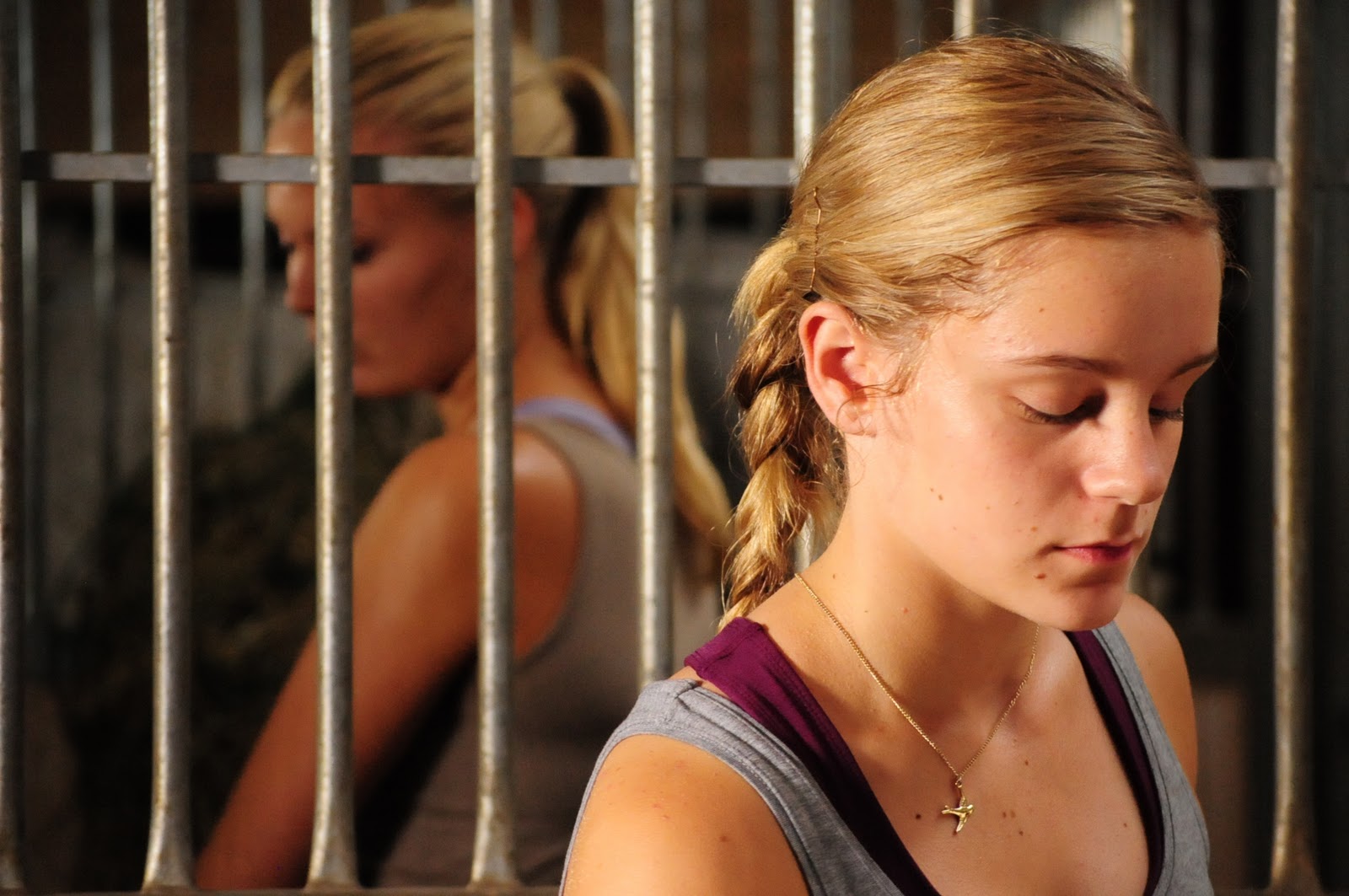
She Monkeys (Apflickorna, Sweden)
Director: Lisa Aschan


One of this autumn's biggest surprises comes from Sweden of all places. To be fair, it's no wonder I was t first dismissive of a film that was said to be like "a new Fucking Åmal". In actuality She Monkeys is a lot more. It shares it's slow, almost documentaristically still style with films like Play. In fact it works very well as a companion piece of that film. Whereas Play had some good ideas of how to present male adolescence, peer pressure and the spread of anti-immigrant views on cinema, She Monkeys delves on the development of female sexuality, unrequited love, mood swings and physicality.

The teenaged Emma (Mathilda Paradeiser) is accepted to a school for circus acrobats. She soon makes friends with another schooler, Cassandra (Lena Molin). They soon become inseperable, doing everything together. But it soon turns out that one of the girls feels a lot stronger towards the other than the other does. Nevertheless, the scenario is allowed to go all through to its breaking point. Meanwhile, Emma's little sister Sara (Isabella Lindquist) gets her first taste of developing into an adult as a swim school instructor tells her mom that she needs a bikini top to swim there. Sara harbors a crush on her cousin Sebastian, and plans to woo her.

All information we viewers gain in the film is based on what Emma and Sara experience on screen. There's not a lot told about what's happening outside. It keeps the film fresh and pulls the rug out from under the viewer's feet a few times. She Monkeys isn't afraid to surprise or even shock. For a debut director, Lisa Aschan has astonishingly good sense of cropping the image and allowing us to read things on almost still faces. The film also has a strong sound design, with breathing and other small sounds turning out to be vital for the storytelling. The film is cut surprisingly short and when it ends, the viewer is left wanting for more. While all threads are tied in this film, maybe we're just left to wait what Aschan does next.

★★★★

In A Better World (Hævnen, Denmark)
Director: Susanne Bier


Susanne Bier's films are basically very good, but I somehow mostly see them as somewhat off-putting. I don't know what it is, certainly not the thematic darkness, since I'm used to that as a Scandinavian. Her films tend to have depressed people be miserable amid the Scandinavian welfare state. That's by no means a wholly unique theme in Scandinavian cinema. So is the case with Hævnen, which actually means Revenge. It has won multiple awards, including the Academy Award for Best Foreign Film at this year's Oscars.

Hævnen has several stories going on at once, but the central one concerns the budding friendship between Elias (Markus Nygaard), who is bullied at school and Christian (William Nielsen), who has a lot of personal problems as well. Both come from fractured families. Elias' parents are on the border of breaking up and his father Anton (Mikael Persbrandt) spends a lot of time abroad, at work at an African refugee camp. Christian has lost his mother to cancer and is having a hard time adjusting to life with his dad Claus (Ulrik Thomsen). Christian starts behaving aggressively, almost sociopathically, and he pulls Elias with him to his dangerous shenanigans.

Bier has a pretty good idea of male adolescence and what pulls boys to dangerous shenanigans. The actors are superb and are particularly well in scenes filled with melancholia and sorrow. Audio-visually, the film is also top notch. Yet I still feel as if the film is missing an edge or some other major spice. The whole thing feels like playing a bit too safe to create exactly the kind of film that Scandinavians appereciate. For one thing, I don't feel the scenes in African add too much to the story. They are interesting and all, but seem like they would better suit another kind of film. Perhaps it is Bier's way to show that the Nordic angst actually is nothing compared to the problems that a lot of other countries have to deal with every day. That would explain the English title, at least.

★★★ 1/2

Superclásico (Denmark/Argentine)
Director: Ole Christian Madsen


In a Better World was Denmark's representative at the Oscars last year. This year they've sent a more comedic film, which is actually still a very similar story at core. It's also about a dysfunctional family on the verge of breaking up that faces grievances, angst and sorrow. It is probably because of Lars von Trier's controversial Nazi statements that they wouldn't dare to send the much superior Melancholia. But while Superclásico is pretty predictable, there's loads of fun to be had with the film.

Christian (Anders W. Berthelsen) is a wine shop owner, that has been trying to cope with his wife Anna (Paprika Steen) leaving him. Anna is a football manager and has fallen in love with her protegé, the famed Argentinian soccer player Juan Diaz (Sebastián Estavanez). Anna needs Christian to sign the divorce papers so he can marry Juan. Christian decides to do that in person in Argentine to get one last chance of rescuing his and Anna's marriage. Their recluctant, laconic teenaged son Oscar (Jamie Morton) is taken along. On the trip the Nordic and fiery latino sensibilities clash, but the boys also get their own taste of passion form Argentine women.

Like it's name implies, Superclásico is a pretty basic story about a divorce. There's only a few small surprises along the way, but the film's real trick is to do the most worn-out elements so well as to make them seem fresh. First of all, the film is very well acted. Everyone from the main roles to small ones do a great job, have just the right comedic timing, and create multidimensional characters that feel very real in the context. Second is that the sunny Buenos Aires is shot with care, an eye for detail and, in a word, with love. It feels like one of the main characters of the film. We scarcely get postcard monuments, the film takes us more to tiny wine bars, carages and seedy hotels. So all in all, while there's nothing to write home about, it is a pleasant enough trip.

★★★

50/50 (USA)
Director: Jonathan Levine


An even more unlikely concept for a comedy than a painful divorce, is deadly cancer. But dark subjects are usually the most ripe for comedic treatment. The approach here is to do it as adorable as possible. So we have adorable Joseph Gordon-Levitt getting deadly cancer. Helping him are the adorable Anna Kedrick, Bryce Dallas Howard and Anjelica Huston. Perky pop and old classics are playing on the background. There's an adorable dog named Skeletor tilting his head at appropriate times. The film even features the adorable Philip Baker Hall as an adorable older cancer sufferer with a potty mouth and an appreciation of weed.

But anyway, the film is based on an (inspirational) true story. The 27-year-old Adam (Gordon-Levitt) finds out that he has back pains because he has a rare form of spinal cancer. He's given a 50/50 chance of making through it. So, naturally he also starts to go through what is important in his life. He comes to terms with his overly-worrying mother (Huston), and deals with his artist girlfriend (Howard) who has started to drift away. Along the way he meets new friends at cemotheraphy and strikes a friendship with his young therapist Katherine (Kendrick).

While 50/50 is quite symphatetic, it doesn't work that well as a comedy. Most of the fault lies in Seth Rogen's performance as the cancer-sufferer's best friend Kyle. Rogen's shtick is as tired as ever, and starting to really get on my nerves. Kyle is a generally unlikeable radio host that thinks about himself before others. He only talks about getting laid and smoking weed, and never, ever shuts up. And he's ever-present in many scenes that would do a lot better without him. I get that he's supposed to be a bit of an asshole, but still have a heart of gold. That's what friends sometimes are, particularly if you're in a tricky situation. I'd still like to avoid Rogen from now on, if he doesn't attempt to evolve one bit either as an actor or a comedian. But the film at least made me reflect on my own life.

★★ 1/2

Wednesday, 21 September 2011

Love & Anarchy 2011 Halftime Report

Image Source: Rakkautta & Anarkiaa -blogi

 Happy Festivus! It's been a pretty funky week at the Helsinki International Film Festival already, with almost all of my free time devoted to seeing great films at The Love & Anarchy Festival. The festival does still go on until sunday. Here are small reviews of six notable festival films that still have screenings during the final weekend of the festival.

Remember to also check out the blog post about this year's tips for HIFF for my previewing reviews of festival films.

13 Assassins (13 No Shikaku, Japan)
Director: Takashi Miike


Each HIFF offers at least one new film from the prolific japanese director Takashi Miike. Too bad that at least everything I've seen from him since the start of the decade has been more or less crap. 13 Assassins is hailed to be the director's return to form. This samurai epic is certainly at least worth a look. This time around Miike won't allow his signature splatter style take over the movie, and there is reasonably less blood and effects scenes than usual.

In Japan, 1844, Naritsugu, the son of a powerful shogun is a raging lunatic, who kills and maims people for his own amusement. The officials of the shogun go behind his back to assassinate Naritsugu before he wrecks the entire nation with his acts. Thus, the samurai warrior Shinzaemon (Koji Yakusho) hires 12 other swordsmen to lure Naritsigu into a trap to murder him. But the son of a shogunate keeps also hunderds of bodyguards with him at all times. It seems likely that the samurai won't make it out of the mission alive.

The problem with the film is, really, that virtually everything about it has been made to perfection almost 60 years ago in The Seven Samurai. I'm not actually a really big fan of the samurai genre as they tend to be boring unless done absolutely right, like Kurosawa did in his magnum opus. In Miike's film, the personalities of the 13 main characters don't really bother me, save for the obligatory Wild Card, who isn't actually a samurai. But he really likes to mouth and show off to them. The end fight scene is impressive and worth the price of admission alone. Too bad that the dramatic parts before that seem to drag.

★★★

Page One: Inside New York Times (USA)
Director: Andrew Rossi


Print media is at a crossroads, which, from the American point of view, looks bleak. Many historical newspapers have gone bankrupt because the markets have shrinked considerably. This does not go unnoticed at the offices of New York Times, perhaps the most trusted and highest quality newspaper in America. The air of fear flows through the corridors, as editors and journalists keep a close watch on the happenings in the industry and try to figure out how not to go bankrupt themselves.

But this documentary is not only gloom and doom. We have one of the most kick-ass leading heroes of recent times in David Carr. The straight-forward journalist isn't afraid to speak what's on his mind with his has-seen-it-all voice. The man used to be a crack-addict, but managed to turn his life around and is currently one of the most respected authors on the staff of NYT. He also represents the newspaper in various instances and is willing to defend it with his teeth and nails if necessary. The young punks at Vice may think they are edgy and inventive, but Carr has had it all figured out long before them.

At times the film is looking for its focus. The work that goes into developing news stories is skimmed, and most of the film ponders the purpose of old-school newsmaking in the modern world. The film takes a stand that high-profile investigative journalism is still relevant and necessary. The NYT editors think the same, and decide to battle free news on the internet by allowing their stories to be read only by purchasing a subscription. NYT is an institution, and that's something, the film argues, that we need today more than anything.

★★★

Conan O'Brien Can't Stop (USA)
Director: Rodman Flender

 
Another institution struggling for relevance is the talk show host Conan O'Brien. He was greedily weaseled out from his dream job hosting America's biggest show, The Tonight Show, but he earned 4 million dollars as a settlement. But money doesn't make the man happy, not by a long shot. O'Brien is desperate to entertain, and puts on a tour across America during the months he's legally obliged to appear on television. As the title implies, the performer is so obsessive about his need to entertain, that he really can't just take a vacation to clear his head and take a breather. He simply must go on, because that's what shows must do.

The film brings an insight to the personality of the comedian (who by the way is phenomenally popular here in Finland). He is proven to be hilariously funny and talented even when he's off the set. But he's also passive-aggressive, using his joking to put down the people around him from time to time. That doesn't mean that he's not a good co-worker and as the film goes on it becomes more and more apparent that his crew is like another family to him. He also insists that even the smaller pawns call him just Conan, and even important meetings have a thick air of silliness within them. For instance, Conan's assistant must speak to a banana (as to a telephone) to be heard.

The amount of fans in Team Coco is overwhelming and the tour sells out in a matter of hours. Conan feels obliged to be a good sport to the fans, and agrees to meet them personally, take photos and get them back stage access. But as the tour goes on and he gives all that he's got each day, he becomes bore and more wired. After a background dancer's extended family arrives backstage to greet him while he was resting, he acts like a good sport, but explodes after they have left. The film is a multi-dimensional personal piece of an entertainer, who might just wear himself out. The fact that Conan's film is also funny and contains great music pieces is just an icing on the cake.

★★★★

Our Day Will Come (Notre Jour Viendra, France)
Director: Romain Gavras

 
One of the biggest surprises of the festival came with this one. I figured this was to be a big screen version of M.I.A.'s music video Born Free, also directed by Gavras. The controversial video features a dystopian world where red-haired people are slaughtered, but they also plan for an uprising. But in Gavras's feature film, there's not one note of M.I.A.'s music left.

Remy (Olivier Barthelemy) is an awkward teenager without friends. He is humiliated when revealed that his online girlfriend is actually a man (and an ugly goth). Remy decides to leave it all and goes on a road trip with the eccentric Patrick (Vincent Cassel). Patrick is a head case, doing whatever comes to his mind. He is also keen on humiliating Remy, as well as urinating in hot tubs and lighting the breasts of the girl he's having sex with on fire. Together they figure that the world is discriminating against them. Remy wants to escape to Ireland where he thinks redheads will be safe. But Patrick doesn't really know what he wants.

It is left for the viewer to decide whether the film takes place in the same world as Born Free (perhaps earlier), or if all the discrimination is just in the heads of the protagonists. The road trip does certainly have arthouse aesthetics in it, with scenes switching, people appearing and disappearing without explanation. The film plays with some heavy symbolism, that goes to pretty dark places. It's no wonder the film's colour scale is dark and grey in tone. The mundane lives of the people in the beginning are dark and greay as well, yet they can't escape the gloom, nor get anything out of rebellion either. The film is also devilishly funny, with the two misanthropic main characters bumbling and playing against each other. It's a stylish arthouse flick, but still highly reccommeneded for anyone that has ever wanted to pick a fight against the system.

★★★★

I Saw The Devil (Akmareul Boatda, South-Korea)
Director: Kim Jee-woon


An even bleaker view of the human nature is on offer with this Korean revenge thriller. The film is notoriously violent, and as dark as they come. Kyung-cul (Choi Min-sik) is a psychopath, raping and murdering women he comes across. He also likes to chop the bodies of his victims into tiny pieces. This fate lands also on the girlfriend of secret agent Su-hyeon (Lee Byeong-heon). When pieces of her body are discovered in a nearby river, Su-hyeon takes a leave from work and starts to systematically find and murder predators in order to find the culprit. When he eventually tracks Kyung-cul down, he has an elaborate scheme with which to have his vengeance. But the plan has its flaws and the roles of cat and mouse may switch.

The biggest flaw of the film is that it's way over long. 1,5 hours would've sufficed to tell the story, but Kim delves on the complicated plans of Su-hyeon's revenge. Watching extremely violent scenes for merely two and a half hours is an experience hard on the stomach. Kim has truly unleashed some horrible monsters from his id. But at the same time he asks whether even the revenge of the most horribly bloody acts is ever justified. Is it right to torture a man just because he is twisted beyond repair. The main pair both give out impressive roles, seething with hatred towards each other. The script is clever ebough itself. The Devil in the title may just be within us viewers for wanting Su-hyeon's cruel games to succeed and to both humiliate and brutally torture the murderer to death.

★★★ 1/2
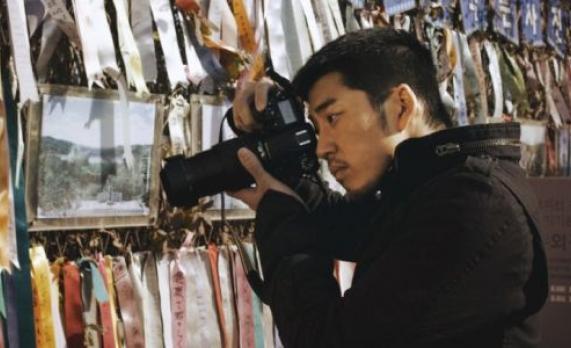
Tyrannosaur (Great Britain)
Director: Paddy Considine


This British thriller is also bleak as all hell, but is among the best films of the festival. Paddy Considine, who's better known as an actor, has created an impressive first feature film, even though it makes you feel like shit by the end. Considine ponders the nature of violence, what drives people to it, how the victims feel it, and how one can live with himself after resorting to it. It takes place in the suburbs, where such things are not uncommon.

Joseph (Peter Mullan) is a tough-as-nails pensioner who's prone to violent outbursts. Such anger results in him killing his beloved dog, leaving the widower all alone in the world. He has to witness a family next door act violent towards each other, including the ten-year-old Samuel, and considers beating the father up. Haunted by his inner demons, one day he wanders to a flea market, owned by the Christian Hannah (Olivia Coleman), but still refuses to take any help from her. Hannah herself is living in an abusive relationship, with his husband constantly beating him up. The two broken people start to lean towards each other for support.

Considine has a clear eye to depict some of the worst parts of England, namely Leeds in West Yorkshire. The film feels so realistic that the viewer is able to imagine the smells of dog, piss and blood. The film may resemble a film like Gran Torino at first, but offers no similar redemptions for the characters by the end. There are also no moral sermons on offer here. The world is, and remains a hole filled with evil, brutality, and shades of grey instead of black and white. Saying anything more would just diminish the film's power. Just go see it.

★★★★★

So, there's that. I urge you to hurry to ticket offices now and buy the last remaining tickets. Have a great weekend!

Cartoon credits: Ville Tiihonen

LinkWithin

Related Posts Plugin for WordPress, Blogger...