Showing posts with label drama. Show all posts

Wednesday, 2 December 2020

Love & Anarchy Advent Calendar


So, we had a Love & Anarchy Film Festival this year as well. I was taking it slow in covering it, but then I realized it was over two months ago. But perhaps by starting an Advent Calendar I can cover 24 movies that were seen at the festival. They had chosen a really good program, and kept the audience as safe as possible in these circumstances. Check back to this post on every day of December to catch up on reviews.

1. First Cow (USA, 2019)
Director: Kelly Reichardt


Kelly Reichardt is known for making slow, quiet and ponderous movies, so it's kind of a jump when the new one is basically a buddy comedy of two grifters in the Old West. It's the kind of western that follows on the footsteps of McCabe & Mrs Miller and the like, everything is grey, brown, dirty, flimsily built and wooden. There's no glory or romanticism involved, even if the framing story tells of a modern woman finding out about the history involved.

The movie is a good, multilayered depiction of the friendship between two underdogs, played by John Magaro and Orion Lee. It also has some critique of the American Dream and drive towards entrepreneurship, which proves impossible for even the skilled ones if enough odds are against them right from the start. That's why they have to resort to cheating, stealing milk from the prize cow to improve their cakes and thus bake sales. The film has a cold, unflinching look at nature, which is at the same time utterly ruthless and oddly comforting. we are all parts of the woods in the end.

★★★★

2. Wendy (USA, 2019)
Dir. Benh Zeitlin


The impressionistic director Benh Zeitlin with his crew has prepared his follow-up to Beasts of a Southern Wild for seven years. While that one saw wonder and childlike amazement in poor and devastated Southeast terriories, this one takes a jump toward even more fantastic storytelling. It's a reworking of the story of Peter Pan.

The film is again visually stunning, and the locations in the Pacific Islands with an active volcano are nothing short of breathtaking. This time around, Zeitling guides a larger cast of child actors, none of which are as strong to carry a movie as Quvenzhané Wallis was. It also seems that the long production period and kids growing up so fast has made it necessary to tell the story fragmented and disjointed. It may be argued that its due to the logic following children's playtimes, but it makes for a tedious thing to follow. There are some kind of cool reworkings of the Pan story set to a more modern backdrop, but some are basically terrible. Mostly anything to do with Captain Hook and his pirates. Beasts of a Southern Wild was not without its problems, but it had a more clear purpose, now it seems it's a bit too childish and dumbed down for adults and not exciting enough for kids, satisfying no one.

★★

3. Lost Boys (Finland/Thailand 2020)
Dirs. Joonas Neuvonen, Sadri Cetinkaya


The documentary film Reindeerspotting made waves a decade ago, and also became a big hit in Finland. The movie depicted a group of drug addicts from Lapland in their daily lives, fighting against their urges, boredom, and the system. From the profits of the film, the real-life buddy group got enough money to fly to Thailand for the winter. After a few months of pure hedonism, sex, drugs and all other vices, only the film's director Joonas Neuvonen returned home. Soon after, one of the group was missing and the first film's main character Jani was found dead in shady circumstances.

The sequel film is of Neuvonen's attempts to recollect, what went wrong and to try to find out what exactly happened to his friends. The material he had for this film were fragmented, some in pooor quality. The reason the film took a decade was that it needed multiple screenwriters, editors and even co-directors to make sense of all this. Considering this, the resulting film is a wonder, a docufiction that is both a horrifying psychedelic nightmare in the vein of Gaspar Noé and Nicolas Winding Refn. On the other hand, it is also a sad look at the dead end facing the first film's characters. They might get some fleeting moments of happiness late in their lives, but it's all a illusion and the ground is approaching fast. This time around, Neuvonen puts himself more to under the magnifying glass, emphasizes his own bad feelings about the case and maybe his own fractured psyche.

★★★★

4. Radioactive (UK, Hungary, China, France, USA 2019)
Dir. Marjane Satrapi


The author of Persepolis, Marjane Satrapi, hasn't had the most successful career as a film director. His previous film, Voices, flopped in the Stateside, so she has had to resort to having an easy-to-sell biography project made with funding from around the world as her next project. The film tells the life story of chemist Marie Curie, discoverer of Radioactive elements. As it is, Radioactive has many moments of visual intrigue and good acting, but it can't avoid all the major pratfalls of the biography genre.

Rosamund Pike carries the film as headstrong Curie. As Satrapi tends to do with her comics work, she also intercuts the story with asides that show consequences of the discoveries, both good (radiation treatments) and bad (the Chernobyl accident). Those asides however reveal the film's limited budget, even if it's stretched admirably to fit these parts. The major problem is, however, that like most scientists, the life story by itself isn't really that captivating, and showing of all the various awards and stuff seems like reading from a Wikipedia page. The center is the relationship between Marie and Pierre (Sam Riley), but it lacks tension since Pierre is doing his best to share credits and help Marie as much as he can. The adventures in World War I with her daughter, shrugged off in the film's last 20 minutes, would have been more interesting to follow than focusing on the early parts.

★★

5. Nomadland (USA, Germany 2020)
Dir. Chloé Zhao


Director Zhao once again finds a way to make a western that's relevant to the themes for today. And she does it with a docufiction style, having plenty of people with the nomad lifestyle essentially play themselves. It's a touching film about the inability to find one's place in the world, but for once, not through the eyes of a teen or a young adult, but an actual adult, magnificently portrayed by Frances McDormand.

McDormand's Fern is tossed out after the closure of a major factory and an entire town's livelyhood. She does meaningless part-time work for Amazon and lives in her trailer, traveling the Great Plains of USA.  On her way, she tries developing relationships, but everything seems fleeting and avoid her grasp. The film has an anti-capitalist sting, but I feel the film could have had more brutally honest things to say about Amazon's worker practices, which were only alluded to here. It may be due to the realities of releasing such a melancholic film for adults, one can't rule out Amazon by biting the hand that may feed you. It's a shame Zhao herself seems to accept the odd job here and there, since she's moving on to the MCU. I think certain rising talents could produce incredible movies elsewhere, whereas with Marvel they'll probably do something reasonably entertaining but forgettable. But that's late-stage capitalism for you. It maximises profits, not art.

★★★★ 1/2

6. Dogs Don't Wear Pants (Koirat eivät käytä housuja, Finland, Latvia 2019)
Dir. J-P Valkeapää


I had actually seen this last year in festival screenings, but since then this movie has become a bit notorious abroad, so it warrants a mention. It's a sort of dark comedy of a man (Pekka Streng) struggling with grief finding a new lease in life with kinky sex and especially with a blossoming relationship with a dominatrix (Krista Kosonen).

Valkeapää is perhaps the most gifted visualist of the new generation of Finnish filmmakers. Here he has some shades of neon noir or the films of the likes of Noé and Friedkin, but manages to do something unique and undoubtedly his. It's a considerable step up of his previous work that had clearer pastiches. It's not as rough and kinky as one might expect, but it's also no surprise that some things get taken a bit far. The key of the movie is in its central triangle drama of sorts with a father being drawn into a sexy underworld, but his daughter also needing him in her struggles.

★★★★

7. My Octopus Teacher (South Africa 2020)
Dirs. Pippa Ehrlich, James Reed

Filmmaker Craig Forster recalls an unusual encounter with an octopus in an underwater kelp forest. Octopi are as intelligent as house cats, so the fil m goes out its way to show how they too can act as personally, gracefully and smartly as any pet, with footage to support it. I'm usually wary of films that make of animal behaviour to be to human-like, and there are some interpretations here that near the line. As it is however, is a reminder that we have incredible species around the world that have their own emotions, and we just can't go on destroying the landscapes in which they live in.  

★★★

Monday, 30 November 2020

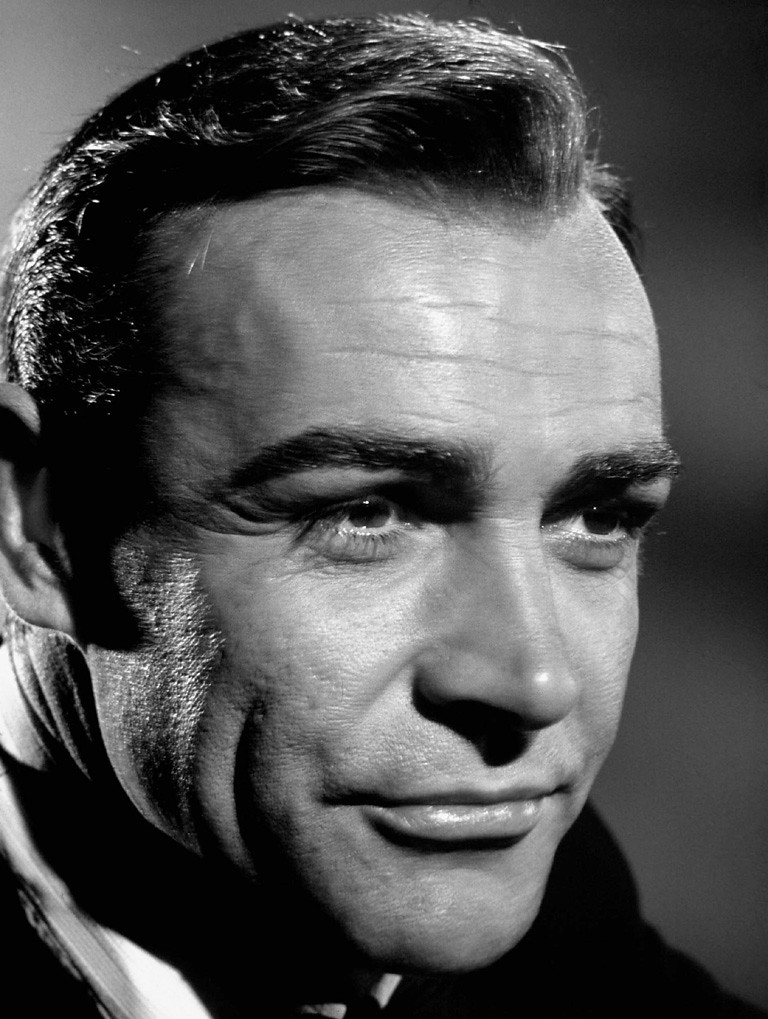
Sean Connery in Memoriam


Cinema lost another giant this year as the legendary Highlander Sean Connery himself passed away aged 90 in the Bahamas. Now, he might have had some very regressive personal ideas that have been repeated ad nauseum by leftists. But one can't claim that he wasn't a mesmerizing screen star, and also (his constant Scottish accent and lisping s's notwithstanding), quite a great actor as well. This post takes a look at some of his best performances.

From Russia with Love (UK, 1963)
Dir. Terence Young


There are many ways of approaching the Bond series, but it is also interesting to watch the earliest entries where everything was not that set in stone. While Dr. No already had a version of the basic formula, the first sequel in the series took a different path, having a more real world espionage-based and dark sequel. As it is one of the more serious entries in the franchise, I find it also surprisingly underrated.

It's still a Bond film, so there's plenty of ludicrousness. The entire film begins with a scene where Bond is seemingly killed, but it turns out it's just some guy wearing a rubber mask (for some reason) in Red Grant's (Robert Shaw) training exercise. Grant's dark reflection of Bond is one of the reasons people remember this film so fondly, but it has some other good characterizations as well, from the double-agent Tatiana Romanova (Daniela Bianchi) to the actual main villain Rosa Klebb (Lotte Lenya), who never even meets Bond face-to-face. 

But Red Grant does, in perhaps the best fight scene of the entire series.
 

Before Daniel Craig came along, Connery was the only actor who managed to get a sense of danger out of the Bond movies. He is constantly in over his head, but his cocky nature and luck also make him come out on top of any situation. Bond is probably the worst secret agent possible, but it just adds to the allure of the character. Espionage is well below his radar after women and boozing.

★★★★

Marnie (USA, 1964)
Dir. Alfred Hitchcock


Late-era Hitchcock films aren't also quite as well-known, and it may seem even surprising that Connery starred in a Hitch movie. Marnie is a exploration of trauma and lies and their effects on a relationship. It also has a Psycho-like table-turn, in which we at first follow Marnie (Tippi Hedren) as she cheats, swindles and steals money from each of her employers. When she gets caught by Connery's Mark Rutland, he takes it upon himself to get to the bottom of her personality flaws and functions.


As it was already the 60's, Hitch could have more graphic sex and violence than used to in his films. Connery is more of a hands-on actor than Jimmy Stewart or Cary Grant who had problems with their masculinity in Hitch's movies. The central character of Marnie, however, is way too half-baked, a damsel in distress with little agenda of her own. Hitchcock has interesting scenes play out her panic attacks, but is seems he could have grounded the end reveals a bit more with the role of Marnie's mother being almost nonexistant beforehand. I think the film showcases a little too clearly Hitchcock's problems with women, and as a result, it's a good try to have a multilayered psychological thriller, but times had already passed such a chauvinistic view of things. It's not among the best of it's director's standards.

★★★

The Offence (USA, 1973)
Dir. Sidney Lumet


Connery made four films in total with Lumet, and as directed by a veteran who leaned heavy on good scripts and getting the best out of his actors, he also made some of the best work in his career. Here he plays a British policeman driven evenly more desperate as a child-murderer's case lingers on.


I'd say the bleak outlook on a 20-year police procedure has probably been a major influence on Bong Joon-ho's Memories of Murder. Lumet, however directs this mostly like a stage play, with minimalist interrogation rooms and very dialogue-heavy scenes. Lumet is interested in a breaking psyche, and the growing desperation that brings a seemingly good police to do atrocious deeds. It covers similar themes than a lot of showier films which is probably why this small-scale movie has had such relatively light attention.

Connery's role, however, is yet another character that takes out his inner anger and frustrations on women, in this case his long-suffering wife. Well, he has violent tendencies towards suspects as well, so he's not entirely likable by any means, but still, one has to wonder why so many of his characters share this woman-beating tendencies.

★★★ 1/2

The Wind and the Lion (USA, 1975)
Dir. John Milius


Milius found a good historical epic with which to tell a story about one of his greatest heroes, Theodore Roosevelt. It wasn't his last Roosevelt film, and Ol' Teddy is restricted here to a quite brief supporting role, though he is the Wind in the title. The Lion, then is Connery's Raisuli, a Berber prince out for glory. At that point it wasn't considered problematic to have Scots portray Arabs. Rather, he is used here to be a world-class lover and a fighter, in the same vein as Rudolph Valentino


There's planty of action scenes equal to Milius's later Conan the Barbarian, and a Stockholm sydromish romance with Candace Bergen's reporter, who finds that there's more to the Berber lifestyle than meets the eye at first. Meanwhile, Teddy (Brian Keith) faces pressures on his foreign policy back home, but meets them with his personal philosophies, which isn't nearly as interesting. The seperate stories don't quite click together and the ending is quite underwhelming. nevertheless, it is an enjoyable film to watch since Connery's and Milius's approaches to tell manly men tales are tangentially similar.

★★★

The Rock (USA, 1996)
Dir. Michael Bay


Finally, among the last really entertaining romps Connery made, and also the movie was more or less to blame for many of Connery's late-era woes. The Rock's stunt casting sees him play pretty much a James Bond type that has been kept in a prison cell for 30 years. He's a quippy man of action, but at the same time a mentor too. That the aged Connery happend to fit into a thoroughly modern action movie so well gave the wrong imprsiion to other filmmakers who attempted similar approaches, the bottom of the barrel being 2003's LXG which made Connery quit acting altogether.


You can find plenty to blame in Michael Bay's approach. Connery seems to enjoy to play a character that sees things to be as black-and-white as they were in the 1960's, which extends also on his sex politics. He also seemingly kills or maims a lot of innocent people in a very tacked-on car chase, that's nevertheless a great showcase of Bay's strengths as an action director. By contrast, Nicolas Cage's weirdo, modern action man and Ed Harris's noble main baddie are more nuanced characters, but Connery holds his own against these two great performances. Bay has only regressive things to say, but that's only if you try to search anything meaningful in his cavalcade of outrageous plot turns and huge explosions. As a 90's romp, it's still great fun, and perhaps should have been Connery's actual retirement film so he could have gone out on top.

★★★★

Wednesday, 30 September 2020

Urban Gauntlets


One thing that gets lost amid all this quarantine is that major cities are seething hellholes. That's probably where I'm particularly drawn into the sort of neo noir films, where a hapless protagonist tries their best, but it seems the entire cities (usually NYC) are against them in every way. So, let's take a closer look at three of such examples.


Killing of a Chinese Bookie (USA, 1976)
Director: John Cassavetes


In the sweaty seventies, John Cassavetes was making his own minimalist art in between shoots of major big-budget Hollywood epics. He bled his own situation into his films, like here where an owner of a burlesque house (Ben Gazzara) strives to make art out of making middle-aged men horny.

He's also a gambling addict that gets into trouble with the local mob. The only way out is to do a favor, which in turn might suck out the last of humanity out of him. These kinds of films are basically tragedies about the failure of the American dream. The plucky underdogs dream of being big, but always have to face some harsh realities, and in the end, violence as well. Cassavetes didn't really like violence in films, so it's shot very discreetly, but the realities it causes changes the tone of the entire film. 


Unlike the two other films in this list, this one is set in Los Angeles. It can be seen in the greater emphasis on cars, distances, and heat eminating from the entire film. Cassavetes as a director usually had a very limited color palette to his films, this one also looks like the film was overexposed in the sun, even though it's mostly set during the night.

The film is mostly talk and no action. One shouldn't expect it to even have a climax of sort. Cassavetes is interested in the implications of the situation more than anything. The entire thing also works as a metaphor for the corruption of the power of money. How far are you willing to sell your soul?

★★★★

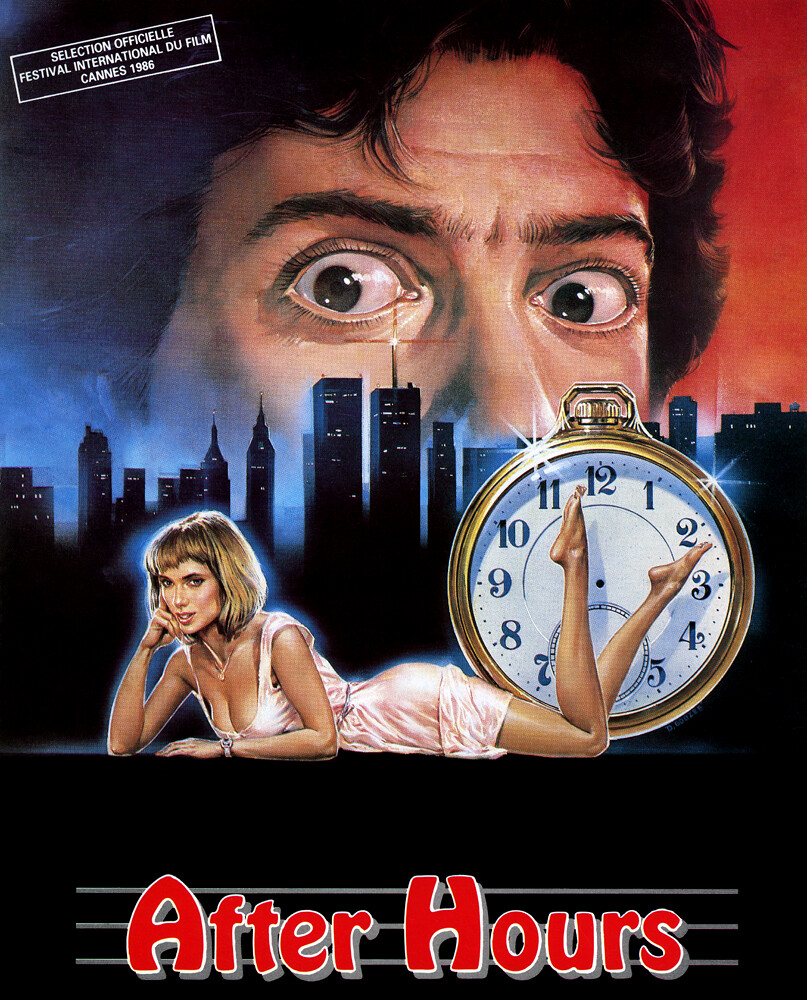
After Hours (USA, 1985)
Dir. Martin Scorsese


It used to be thought that the 1980's weren't really that good for the director Martin Scorsese. I beg to differ, I find he did some great work that riffed on ideas and themes he had set up in the previous decade. After Hours is one of his rare more comedic movies. But in fact, it's a thorough New York movie that sees the city, yuppified since the days of Taxi Driver, as dangerous as ever.

A hapless office worker (Griffin Dunne) is a regular young man but takes a few steps out of his comfort zone as he's looking for love. Out in the middle of the night in a weird part of the town alone and with no money seems to attract him to oddballs and authorities that don't mean him well and are out to get him. The neon-lit, cold and smoky New York never looked better but at the same time, more terrifying.


The film is emphatethic towards everyone who's down and out in the Big Apple, even if it casts most of the characters of the city with major mental issues and cynicism. But the key is that circumstantial setbacks can pile up and minor things like losing a $20 bill may cause a chain-reaction that only adds to the plight of the outcasts. It's a film that also gets to the heart of the loneliness felt in cities, even if there are plenty of people around. 

Scorsese has borrowed from Woody Allen a distrust of the city's intellectual and artistic class and mercilessly mocks it. He also manages to sneak in some of his personal obsessions, from late-night diners to talking about film classics to the mix as well, making this one of the movies surely influencing a young Quentin Tarantino. The only major problem with the movie is that it hits so close to truth it's not that funny as a comedy, but hey, you can't always have everything.

★★★★


Uncut Gems  (USA, 2019)
Dirs. Benny & Josh Safdie

The latest one, and the one that particularly inspired this writing comes from the arthouse cinema production house A24 and has Scorsese and Cassavetes in particular as influences. The seediness in the previous ones is now contrasted with more modern sports centers and auction houses. But even if it's not done in the open any more, the threat of violence looms even stronger behind every scene.

Lando Calrissian -styled gems dealer Howard Ratner (Adam Sandler) is at once a sleazy little rat, and a fast-talking trickster you can't help but to like even if his self-destructive adrenaline addiction is putting not only himself, but his his family and friends on harm's way. Ratner is about to make a huge sell on a particularly beautiful opal, which puts him in a position and mindset to make increasingly dangerous bets on sports. The movie follows as Ratner ups the ante again and again, always surviving by the skin of his neck, until finally the bets become way too big to handle.


For the fast-paced modern audiences, the movie is fast-cut and has plenty of side-plots going on at all times. The effect may be anxiety-inducing for some viewers, but the film also warrants repeat viewings if one is interested in seeing the strings of plotlines getting pulled. Given the chance, Sandler can be a great character actor, so it's a bit sad he didn't get the rcognition he deserved from this which will surely make him go back to making very half-assed comedies with no effort. But such are the joys and victories that the film presents, too. They are fleeting, and something much worse is yet to come soon enough.

 ★★★★ 1/2

Thursday, 10 September 2020

Three Laughs: Showgirls


It is hard to rate some trashy films. Films can be really good entertainment in spite of the quality of the filmmaking. In fact, it might be even harder to create unique trash that keeps surprising you than most "quality" films with which you know what you are going to get. It certainly is an even better pleasure to watch them. My friend says that he knows a trash film is worth something if it gets three laughs out of me. I mean proper, good belly laughs when you just can't believe what the film is showing to you, scene after scene. That's as good a rating as any for these movies. Any film that has these three laughs has a special place in my heart.

Three laughs case file #36
Showgirls (USA, 1995)
Dir. Paul Verhoeven 


Now, Showgirls is a cult film in the proper use of the term. It has a devoted league of fans that know the movie by heart and recite its lines. But even they can't really come to an understanding on whether the film is actually any good or if it's funny just because it's bad. There's even a new documentary called You Don't Nomi (2019, dir. Jeffrey McHale) that makes arguments for either case.

I am more than willing to give director Paul Verhoeven the benefit of a doubt. After all, the crazy Dutchman has always provoked and in the meantime made some of my favorite movies of all time. But one has to also know that he's a bit of a perv, and even if he's doing a scathing movie of the treatment of young women in the entertainment industry, one can be sure he makes it gaudy, ridiculous and more than a bit male-gazey. Screenwriter Joe Eszterhas gets even less of a benefit of a doubt.

But the thing that makes Showgirls an entertaining movie is that it refuses to belong to any one box. It is more than happy to keep switching its tone, taking different aspects and running with them, and refusing to give easy answers. It's dumb, it's weird, and the acting in particular is all over the place. It is not an entirely successful movie, that much has to be said. I think one gets quite weary of it during the lengthy run time. But there's certainly the required laughs to be had in following Nomi's (Elizabeth Berkley) career from a stripper to showgirl to a genuine star.

★ or ★★★★★

Three laughs (SPOILERS):

1. Some people in McHale's document claim to realize the film is very bad from the first scene onward. I feel like it's a bit heightened, but a true reveal on how the film is going to be is after Nomi arrives to Las Vegas and loses all of her belongings to a thief pretending to be a Samaritan. A kind soul (Gina Ravera) offers to help her, but also makes the mistake of asking her where she comes from. Nomi, just trying to eat a basket of fries, doesn't have any of it, throws the fries away and gives a wonderful delivery of the line "DIFFERENT PLACES!"

2. I think the film's funnest scenes include the super-bitch star Cristal Connors (Gina Gershon), and the All About Eve -style one-upping between her and Nomi. The film's funniest scene comes from the bonding at a restaurant they seem to have between eating dog food, and loving a perticular brand, Doggy Chow. To add up to the scene's oddness, they also toast chips when finding common ground.

3. I just have to include the bizarre sex scene between Nomi and the sleazy rich boy Zack Carey played by Kyle McLachlan. They head out to a neon-lit pool for a bit of the old in-n-out, which Nomi performs similarly as her striptease, mainly throwing her legs around Carey and flopping on her back like a fish on heat in dry land. It's wet, it's wild, but it ain't erotic, I tell you that much.

Tuesday, 1 September 2020

Three laughs: The Last American Virgin


It is hard to rate some trashy films. Films can be really good entertainment in spite of the quality of the filmmaking. In fact, it might be even harder to create unique trash that keeps surprising you than most "quality" films with which you know what you are going to get. It certainly is an even better pleasure to watch them. My friend says that he knows a trash film is worth something if it gets three laughs out of me. I mean proper, good belly laughs when you just can't believe what the film is showing to you, scene after scene. That's as good a rating as any for these movies. Any film that has these three laughs has a special place in my heart.  

★ or ★★★★★


Three laughs case file #35:  
The Last American Virgin (USA, 1982)
Director: Boaz Davidson

It's time to go back to school! I'm not usually big into teen movies, but there's an exception to this rule, a kind of ultimate how-I-spent-my-summer-vacation movie. As it turns out, it's also a straight remake of an Israeli American Graffiti ripoff, Lemon Popsicle. A lot of the modernization of Cannon Group's The Last American Virgin tries way too hard to capture the hearts of 80's teenagers, which makes it so preposterous and funny.

In particular, the movie's soundtrack is full of the cheesiest early 80's ballads you could imagine. The melodrama may suit the teenager mindset when every little crush is a matter of life and death, but it seems quite silly when half the movie is dumb dick jokes. Also the sad sack main character Gary (Lawrence Monoson) looks about to cry at any given moment. 

The film quests Gary and his two meatheaded friends during one summer in a quest to get laid. They find plenty of opportunities, but insecurities keep Gary from gatting any. That, and a love for the new girl in the neighborhood, Karen (Diane Franklin). But sadly, there's a triangle drama as Rick (Steve Antin) picks her up and starts developing a relationship. One of the reasons I find this better than most teeny fare is the more realistic feelings of lovelorniness and unfairness throughout. I'm a cynic, but it feels more comfortable than fairy tales. The end scene in particular is a real coup de grace.


Three laughs (SPOILERS):

1. As Devo's Whip It plays on the background, first we have a nerd peeping into the girl's dressing room, and as he's caught in the act, it devolves into a scene with the entire gym class measuring and comparing their ding-dongs.

2. In a particularly unrealistic scene straight outta the letters column of Penthouse, the boys are seduced by a sexy Spanish woman, alone at home with her boyfriend being a sailor. The boys take turns in entertaining her in the bedroom. As the tubby Victor (Bryan Peck) get's a go, the other boys peep from the keyhole. KC and the Sunshine Band's That's the Way (I like it) plays as Victor thrusts.

3. In what is undoubtedly the best use of U2 in anything ever, I Will Follow plays on the background as Gary has to work his ass off in order to pay for Karen's abortion. It is intercut with the procedure. Yes, this movie has a U2 Abortion Montage.

Tuesday, 14 July 2020

Blow Up, Blow Out


 Did you just accidentally capture a murder on film, or a sound of evidence for one? Can the truth be found on details or does it just send its seeker to the path of obsession? There's a trio of films much studied and appreciated that riff on a very similar subject. I think it appeals to film directors, as the job often includes getting easily distracted on the moments they weren't set out to capture. That's why this idea lingers on, and what's more it epitomize the styles and ides of each of their respective auteurs. Each could also not have been done in a different time, they are the image of the 1960's, 1970's and 1980's.

So, let's talk about Michelangelo Antonioni's Blow-Up (1966), Francis Ford Coppola's The Conversation (1974) and Brian De Palma's Blow Out (1981).

Blow-Up (UK, Italy 1966)
Director: Michelangelo Antonioni


One of the essential depictions of the image of 1960's Swinging London, Antonioni's most famous film sees David Hemmings as a wealthy, self-centered and womanizing photographer. Much of the film we also see odd and off-putting public performances of Flower People through his eyes. Like in many of Antonioni's films, much of the mood and ideas are put between the lines. Even as Hemmings' Thomas tries his best to be a hip mod, it is obvious that he does not feel comfortable or let his guard down.


But his boredom and uneasiness also allow him to push boundaries and operate on a morally gray area. As he's secretly photographing a mysterious woman in the park, it seems that his camera captures something odd. The woman confronts him later on and demands the roll. The instance haunts Thomas and as he's studying his secret negatives he starts seeing things by blowing up smaller and smaller elements to bigger pictures. But we as an audience also never get any closure or reinsurance of the fact throughout the film.


The obsessions related to the sexual nature of how Thomas uses the camera makes the film basically about the male gaze and voyeurism. Antonioni had a knack of combining his themes to the plot. Empty hedonism and sex where his every whim is filled still doesn't satisfy, and by pushing morals, the main character is left a giant void. These days, one could also see how his masculinity turns more and more toxic, as he treats women disposable and has the entire world revolving around his wants and needs. The film is a fascinating look at details and visually wondrous, but the strictly male navel-gazing it provides is a bit out of time by today's standards.

★★★★

The Conversation (USA 1974)
Dir. Francis Ford Coppola


As Antonioni was exploring life in the 1960's, then Coppola took the idea to the paranoid 1970's and brought a more political aspect to the proceedings. It is probably still the best movie ever made about surveillance and the endless hole of compromizing ideals it leads to.

It's not to say Coppola is stealing the idea from Blow-Up, rather he's using it as a key influence. A most notable difference is that as Antonioni's film was about a wealthy and cool young artist, Coppola centers around a sweaty and mousey middle-aged man that considers himself a public servant. Actually Gene Hackman's Harry Caul is a surveillance expert, and with his company, follows around those his clients point out to him with very little regard on the moral aspects of his work.


By contrast to his job description, Caul himself is very much an introvert, careful of his own privacy and keeping his private life private (I wonder what he would make of the modern day when American and Chinese apps follow your every move and sell them to the highest bidder in a bat of an eyelash). But as he is very much a loner, there's a perverted aspect of him following young couples around and listening their conversations. One particular conversation might contain some damning information, but it is not clear and could be interpreted multiple ways. Nevertheless, Caul is horrified to learn that the couple he is listening in might be stalked by a murderer.


Coppola's film has an amoral man grow a conscience but as one would expect, he is not rewarded from it but rather, having his whole life come crumbling down and things going from bad to worse quick. He blows his few relationships, work and most of all, his safety, which means all his posturing around privacy concerns was basically for naught as his enemys could still get to him. Coppola is also careful not to make his film into your basic thriller, but having the tensions come from very slow development of the plot, and as Antonioni, reading moods and implications from between the sparse lines of dialogue.

It's a jazzy and alienating, often frustrating and deliberately off-putting film. The use of sound is brilliant and I think would warrant a seeing seemingly such a small-scale character drama in theatres. This is one of those films you get to appreciate properly only second or third viewing. It is very multi-layered, but I think well worth the effort.

★★★★ 1/2

Blow Out (USA 1981)
Dir. Brian De Palma


Easily the most garish of the trio, De Palma was never afraid of "borrowing" stuff from even well-known cinema, so his answer to the same theme takes more out of the previous movies, as well as Michael Powell's Peeping Tom. Visually, though it looks more like it's director. As the ideas stretch far beyond just plucking them from previous work, it is among the director's finest works with particularly a climactic image lingering on long after the curtains have closed.


John Travolta plays Jack Terry, a character that is something like an amalgam of Hemmings' and Hackman's characters. On surface he may seem like a brash and cool film sound engineer, but below he's tormented and traumatized, as well as feeling empty and lonely. He is recording ambient sound at a park one evening as a car crashes into a pond. He manages to pull out a woman, Sally (Nancy Allen) and helps her to a hospital. But it turns out she was dealing with an important political figure and thus someone might be out to get her. Terry finds evidence on the sound he recorded that the car crash was not an accident.

The film makes fun of the misogynism of murder movies and by-the-numbers stalk-view that De Palma and many of his copycats have used. The movie opens with a film-within a film that seems like a cheap Halloween knock-off and a sub-plot of the film concerns on trying to find the right kind of scream to be used on the film. De Palma presents himself to be more detail-oriented. The actual film has a murderer stalking women too, played by thorough iciness by John Lithgow. But the movie goes out of its way to show how pathetic and disgusting this messy killing actually is, not just stalking girls in a house with a bread knife. De Palma uses plenty of underutilized tricks to emphasize the suspense, such as exciting camera shots and suspending expectations. He is a true follower of Hitchcock in that, carefully limiting on what the audience knows and what he shows.


But in its core, it is a tragic love story of a man who has lost his wife being unable to protect another woman he has developed feelings for. It has similar qualities also to Vertigo in this regard, with the love being really as much about obsession. The final punch of the film also depicts a more cynical end to the character arc than the more open-ended predecessors allowed. In a way all of these are about a man being destroyed by thier obsession in multiple ways. The film also draws parallels to the political decay of the loss for truth and the withering of cinematic artistry in a way I'm not really enclined to agree with, but find fantastically entwined within the plot. De Palma is just as angry as Coppola was, but comes to different conclusions on the same issues.

The cycle of inspiration carried on, as the film itself proved very influental to Quentin Tarantino (particularly Death Proof, which features the same love theme) and Peter Strickland's Berberian Sound Studio.

★★★★

Sunday, 10 May 2020

Three laughs: Cool as Ice


It is hard to rate some trashy films. Films can be really good entertainment in spite of the quality of the filmmaking. In fact, it might be even harder to create unique trash that keeps surprising you than most "quality" films with which you know what you are going to get. It certainly is an even better pleasure to watch them. My friend says that he knows a trash film is worth something if it gets three laughs out of me. I mean proper, good belly laughs when you just can't believe what the film is showing to you, scene after scene. That's as good a rating as any for these movies. Any film that has these three laughs has a special place in my heart.


Three laughs case file #21:
Cool As Ice (USA, 1991)
Director: David Kellogg

I am trying to explore more genres in this column. One I haven’t touched upon yet is the musical melodrama, a vanity project for an up-and-coming star to showcase his talents and perhaps show a few more the general audience never knew about. It becomes funny when the man at the center of attention is someone most people would prefer to just forget. Case in point: Vanilla Ice.

Since white people have tended to steal the best ideas from black music throughout the decades, once rap started to get mainstream, they tried to do the same for hip-hop. Vanilla Ice’s biggest talents are on his looks, but I do find some goofy charm of his totally producer-mandated music and today hilarious-looking clothing and dance moves as well. But would rather not listen to it for too much. Then, I’m in luck with this film as the scenes featuring Ice performing are very scarce. Most of his songs are background music, and with good cause. The film takes more inspiration from The Wild One and Rebel Without a Cause than most music pictures, though Purple Rain and some of Elvis’ films are obvious influences as well.

Vanilla Ice plays the club-dwelling and motorcycle-driving bad boy Johnny van Owen, who falls for a honor student (Kristin Minter). His family objects initially, as does her asshole boyfriend, but as Johnny tries to be good, they allow him to date their daughter. But the family dad’s mysterious past starts to catch up to them.


Three laughs (SPOILERS):

1. The film opens with a very 90’s dance song that’s being performed by supermodel Naomi Campbell. Sweaty, blue characters rave around. Vanilla Ice dances to the opening credits and would get all the ladies in the house, if not his crew who entice him to get on the road. They drive on all through the night until in the morning Ice sees a pretty girl riding a horse. So of course he jumps the fence with his motorcycle and startles the horse, which drops the girl. Nothing like first impressions, eh? We now know that Johnny is a show-off and a total wanker who should stay a safe distance from any women. In general, the film's ideas of "romance" and wooing a lady are as misguided and borderline psychotic that they remind of The Room.

2. There’s a trope of a scene in rock ’n roll films of old where rockers come to play at some unexpected place in the country where no one has heard of the music. But they always manage to drive the kids wild. This film’s version sees Ice and his friend start a hip hop dance routine at a rural bar, but instead of getting everyone along, the gaped maws and shocked silence is more akin to the audience having just seen Springtime for Hitler. For a good reason, too. Ice’s performance must’ve been out of the times even back in 1991.

3. The entire movie has seen shadowy figures follow our main couple around. But once the threat materialized to the Nintendo-hooked little brother, it turns out that the thugs are bumbling gangsters in the vein of Home Alone. Nevertheless, the Mario-brained youngster is so inefficient in keeping away from them, he gets kidnapped easily. Macauley Culkin never had to put up with this shit.

LinkWithin

Related Posts Plugin for WordPress, Blogger...